
Meet Janaki Ammal: The scientist whose research powers India’s sugarcane revolution and ethanol growth

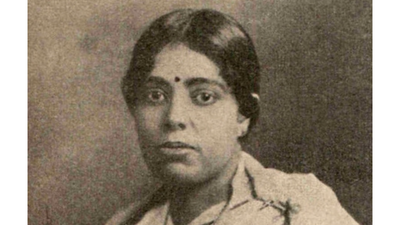
Long before India emerged as one of the world’s leading sugar producers, its fields told a different story. Farmers cultivated sugarcane, yet the crop often lacked the sweetness needed for large-scale production. Imported varieties offered higher sugar content, but they struggled to adapt to India’s climate. At this crossroads, E. K. Janaki Ammal stepped into a scientific challenge that would quietly reshape Indian agriculture. Through her work in plant genetics and cytology, she contributed to efforts that improved hybrid sugarcane suited to Indian conditions, developments that strengthened the country’s sugar sector over time and now support its role in ethanol production.
How Janaki Ammal’s research shaped India’s sugarcane development
In the early 20th century, India’s sugarcane cultivation faced a fundamental limitation. Indigenous varieties were resilient and adapted to local environments, but they produced relatively low sugar yields. Imported varieties, particularly those developed in tropical regions like Java, offered higher sucrose content but were far less reliable in Indian soils and climates. This imbalance restricted productivity and kept the country dependent on inconsistent supply.Scientists recognised that the solution lay in combining the strengths of both types of sugarcane. The task required more than simple crossbreeding. It demanded a deep understanding of plant genetics, especially because sugarcane is a highly complex crop with multiple sets of chromosomes. This is where Janaki Ammal’s expertise became important.At the Sugarcane Breeding Institute in Coimbatore, she worked at the forefront of sugarcane research. Her focus on cytogenetics, the study of chromosomes and heredity, helped scientists better understand how traits could be combined and stabilised across generations.Her work formed part of broader breeding programmes that successfully merged hardy Indian species with high-yielding foreign varieties. The resulting hybrids were more productive while retaining the resilience needed for Indian agricultural conditions. These advances were the result of collaborative scientific efforts, and Ammal’s research played a meaningful role in enabling such hybridisation.
From laboratory research to agricultural transformation
The impact of these developments gradually became visible across India’s farmlands. Improved sugarcane varieties allowed farmers to increase output without sacrificing reliability. Over time, this contributed to a steady rise in sugar production and helped establish India as a major player in the global sugar market.This transformation reflected a wider shift towards scientific agriculture, where research institutions and field practices became more closely aligned. The work carried out during this period, including Ammal’s contributions, formed part of the long-term foundation for India’s agricultural growth.
The modern link to ethanol and energy policy
In the present day, sugarcane has taken on a new dimension beyond food production. It is a key feedstock in India’s ethanol blending programme, which aims to reduce dependence on imported fossil fuels. Ethanol derived from sugarcane is mixed with petrol, contributing to energy security and environmental goals.The growth of ethanol production is primarily driven by contemporary policy, infrastructure and blending targets. However, it depends on a stable and productive sugarcane supply chain. That stability is supported by decades of crop improvement. Janaki Ammal’s work on sugarcane cytogenetics helped improve high-yield, climate-adapted varieties in India, contributing to the long-term strength of the country’s sugar sector, which today also supplies ethanol feedstock.
A scientist beyond sugarcane
Janaki Ammal’s career extended far beyond her work on sugarcane. She was an accomplished botanist who made significant contributions to plant cytogenetics and taxonomy. Her work took her to institutions such as the Royal Horticultural Society, and she later played an important role in strengthening botanical research in India through the Botanical Survey of India.She also advocated for the conservation of indigenous plant species and emphasised the importance of scientific independence in a newly emerging nation. At a time when few women were present in advanced scientific research, her achievements stood out as both a scientific and social milestone.
Recognition and enduring influence
Janaki Ammal’s contributions were recognised with honours such as the Padma Shri, but her influence extends far beyond formal recognition. Her work represents the kind of foundational science that often goes unnoticed yet has lasting impact.India’s rise as a major sugar producer and its expanding ethanol programme reflect sustained efforts across generations. Within that larger story, Janaki Ammal remains an important figure whose research contributed to strengthening a critical agricultural sector.


