
Kairana MP Iqra Hasan Choudhary. (File image) NEW DELHI: One of the just two Muslim women in the 543-seat Lok Sabha, Kairana MP Iqra Hasan Choudhary voted against the amendment to fast-track women’s reservation on April 17. She said she did not reject the idea of women’s quota but questioned who this particular version of it would actually serve.“Muslim women, especially poor, rural, OBC and minority women, will be the last to benefit,” she told TOI on Wednesday. “By linking reservation to delimitation and census, you are making women’s representation hostage to a political calculus that has rarely favoured our communities.As one of the two Muslim women in the house—alongside Trinamool Congress’s Sajda Ahmed—Choudhary, who represents Kairana in western UP, said her scepticism about who this bill will actually reach is not theoretical. “There is no clarity on OBC or minority women. If the most marginalised are still missing, what are we really achieving?”Nearly two years into her first term, the Samajwadi Party MP and SOAS University of London postgraduate said the entire debate has remained, at its core, a “metropolitan conversation polished in studios”, one that has “barely touched” the constituency she represents.Ambition, she said, is itself a function of access. “Only women with advantage—family in politics, connections—are able to even think like that.”Even where quotas already exist, at the “pradhani level”, the pipeline is narrow and pre‑guarded. “Because of panchayat reservation, women can at least imagine local leadership. But you will still not see fresh faces—without a husband’s backing or family already in politics, it doesn’t happen.” Some women, she added, started as someone’s daughter or sister and made their own space. “But we are still a deeply patriarchal society. A dedicated space has to be deliberately created.” It is this ground reality—not parliamentary procedure—that shaped her vote, she said.The Kairana MP said, “I come from a political family. Even then, it took time for people to accept that women can lead.” The ceiling, for Muslim women in Indian politics, has barely been scratched, she said. Across the entire history of the Lok Sabha, only 18 Muslim women have ever been elected. Today, there are two.Her structural alarm is the “delimitation link”. She pointed to Assam and said “the 2023 redrawing has reduced the number of Muslim‑majority seats, raising fears of diluted Muslim representation. Delimitation is not neutral”.She said she sees the “same politics” at work in triple talaq. “It criminalised a civil matter—also done in the name of helping Muslim women.” Both moves, in her reading, “arrive wrapped in the language of women’s emancipation while serving a different purpose entirely. “It is about playing with minds, not giving women a voice.”The opposition, she added, wasn’t even “properly” consulted on the women’s reservation issue in Parliament. “A reform of this scale needs broader consensus. They didn’t have the numbers, so they didn’t try.”About the AuthorIsmat AraAt The Times of India, Ismat Ara covers politics, people, and societies, with a focus on accountability, justice, and lived experience. Shaped by years of rigorous reporting across cities, small towns, and remote villages, she is drawn to the human stories tucked beneath policy and paperwork.Read MoreEnd of ArticleFollow Us On Social MediaVideosEC Issues Notice To Kharge Over “Terrorist” Remark On PM Modi After BJP Complaint‘Democracy Cannot Be Jeopardised’: SC Slams Mamata Banerjee Over Alleged Interference In ED RaidIran Seizes Two Ships in Strait of Hormuz, India-Bound Vessel Sparks Global ConcernINS Dhruv: The ship behind India’s missile tracking and strategic strength‘Dot, Dot, Dot’: Rajnath Singh Warns Pakistan On Pahalgam Attack AnniversaryFrom US To Israel: Global Leaders Mark One Year Of Pahalgam Terror AttackPappu Yadav Defies NCW Notice, Doubles Down on Remarks Amid Massive Political RowIAF Lands Fighter Jets, Transport Aircraft on Purvanchal Expressway in Major Readiness DrillFast Fashion Explained: The Hidden Cost of Cheap Clothes Will Shock YouMumbai Woman Blasts BJP Minister Over Traffic Chaos Caused By ‘Nari Shakti’ Rally: ‘Get Out of Here’123PhotostoriesAre you killing your Bougainvillea with kindness? Here are 4 things you really need to knowGenelia Deshmukh proves she believes in tradition in the sea of trends with her soft pink Nauvari saree momentANZAC Day 2026: What’s open and closed across AustraliaOTT Releases This Week (April 23–27): ‘If Wishes Could Kill’, ‘Marty Supreme’, ‘Band Melam’, ‘Apex’ lead the slate3 mantras to chant everyday that are believed to bring peace, prosperity and divine protectionPresident Droupadi Murmu hosted South Korean President with royal Rajasthani feastMukul Chadda, Mallika Sarabhai, Smriti Kalra: Meet the IIM graduates who swapped corporate suits for movie scriptsSpiritual benefits of taking a holy dip in Ganga riverTop 5 premium residential areas of GhaziabadHow to spot fake friends: 10 toxic traits disguised as ‘friendship’123Hot PicksBengal Election 2026Rahul gandhi rallyBengal election dos and don’tsTamil Nadu pollsSIR ProtestTN election dos and don’tsBank Holidays AprilTop TrendingLSG vs RR IPL MatchMohandas PaiSupreme CourtMalegaon Blast CaseMeerut Blue Drum Murder CaseBareilly Suicide NewsTCS Nashik CaseDelhi Murder NewsMiddle East ConflictIPL Orange Cap

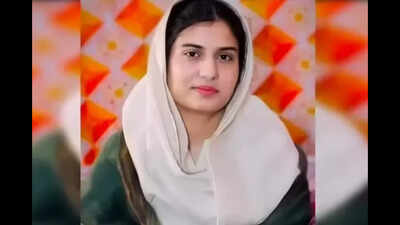
Kairana MP Iqra Hasan Choudhary. (File image)
NEW DELHI: One of the just two Muslim women in the 543-seat Lok Sabha, Kairana MP Iqra Hasan Choudhary voted against the amendment to fast-track women’s reservation on April 17. She said she did not reject the idea of women’s quota but questioned who this particular version of it would actually serve.“Muslim women, especially poor, rural, OBC and minority women, will be the last to benefit,” she told TOI on Wednesday. “By linking reservation to delimitation and census, you are making women’s representation hostage to a political calculus that has rarely favoured our communities.As one of the two Muslim women in the house—alongside Trinamool Congress’s Sajda Ahmed—Choudhary, who represents Kairana in western UP, said her scepticism about who this bill will actually reach is not theoretical. “There is no clarity on OBC or minority women. If the most marginalised are still missing, what are we really achieving?”Nearly two years into her first term, the Samajwadi Party MP and SOAS University of London postgraduate said the entire debate has remained, at its core, a “metropolitan conversation polished in studios”, one that has “barely touched” the constituency she represents.Ambition, she said, is itself a function of access. “Only women with advantage—family in politics, connections—are able to even think like that.”Even where quotas already exist, at the “pradhani level”, the pipeline is narrow and pre‑guarded. “Because of panchayat reservation, women can at least imagine local leadership. But you will still not see fresh faces—without a husband’s backing or family already in politics, it doesn’t happen.” Some women, she added, started as someone’s daughter or sister and made their own space. “But we are still a deeply patriarchal society. A dedicated space has to be deliberately created.” It is this ground reality—not parliamentary procedure—that shaped her vote, she said.The Kairana MP said, “I come from a political family. Even then, it took time for people to accept that women can lead.” The ceiling, for Muslim women in Indian politics, has barely been scratched, she said. Across the entire history of the Lok Sabha, only 18 Muslim women have ever been elected. Today, there are two.Her structural alarm is the “delimitation link”. She pointed to Assam and said “the 2023 redrawing has reduced the number of Muslim‑majority seats, raising fears of diluted Muslim representation. Delimitation is not neutral”.She said she sees the “same politics” at work in triple talaq. “It criminalised a civil matter—also done in the name of helping Muslim women.” Both moves, in her reading, “arrive wrapped in the language of women’s emancipation while serving a different purpose entirely. “It is about playing with minds, not giving women a voice.”The opposition, she added, wasn’t even “properly” consulted on the women’s reservation issue in Parliament. “A reform of this scale needs broader consensus. They didn’t have the numbers, so they didn’t try.”


