
Hranice Abyss: Why no one has found the bottom

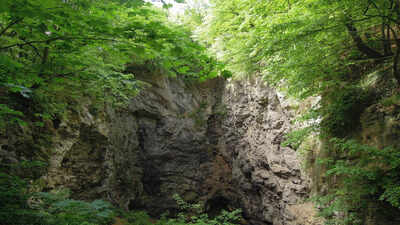
Buried in the depths of a tranquil forest in the Czech Republic lies an inconspicuous pool that refuses to surrender its mystery. It may appear like any other natural pond within the forest, but there is a mysterious vertical shaft leading down into the abyss beneath the water’s surface. This area has long been the subject of exploration by divers and researchers due to its recognition as the world’s deepest explored water-filled cave. What makes it all the more captivating is not what has already been discovered, but what still awaits discovery.And this is not simply a story of an abyss in the Earth. This is a challenge for mankind and the potential of machines. Studying such a cave system implies the task of mapping the heights of skyscrapers, being in a pitch-black and inky underwater environment, under heavy pressure, where the water is slightly acidic, and passages shrink to the point where they can devour even the most experienced diver. Today, we stand on the borderline that divides the period when humans could explore it manually from a new era of deep Earth sciences.A deep record with an invisible bottomThe reason why the Hranice Abyss is attracting more and more attention nowadays is that there is a huge discrepancy between the data gathered already and the presumed depth below the current record. Once a local wonder, the cave got into the spotlight only after new technologies revealed its real magnitude to mankind.A comprehensive 2020 study from the Journal of Geophysical Research: Earth Surface provides the most detailed look yet at this subterranean giant. Researchers used a combination of geophysical tools, like gravity measurements and seismic reflection, to peer into the depths that no human can reach. They confirmed an explored depth of 473.5 meters, but the data hinted at something far more extreme. The study suggests the cave system could extend down to roughly one kilometre. That would make it nearly three times the height of the Eiffel Tower, all submerged vertically underground.The study turned everything we thought we knew about these caves upside down. Whereas most caves originate from the sky, formed by rainwater eating away at rock, Hranice appears to originate from underground, created through the action of hot, carbon dioxide-filled groundwater. This bottom-up formation process accounts for both the immense depth of the cave and how difficult that depth is to access. In effect, the cave functions as one giant chimney for Earth’s inner chemistry, and mapping its full extent requires plumbing the innermost parts of the planet’s crust itself.
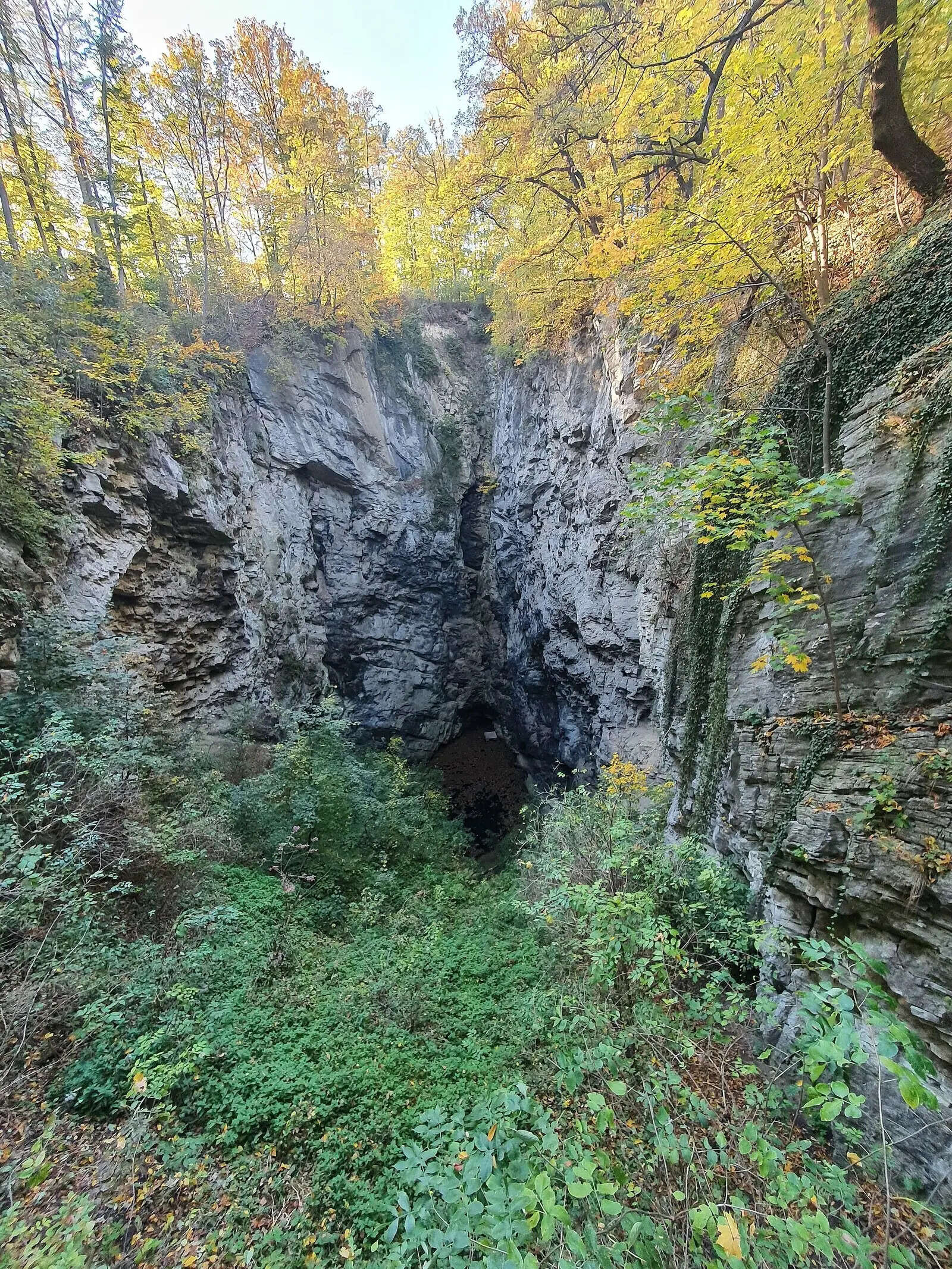
Formed by hot groundwater, its extreme depths challenge human divers. Robotics, inspired by autonomous systems, are now key to mapping this geological enigma, pushing the boundaries of deep Earth exploration. Image Credits: Wikimedia Commons
Why robots are taking over the descentWith no way to get to the bottom, then what? The solution is in the future world of robotics. The harsh conditions have made the cave a test site for robotic technology, an extreme environment in which robots have to go it alone in the absence of any surface communications and the lack of a working GPS.The technology required for this is closely related to the breakthroughs seen in the CERBERUS in the DARPA Subterranean Challenge. This research focused on creating autonomous systems that can move through “unstructured” environments, places where the ground is uneven, the space is tight, and there are no maps to follow. While the DARPA challenge often involved dry tunnels, the core problem is identical to what faces explorers in the abyss. A machine must be able to build a 3D map of its surroundings in real-time while avoiding obstacles that could snag a cable or crush a hull.Using these autonomous “eyes,” scientists hope to close the gap in the map finally. A robot doesn’t get tired, it doesn’t need to breathe, and it can carry sensors that “see” through the murky water using sound and light. The mystery of the Hranice Abyss is currently an engineering race as much as a geological one. Until a machine can successfully navigate the deepest, narrowest squeezes of the shaft, the true bottom will remain one of the quietest open questions in Earth science.Each foray into the mysterious darkness is motivated by our desire to understand. We seek out the fringes of a map that continues to grow, a stark reality that even in today’s highly developed world of cartography, there remain blind spots yet to be mapped.


