
Hormuz crisis: Venezuela becomes India’s third-largest crude oil supplier in May

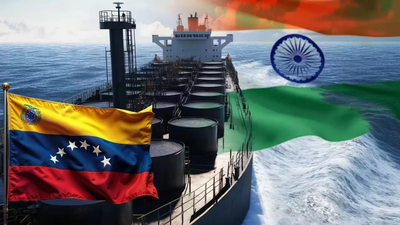
Venezuela has emerged as India’s third-largest crude oil supplier so far in May, overtaking Saudi Arabia and the United States, as Indian refiners increased purchases of cheaper heavy crude amid disruptions linked to the ongoing West Asia conflict.The South American nation supplied around 417,000 barrels per day (bpd) to India this month, sharply higher than 283,000 bpd in April and compared with zero supplies during the previous nine months, as per energy cargo tracker Kpler.The surge comes after the US eased restrictions on Venezuelan oil exports following the January capture of Venezuelan President Nicolás Maduro.Russia and the United Arab Emirates remained India’s top two crude suppliers in May, while Saudi Arabia slipped behind Venezuela due to lower shipments.
Indian refiners shift towards cheaper heavy crude
“Indian buyers have historically shown strong interest in Venezuelan barrels due to their attractive economics and compatibility with complex refining systems,” Nikhil Dubey, lead analyst-refining at Kpler, said, as quoted by ET.Venezuelan crude is particularly suitable for complex refineries such as Reliance Industries’s refinery in Gujarat, which can efficiently process heavier and high-sulphur crude grades.India’s overall crude imports rose 8 per cent month-on-month to 4.9 million barrels per day in May, though imports still remained below the 5.2 million barrels per day recorded in February before the Iran war disrupted regional shipping routes.Saudi Arabia’s supplies to India nearly halved to 340,000 bpd in May from 670,000 bpd in April, largely due to what analysts described as aggressive pricing of Saudi crude.
Strait of Hormuz disruptions reshape India’s oil sourcing
India has significantly diversified its crude sourcing strategy since the Strait of Hormuz effectively became inaccessible due to the ongoing conflict in West Asia.Indian refiners have increasingly turned to Russia, Venezuela, Brazil, West Africa and the United States to offset weaker Gulf supplies.Russian crude continues to form the backbone of India’s oil imports, with flows estimated at around 1.9 million barrels per day in May. Russian supplies remain outside Hormuz-linked risks because they are shipped through Baltic, Black Sea and Pacific routes.The easing of US sanctions had also briefly allowed India to resume imports from Iran in April after a seven-year gap. However, no Iranian cargoes have reached India this month because of the US naval blockade of Iranian ports.Iraqi supplies, which had nearly disappeared in April following disruptions in the Strait, have partially resumed. India received around 51,000 bpd from Iraq in May, compared with 969,000 bpd in February.
Alternative supply routes and energy security
Saudi Arabia and the UAE have been rerouting oil through alternative pipelines to bypass the Strait of Hormuz. Saudi crude is being moved through the East-West pipeline to Yanbu on the Red Sea, while UAE exports are routed through the Habshan-Fujairah pipeline.
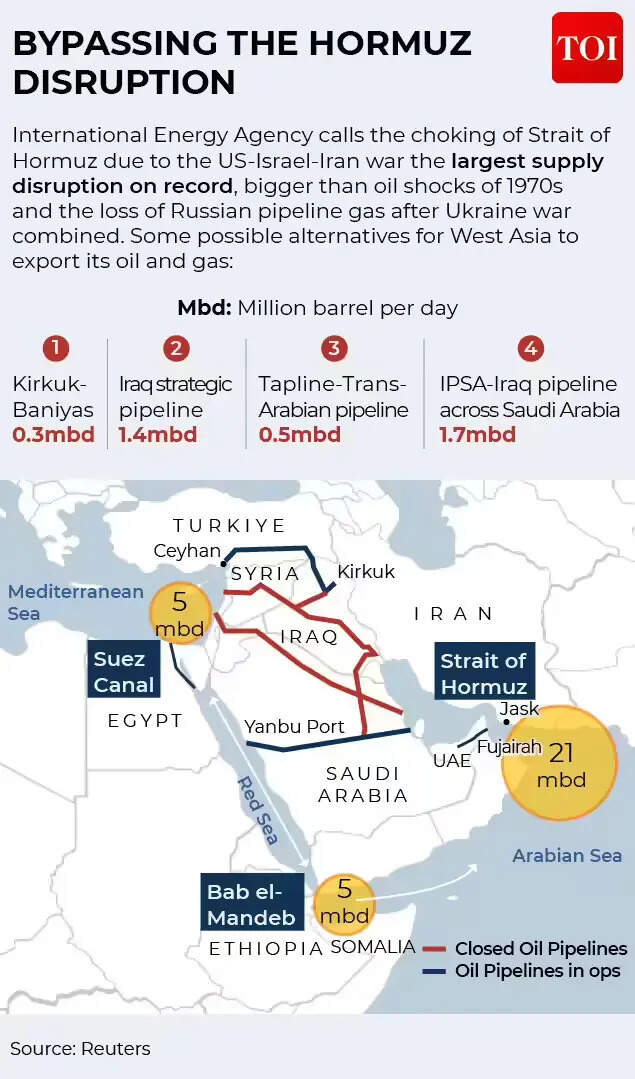
These alternate routes have helped India maintain supply stability, though they have increased shipping times and freight costs.India currently holds around 60 days of petroleum supplies, including strategic reserves, according to government estimates.Analysts believe that India’s crude basket is likely to remain diversified in the coming months, with Russian and Venezuelan barrels expected to play a larger role as refiners continue prioritising supply security and refinery optimisation amid ongoing geopolitical uncertainty.


