
CJI Surya Kant NEW DELHI: “The most difficult part for a constitutional court is to give a ruling whether a centuries-old belief of millions of devotees is right or wrong,” said CJI Surya Kant on Wednesday as the nine-judge constitution bench under him continued hearings on whether the court can be arbiter on faith-related matters, reports Dhananjay Mahapatra.Justice M M Sundresh empathised with CJI’s argument: “That too without hearing the views of those millions of devotees and purely based on the plea of the PIL petitioners, state and religious organisations.”The remarks came as CPM-controlled Kerala govt’s temple administration arm in Travancore Devaswom Board on Wednesday said SC could not have struck down the centuries-old custom barring entry of menstruating age women into Sabarimala Ayyappa temple because it was integral to the deity’s character as a celibate (Naistika Brahmachari).Senior advocate A M Singhvi, on behalf of TDB, told a nine-judge bench that women of all ages could enter and worship Lord Ayyappa in more than 1,000 temples in India, but Sabarimala temple’s deity had unique attributes and manifestation.TDB recommended SC be extremely cautious while entertaining PILs by a few individuals inviting judicial intervention in matters of faith, belief and religion.Referring to the SC verdict on Sabarimala temple entry issue in 2018, Singhvi said, “Lord Ayyappa in Sabarimala is the only form of Ayyappa as the eternal Bhramacharya, that is ‘Naishtika Brahamachari’.”Explaining why the entry of fertile women in the age group of 10-50 years is barred in the temple, he said, “The very foundation of his prowess and fame is in his capacity as an eternal Brahmachari. All forms of female fertility and all practices of ‘Grhasthasrama’ have therefore to be scrupulously distanced from the intrinsic nature and identity of the deity.”Singhvi’s argument completed CPM’s political pirouette where they had gone from enthusiastically supporting the SC verdict in the Sabarimala case to opposing it with the same vigour. The reversal was prompted by a backlash, which resulted in CPM’s rout in the 2024 Lok Sabha polls.Faulting the 2018 SC judgment terming the norm exclusionary, Singhvi said, “This distancing and exclusion of fertile women with childbearing capacity thus has a direct nexus to the faith, belief and object for which the worshippers visit the deity and cannot remotely be construed to constitute exclusion on extraneous and irrelevant reasons.”TDB said this was not gender-exclusionary as females below the age of 10 and above 50 are permitted entry to Sabarimala temple. According to the centuries-old religious belief, “the maintenance of the purity of the idol/deity in the form of a Naishtika Brahmacharya is also a paramount object which is sought to be achieved”.Singhvi told the bench that the PILs, which enjoy a relaxed locus standi, should be discouraged in matters relating to religious rights.End of ArticleFollow Us On Social MediaVideos’India In Talks With Many Countries Over Hormuz’: MEA Amid US’ Naval BlockadeTamil Nadu elections 2026: Freebies war heats up between DMK, AIADMK & rivals’Not Shehbaz Sharif’: Ex-Minister Fawad Chaudhry Calls Asim Munir ‘De Facto Leader Of Pakistan’TCS Row Explodes: Horrific Details Of Sexual Abuse, Conversion Claims Rock India’s CorporateWomen’s Reservation Bill A ‘Trick’ To Hike Lok Sabha Seats? | Delimitation | Slam Dunk With TehseenIndia Bloc Backs Women’s Reservation But Opposes Delimitation, Flags Risk Of Political Power Shift‘Completely Unacceptable’: Jaishankar Slams Attacks On Merchant Shipping At Azec Plus MeetWomen’s Quota Bill: Govt Clarifies 850-Seat Lok Sabha Plan, Opposition Flags Delimitation ConcernsIndian Delegation To Visit Washington Next Week To Resume Talks On India-US Trade DealDelimitation Row Escalates As TN CM Stalin Warns Of Statewide Protests123Photostories8 ’90s baby names making a comeback with Gen AlphaGauranga Das shares 3 ways to deal with toxic family membersChef Vikas Khanna makes it to 100 Most Influential People of 2026: 5 success lessons to learn from his culinary journeyFrom growing up in a conservative family to shooting her debut music video without informing them: Naagin 7’s Kanika Mann opens up about her journeyAre you about to get fired? 3 warning signs to watch out for and 5 ways to save your job, shares Ankur WarikooChandigarh’s Billionaire Lanes: 5 premium regions where the city’s rich live6 desi Indian dishes among Top 32 Rice Puddings in the WorldRanveer Allahbadia’s girlfriend Juhi Bhatt is redefining traditional wedding dressing with contemporary elegancePriyanka Chopra recommends this must-try street food from Mumbai, and it’s not Vada PavFrom ‘Fleabag’ to ‘Arrested Development’: Some of the best dark comedy dramas to add to your watchlist123Hot PicksIran warDisney layoffsPurple cap winnerOrange cap winnerIPL Points TablePublic holidays April 2026Bank Holidays AprilTop TrendingTaylor Swift Wedding DressCanada Citizenship GarbaUK Migrant Gay ClaimsCBSE Class 12 ResultNirav ModiOmar Tricolour RowKargil Statehood DemandIPL Points TableIran crude oilMeenu Batra

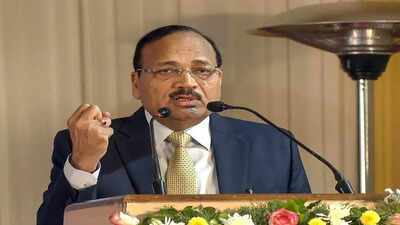
NEW DELHI: “The most difficult part for a constitutional court is to give a ruling whether a centuries-old belief of millions of devotees is right or wrong,” said CJI Surya Kant on Wednesday as the nine-judge constitution bench under him continued hearings on whether the court can be arbiter on faith-related matters, reports Dhananjay Mahapatra.Justice M M Sundresh empathised with CJI’s argument: “That too without hearing the views of those millions of devotees and purely based on the plea of the PIL petitioners, state and religious organisations.”The remarks came as CPM-controlled Kerala govt’s temple administration arm in Travancore Devaswom Board on Wednesday said SC could not have struck down the centuries-old custom barring entry of menstruating age women into Sabarimala Ayyappa temple because it was integral to the deity’s character as a celibate (Naistika Brahmachari).Senior advocate A M Singhvi, on behalf of TDB, told a nine-judge bench that women of all ages could enter and worship Lord Ayyappa in more than 1,000 temples in India, but Sabarimala temple’s deity had unique attributes and manifestation.TDB recommended SC be extremely cautious while entertaining PILs by a few individuals inviting judicial intervention in matters of faith, belief and religion.Referring to the SC verdict on Sabarimala temple entry issue in 2018, Singhvi said, “Lord Ayyappa in Sabarimala is the only form of Ayyappa as the eternal Bhramacharya, that is ‘Naishtika Brahamachari’.”Explaining why the entry of fertile women in the age group of 10-50 years is barred in the temple, he said, “The very foundation of his prowess and fame is in his capacity as an eternal Brahmachari. All forms of female fertility and all practices of ‘Grhasthasrama’ have therefore to be scrupulously distanced from the intrinsic nature and identity of the deity.”Singhvi’s argument completed CPM’s political pirouette where they had gone from enthusiastically supporting the SC verdict in the Sabarimala case to opposing it with the same vigour. The reversal was prompted by a backlash, which resulted in CPM’s rout in the 2024 Lok Sabha polls.Faulting the 2018 SC judgment terming the norm exclusionary, Singhvi said, “This distancing and exclusion of fertile women with childbearing capacity thus has a direct nexus to the faith, belief and object for which the worshippers visit the deity and cannot remotely be construed to constitute exclusion on extraneous and irrelevant reasons.”TDB said this was not gender-exclusionary as females below the age of 10 and above 50 are permitted entry to Sabarimala temple. According to the centuries-old religious belief, “the maintenance of the purity of the idol/deity in the form of a Naishtika Brahmacharya is also a paramount object which is sought to be achieved”.Singhvi told the bench that the PILs, which enjoy a relaxed locus standi, should be discouraged in matters relating to religious rights.


