
BENGALURU: India’s first space mission for 2026 will launch a defence satellite built by the Defence Research and Development Organisation (DRDO), a satellite for ministry of external affairs (MEA) to be used by Nepal, test on-orbit refuelling technology of a Bengaluru-based startup, aside from 13 other satellites, including foreign ones from UK, France and Brazil.The launch of PSLV-C62 mission, Isro said, is scheduled for January 12 at 10.17 am from the first launch pad (FLP) of the Satish Dhawan Space Centre (SDSC) in Sriharikota. The main satellite the mission will launch is DRDO’s Anvesha, also called EOS-N1.EOS-N1 is designed to provide the Indian military with advanced, unprecedented surveillance advantages over adversaries. The hyperspectral imaging payload can analyse light in hundreds of wavelengths to identify the materials an object is made of, a capability beyond the human eye.While this satellite is expected to bridge the gap in strategic surveillance to some degree, the mission will also launch AyulSAT, built by Bengaluru’s OrbitAID Aerospace, which if successful will be the first step towards India demonstrating the crucial on-orbit refuelling technology which will have far-reaching benefits.OrbitAID founder and CEO Sakthikumar Ramachandran terms AayulSAT more than a mission. “…It’s the foundation of the on-orbit economy,” he says, while the company says: “Years from now, this won’t be remembered as a launch but as the moment India made space serviceable. From India to the world!”A third important satellite will be Munal, built by Nepal’s Antharkshya Pratishtan with help from India’s ministry of external affairs (MEA). It is intended to carry an Earth observation payload to support environmental monitoring and capacity building, marking another step in Nepal’s entry into space-based applications.13 More SatellitesAside from these three, the mission will put into orbit 13 more satellites, including five — CGUSAT, DSUSAT, MOI-1, LACHIT and DR-1 — by Indian startup Dhruva Space. They will demonstrate or validate multiple technologies, including indigenous satellite bus capabilities and subsystems, communication and payload subsystems in low Earth orbit, multi-payload integration and operational performance of larger CubeSat platforms, basic satellite operations and communication links, etc.Foreign satellites on the mission include five satellites by Brazil’s AlltoSpace, Theos-2 from SSTL, UK, and KID Capsule by RIDE, France. The five satellites from Brazil are EduSat, Uaisat, Galaxy Explorer, Orbital Temple, and Aldebaran-1. The last is a CubeSat called Sanskarsat by Laxman Gyanpith, India. All satellites have been contracted through Space PSU NewSpace India Limited (Nsil), the commercial arm of the department of space.About the AuthorChethan KumarChethan Kumar is a Senior Assistant Editor with the Times of India. Aside from specialising in Space & Science, he has reported extensively on varied topics, with special focus on defence, policy and data stories. He has covered multiple elections, too. As a young democracy grows out of adolescence, Chethan feels, there are reels of tales emerging which need to be captured. To do this, he alternates between the mundane goings-on of the Common Man and the wonder-filled worlds of scientists and scamsters, politicians and soldiers. In a career spanning nearly 18 years, he has reported from multiple datelines — Houston, Florida, Kochi, Hyderabad, Chennai, Sriharikota (AP), NH-1 (J&K Highway), New Delhi, Ahmedabad, Raichur, Bhatkal, Mysuru, Chamarajanagar, to name a few — but is based out of Bengaluru, India’s science capital that also hosts the ISRO HQ.Read MoreEnd of ArticleFollow Us On Social MediaVideosImran Khan’s Family Stages Prayer Protest After Being Barred From Meeting Him At Adiala JailImran Khan’s Sister Aleema, PTI Members Hold Prayers Outside Adiala Jail After Meet DeniedTharoor Flags UN Charter Violations, Voices Concern Over US Action In VenezuelaUS Issues Blunt Warning To Indian Students: Breaking Laws May Cost Visas, Careers And Future DreamsCongress-BJP Tie-Up Claims In Ambernath Create Rift, Put Mahayuti Alliance Under Fresh Strain“Worst Kind of Discrimination in PoJK”: UKPNP Chairman Flags Deepening CrisisNo Compromise On Terror: PM Modi, Benjamin Netanyahu Reaffirm India Israel Strategic PartnershipOwaisi Slams MCD Demolition, Says Turkman Gate Land Fully Belongs To WaqfNehru Catered To Liaquat Ali Khan, Ignored Somnath History: BJP MP Sudhanshu TrivediUS FARA Filings Expose How Pakistan Lobbied Washington To Somehow Stop India’s Operation Sindoor123PhotostoriesWinter Special: How to make traditional Besan Ka Sheera at home5 adorable-looking animals that are surprisingly deadly5 red flags people often ignore in friendships (But shouldn’t!)6 classic non-vegetarian Cutlets to enjoy during winter monthsVijay’s ‘Jana Nayagan’ to Prabhas’ ‘The Raja Saab’: Biggest South releases for Pongal 2026Can you guess the temples and places featured on INR 10, 20, 50, 100, 200 and 500 currency notes?How to add smoky flavour to winter dishes without using a tandoor at home”I just read somewhere that 20% of American meals are consumed in a car!” Sadhguru shares tips on the right way to eat foodRepublic Day 2026 long weekend travel ideas from Delhi-NCR; places to go, things to doMumbai’s busiest suburban corridor on Western Railway is set for major safety upgrade: What we know123Hot PicksBudget 2026Venezuela NewsGold rate todayStock Market TodayCigarette price hikePublic holidays January 2026Bank Holidays JanuaryTop TrendingMLB Trade RumorsTommy Fleetwood and Clare Fleetwood Net WorthTravis KelceTaylor SwiftJimmie Johnson Net WorthWipro Work From Office RuleMustafizur RahmanGreenland RowVenezuela Presidential Palace GunfireHouse GOP members
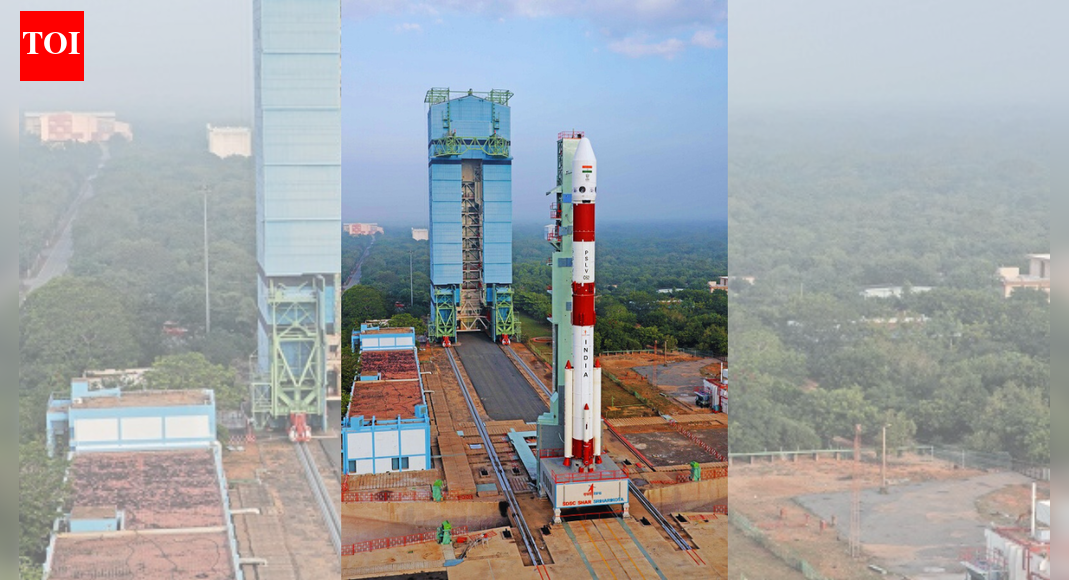
BENGALURU: India’s first space mission for 2026 will launch a defence satellite built by the Defence Research and Development Organisation (DRDO), a satellite for ministry of external affairs (MEA) to be used by Nepal, test on-orbit refuelling technology of a Bengaluru-based startup, aside from 13 other satellites, including foreign ones from UK, France and Brazil.The launch of PSLV-C62 mission, Isro said, is scheduled for January 12 at 10.17 am from the first launch pad (FLP) of the Satish Dhawan Space Centre (SDSC) in Sriharikota. The main satellite the mission will launch is DRDO’s Anvesha, also called EOS-N1.EOS-N1 is designed to provide the Indian military with advanced, unprecedented surveillance advantages over adversaries. The hyperspectral imaging payload can analyse light in hundreds of wavelengths to identify the materials an object is made of, a capability beyond the human eye.While this satellite is expected to bridge the gap in strategic surveillance to some degree, the mission will also launch AyulSAT, built by Bengaluru’s OrbitAID Aerospace, which if successful will be the first step towards India demonstrating the crucial on-orbit refuelling technology which will have far-reaching benefits.OrbitAID founder and CEO Sakthikumar Ramachandran terms AayulSAT more than a mission. “…It’s the foundation of the on-orbit economy,” he says, while the company says: “Years from now, this won’t be remembered as a launch but as the moment India made space serviceable. From India to the world!”A third important satellite will be Munal, built by Nepal’s Antharkshya Pratishtan with help from India’s ministry of external affairs (MEA). It is intended to carry an Earth observation payload to support environmental monitoring and capacity building, marking another step in Nepal’s entry into space-based applications.
13 More Satellites
Aside from these three, the mission will put into orbit 13 more satellites, including five — CGUSAT, DSUSAT, MOI-1, LACHIT and DR-1 — by Indian startup Dhruva Space. They will demonstrate or validate multiple technologies, including indigenous satellite bus capabilities and subsystems, communication and payload subsystems in low Earth orbit, multi-payload integration and operational performance of larger CubeSat platforms, basic satellite operations and communication links, etc.Foreign satellites on the mission include five satellites by Brazil’s AlltoSpace, Theos-2 from SSTL, UK, and KID Capsule by RIDE, France. The five satellites from Brazil are EduSat, Uaisat, Galaxy Explorer, Orbital Temple, and Aldebaran-1. The last is a CubeSat called Sanskarsat by Laxman Gyanpith, India. All satellites have been contracted through Space PSU NewSpace India Limited (Nsil), the commercial arm of the department of space.


