
BENGALURU: Bengaluru-based space startup GalaxEye placed its first commercial satellite — Drishti — in orbit aboard SpaceX’s Falcon-9 rocket on Sunday. Terming it the “world’s first OptoSAR satellite”, the firm said the launch was a milestone in the advancement of Earth observation technologies and reinforcing India’s growing capabilities in the global space sector.“Weighing 190kg, Mission Drishti is India’s largest privately developed Earth observation satellite. It is the first satellite globally to integrate Electro-Optical (EO) and Synthetic Aperture Radar (SAR) sensors into a single operational platform, enabling all-weather, day-and-night imaging capabilities,” the firm said.Drishti, which can “see” through clouds, darkness and bad weather while also capturing conventional optical imagery, carries what the company calls a “SyncFused OptoSAR” payload, combining electro-optical imaging and synthetic aperture radar (SAR) on a single platform. Optical satellites provide conventional high-resolution images but are affected by cloud cover and darkness. Radar satellites, on the other hand, can operate day and night and penetrate clouds, smoke and rain, though their imagery is harder to interpret.By synchronising and combining both streams of data, GalaxEye says the satellite can generate more consistent and usable imagery for users on the ground.The spacecraft is expected to support applications ranging from border surveillance and defence monitoring to disaster response, agriculture, infrastructure planning and insurance assessment. During floods, cyclones or landslides, for instance, radar imaging can continue functioning even when cloud cover prevents optical satellites from capturing images.“Another key feature onboard is artificial intelligence processing powered by Nvidia’s Jetson Orin computing platform. Instead of transmitting vast quantities of raw imagery back to Earth for analysis, parts of the processing will happen directly in orbit. The idea is to reduce the time taken to convert satellite imagery into actionable information,” GalaxEye co-founder and CEO Suyash Singh told TOI.GalaxEye says the satellite can deliver imagery at a resolution of 1.5 metres and revisit locations globally every seven to ten days. The spacecraft, roughly the size of a compact refrigerator, also carries a deployable antenna spanning about three-and-a-half metres.The company had earlier tested its imaging systems through nearly 500 aerial sorties involving drones, Cessna aircraft and high-altitude platforms, besides flying an earlier payload aboard an Isro PSLV mission under the POEM platform.Interest in the project has already emerged from both defence and civilian agencies. The company has said discussions have taken place with multiple Indian government departments, including defence and agriculture ministries, while agencies such as the Defence Space Agency, Indian Air Force, Army and Navy have been tracking the programme.GalaxEye has also signed distribution partnerships across more than 20 countries. Following Drishti’s launch, the startup plans to build a larger constellation of 8 to 12 satellites over the next four years, with future versions targeting even sharper imagery.About the AuthorChethan KumarChethan Kumar is a Senior Assistant Editor with the Times of India. Aside from specialising in Space & Science, he has reported extensively on varied topics, with special focus on defence, policy and data stories. He has covered multiple elections, too. As a young democracy grows out of adolescence, Chethan feels, there are reels of tales emerging which need to be captured. To do this, he alternates between the mundane goings-on of the Common Man and the wonder-filled worlds of scientists and scamsters, politicians and soldiers. In a career spanning nearly 18 years, he has reported from multiple datelines — Houston, Florida, Kochi, Hyderabad, Chennai, Sriharikota (AP), NH-1 (J&K Highway), New Delhi, Ahmedabad, Raichur, Bhatkal, Mysuru, Chamarajanagar, to name a few — but is based out of Bengaluru, India’s science capital that also hosts the ISRO HQ.Read MoreEnd of ArticleFollow Us On Social MediaVideosVietnam President To Lam’s First State Visit To India: What It Means For New Delhi-Hanoi TiesPune Rape-Murder Case: CM Fadnavis Assures Fast-Track Trial, Targets Oppn Over ‘Cash-for-Transfer’Nishant Kumar Begins Sadbhav Yatra from Patna, Says Aim is Worker Outreach & Public ConnectIAF Rescues Two Children Stranded On Water Tank in Siddharthnagar, UP Using Mi-17 HelicopterMassive Fire in Delhi’s Vivek Vihar Building, 9 Dead as Rescue Operations Continue in ShahdaraPune Child Rape-Murder Sparks Protests, Highway Blocked Near Navale Bridge‘Reminder To Those Who Misuse State Power’: Pawan Khera Jabs Assam CM After SC Anticipatory BailUS Retains India on Special 301 Priority Watch List, Flags Patent Regime, Enforcement GapsCourt Rejects Nida Khan’s Anticipatory Bail in TCS Nashik Harassment and Conversion CaseCensus 2027 To Begin In UP From May 2026 With 5 Lakh Personnel, & Caste Data Inclusion123Photostories5 offbeat beaches in Maharashtra perfect for a peaceful holiday”My moong dal chilla sticks to the pan”: 5 easy fixes to make crispy and non-sticky chillaBest ways to mole- and rat-proof your home and gardenVictoria Beckham and David Beckham: All about the high-profile romance, cheating rumours, renewed vows and moreDiljit Dosanjh fashion: 5 iconic looks that broke style rulesFrom firing near Kapil Sharma’s Kap’s Cafe to Bishnoi gang’s warning: All you need to know about the ongoing controversyThe 10-minute smart freezer tricks you will wish you knew before every vacationAkshay Kumar, Sonakshi Sinha, Ajay Devgn, Ranbir Kapoor: Celebs who love pulling pranks on co-stars17-year-old ‘Young Wildlife Photographer of the Year 2025’: 7 stunning photosPrincess Charlotte celebrates 11th birthday: 5 interesting facts about the Princess who’s an equal in the league of Queen Elizabeth II123Hot PicksAssam key constituenciesKerala key constituenciesPuducherry election resultsTamil Nadu constituenciesAjay Pal SharmaBengal Poll RecordHimanta Biswa SarmaTop TrendingUS Germany relationsBank Holiday MayVande Bharat expressLPG cylinder price hikeMumbai missing linkPetrol, Diesel, LPG priceCBSE Class 12th ResultNEET 2026: Exam-day guideBSE AP SSC Class 10th ResultIPL Orange Cap

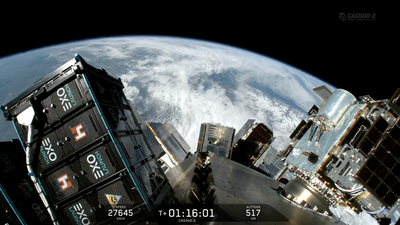
BENGALURU: Bengaluru-based space startup GalaxEye placed its first commercial satellite — Drishti — in orbit aboard SpaceX’s Falcon-9 rocket on Sunday. Terming it the “world’s first OptoSAR satellite”, the firm said the launch was a milestone in the advancement of Earth observation technologies and reinforcing India’s growing capabilities in the global space sector.“Weighing 190kg, Mission Drishti is India’s largest privately developed Earth observation satellite. It is the first satellite globally to integrate Electro-Optical (EO) and Synthetic Aperture Radar (SAR) sensors into a single operational platform, enabling all-weather, day-and-night imaging capabilities,” the firm said.Drishti, which can “see” through clouds, darkness and bad weather while also capturing conventional optical imagery, carries what the company calls a “SyncFused OptoSAR” payload, combining electro-optical imaging and synthetic aperture radar (SAR) on a single platform. Optical satellites provide conventional high-resolution images but are affected by cloud cover and darkness. Radar satellites, on the other hand, can operate day and night and penetrate clouds, smoke and rain, though their imagery is harder to interpret.
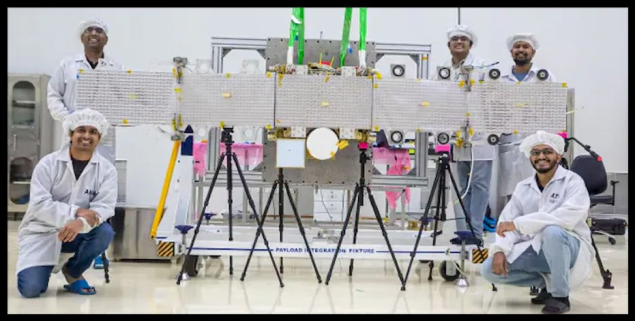
By synchronising and combining both streams of data, GalaxEye says the satellite can generate more consistent and usable imagery for users on the ground.The spacecraft is expected to support applications ranging from border surveillance and defence monitoring to disaster response, agriculture, infrastructure planning and insurance assessment. During floods, cyclones or landslides, for instance, radar imaging can continue functioning even when cloud cover prevents optical satellites from capturing images.“Another key feature onboard is artificial intelligence processing powered by Nvidia’s Jetson Orin computing platform. Instead of transmitting vast quantities of raw imagery back to Earth for analysis, parts of the processing will happen directly in orbit. The idea is to reduce the time taken to convert satellite imagery into actionable information,” GalaxEye co-founder and CEO Suyash Singh told TOI.GalaxEye says the satellite can deliver imagery at a resolution of 1.5 metres and revisit locations globally every seven to ten days. The spacecraft, roughly the size of a compact refrigerator, also carries a deployable antenna spanning about three-and-a-half metres.The company had earlier tested its imaging systems through nearly 500 aerial sorties involving drones, Cessna aircraft and high-altitude platforms, besides flying an earlier payload aboard an Isro PSLV mission under the POEM platform.Interest in the project has already emerged from both defence and civilian agencies. The company has said discussions have taken place with multiple Indian government departments, including defence and agriculture ministries, while agencies such as the Defence Space Agency, Indian Air Force, Army and Navy have been tracking the programme.GalaxEye has also signed distribution partnerships across more than 20 countries. Following Drishti’s launch, the startup plans to build a larger constellation of 8 to 12 satellites over the next four years, with future versions targeting even sharper imagery.


