
Amid a barrage of AI deepfakes, U Sudhakar Reddy of STOI looks at how celebrities and courts are taking recourse to existing laws to counter the menace and protect their rights As artificial intelligence (AI) usage gains traction so is the AI deepfakes menace. But celebrities, right from Tollywood to Bollywood film stars, are taking the bull by the horns, opting for the legal route to curb this menace.A string of civil suits filed recently by film actors like K Chiranjeevi and Akkineni Nagarjuna to Bollywood biggies like Amitabh Bachchan, Aishwarya Rai Bachchan and Anil Kapoor show India’s sharpening legal response to AI-driven deepfakes, counterfeit merchandising and pornographic scams, putting personality rights at the centre of the entertainment economy. Taking violations seriously, courts too have been issuing swift injunctions to curb deepfakes and unlicensed endorsements that mislead audiences and dilute personal brand value.COURTS FRAMING PERSONALITY AS PRIVACY AND PUBLICITY TOGETHERAcross jurisdictions, judges are treating unauthorized AI images, manipulated videos and counterfeit merchandise as both privacy and publicity violations. Recent orders include “John Doe” (unknown person) injunctions against unidentified online offenders andtakedown directions to platforms, recognising a celebrity’s persona as commercially valuable and instantly associated with the star in the minds of fans, causing irreparable harm if misused.In Hyderabad, a city civil court order on September 26, 2025, protected K Chiranjeevi’s name, image, voice and well-known sobriquets such as “Mega Star”, “Chiru”, “Annayya”, “Boss” from unauthorized exploitation by over 30 online entities. The injunction extends to AI-generated content and the Metaverse, ruling that no T-shirts, posters, and deepfake videos be sold under his name without his consent. The Hyderabad cybercrime police also registered a case against porn sites circulating deep fake videos of the actor.In Delhi, a 2025 order in favour of Akkineni Nagarjunarestrained dozens of obscene websites and merchandisers from using his “name, image, persona and voice”. The court relied on recent Delhi High Court (HC) precedents, including suits involving Amitabh Bachchan and Aishwarya Rai Bachchan, to order disabling of URLs and barring sale of merchandise bearing their likenesses.Where does consent end? The Hyderabad Biker’s Case But not all disputes are being raised by the film fraternity. A famous Hyderabad-based biker filed a suit in a local court after she discovered her photograph, originally given to a women riders’ group for promoting International Female Riders Day, was altered and allegedly used by an Indian bike firm for advertising without consent.Her image was allegedly manipulated to replace a Harley Davidson motorcycle with an Indian bike brand in the advertisement. The case, pending before an additional chief judge in a Ranga Reddy court, underscores how misuse of likeness affects everyone. The plaintiff’s original permission was for one event, but the image found its way into a corporate campaign, revealing how easily digital assets can be exploited without authorisation.IN ABSENCE OF A STATUTE, JUDGES RELY ON MIX OF LAWSLegal experts say though India has no specific laws for personality rights, courts are using constitutional privacy, intellectual property doctrines and information-technology and criminal provisions (identity theft, obscenity) to order removal of content and deter further misuse.The Supreme Court’s privacy jurisprudence, from R Rajagopal v Tamil Nadu in 1994 underpins this patchwork, while high courts have built a pragmatic framework through interim orders in series of suits filed by celebrities.Intellectual property (IP) expert Ashok Ram Kumar says personality rights cases have become an important tool for celebrities seeking to protect their identity from misuse, economic exploitation and loss of dignity caused by AI deepfakes.“As identity theft turns into a profitable digital enterprise, courts, though operating without a specific law, have started treating a celebrity’s identity as a form of IP. This helps prevent unauthorised use of their name, likeness or voice and paves the way for broader protection of individual identity in the future,” he says. Delhi HC has led in speed and scope, ordering fast takedowns of deepfakes and fake profiles while leaving room for bona fide speech like satire and fan pages. Other courts, including Madras HC, Hyderabad HC and Bombay HC, have passed similar, often ex parte, injunctions balancing a celebrity’s drawing power and livelihood against the public’s speech rights.About the AuthorU Sudhakar ReddySudhakar Reddy Udumula is the Editor (Investigation) at the Times of India, Hyderabad. Following the trail of migration and drought across the rustic landscape of Andhra Pradesh and Telangana, Sudhakar reported extensively on government apathy, divisive politics, systemic gender discrimination, agrarian crisis and the will to survive great odds. His curiosity for peeking behind the curtain triumphed over the criminal agenda of many scamsters in the highest political and corporate circles, making way for breaking stories such as Panama Papers Scam, Telgi Stamp Paper Scam, and many others. His versatility in reporting extended to red corridors of left-wing extremism where the lives of security forces and the locals in Maoist-affected areas were key points of investigation. His knack for detail provided crucial evidence of involvement from overseas in terrorist bombings in Hyderabad.Read MoreEnd of ArticleFollow Us On Social MediaVideosBJP’s Succession Script Repeats: Why Nitin Nabin Is Working President, And Not Nadda’s ReplacementEnd Of MGNREGA? What VB–G Ram G Means For Rural Workers, Farmers And Viksit Bharat PlanFrom Missiles To Torpedoes, DRDO Outlines India’s Big Defence Push For Near-Term Battlefield EdgePM Modi Begins Jordan, Ethiopia, Oman Tour To Boost Ancient Ties, Expand India’s Global South RoleIndian Diaspora Members Prepare Cultural Performances Ahead Of PM Modi’s Jordan VisitFrom Power Cuts To 500 GW Grid, India Emerges As Global Data Centre Hub Under Modi: Piyush GoyalCong’s ‘Modi Teri Kabr Khudegi’ Slogan Sparks Uproar, NDA Seeks Apology As Parliament Grinds To Halt”Abusing PM Does Not Befit” Rijiju Seeks apology From Congress Over Anti-Modi SlogansYogi Adityanath Targets Nehru Over Kashmir, Links Historic Blunder To India’s Long Terror CrisisWho Is Sajid And Naveed Akram? Bondi Beach Attacker Father-Son Duo Shame Pakistan With Terror Attack123Photostories5 pet fish that change colour and why it happens6 Traditional egg curries from different parts of the countryAnkita Lokhande and Vicky Jain’s love story: From being close friends to getting remarried in EuropeUttarakhand Govt announces snow leopard tour to boost winter tourism; 5 other Indian spots to see the Big CatMrunal Thakur’s colourful Paithani saree is a bold love letter to Maharashtrian cultureFrom ethnic glam to chic streetwear: ‘Bigg Boss 19’ fame Farrhana Bhatt’s fashion diaryWhat is binge eating disorder and how to fix it?9 Auspicious Symbols According To Your Birth Date‘Housefull 5’, ‘Sikandar’, ‘Nadaaniyan’: 2025 films that struggled to make an impact at the box office7 animals whose names begin with the letter V123Hot PicksBondi beach attackCorona RemediesJetBlue flight VenezuelaGold rate todaySilver rate todayPublic Holidays NovemberBank Holidays NovemberTop TrendingDelhi SchoolMLB Trade RumorsNFL PlayoffPhilip River KidsLuka Modric and Vanja Bosnic Net WorthBoston Red SoxDelhi AQILebron JamesDelarum PouyabaharWho is Paige Shiver
As artificial intelligence (AI) usage gains traction so is the AI deepfakes menace. But celebrities, right from Tollywood to Bollywood film stars, are taking the bull by the horns, opting for the legal route to curb this menace.A string of civil suits filed recently by film actors like K Chiranjeevi and Akkineni Nagarjuna to Bollywood biggies like Amitabh Bachchan, Aishwarya Rai Bachchan and Anil Kapoor show India’s sharpening legal response to AI-driven deepfakes, counterfeit merchandising and pornographic scams, putting personality rights at the centre of the entertainment economy.
Taking violations seriously, courts too have been issuing swift injunctions to curb deepfakes and unlicensed endorsements that mislead audiences and dilute personal brand value.COURTS FRAMING PERSONALITY AS PRIVACY AND PUBLICITY TOGETHERAcross jurisdictions, judges are treating unauthorized AI images, manipulated videos and counterfeit merchandise as both privacy and publicity violations. Recent orders include “John Doe” (unknown person) injunctions against unidentified online offenders andtakedown directions to platforms, recognising a celebrity’s persona as commercially valuable and instantly associated with the star in the minds of fans, causing irreparable harm if misused.In Hyderabad, a city civil court order on September 26, 2025, protected K Chiranjeevi’s name, image, voice and well-known sobriquets such as “Mega Star”, “Chiru”, “Annayya”, “Boss” from unauthorized exploitation by over 30 online entities.
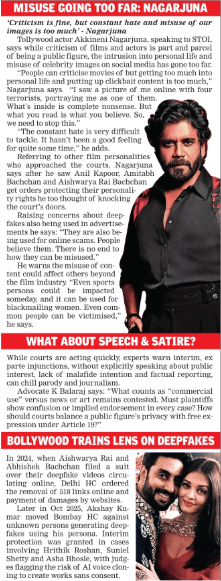
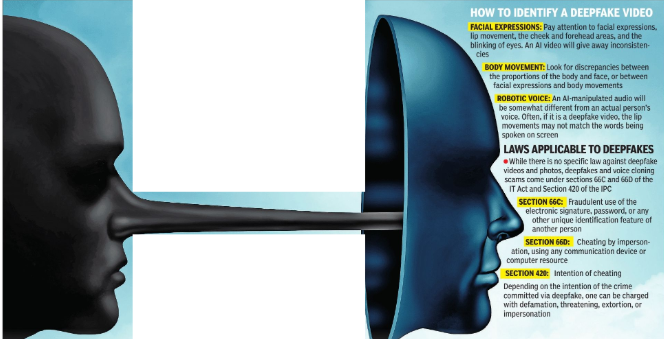
The injunction extends to AI-generated content and the Metaverse, ruling that no T-shirts, posters, and deepfake videos be sold under his name without his consent. The Hyderabad cybercrime police also registered a case against porn sites circulating deep fake videos of the actor.In Delhi, a 2025 order in favour of Akkineni Nagarjunarestrained dozens of obscene websites and merchandisers from using his “name, image, persona and voice”. The court relied on recent Delhi High Court (HC) precedents, including suits involving Amitabh Bachchan and Aishwarya Rai Bachchan, to order disabling of URLs and barring sale of merchandise bearing their likenesses.Where does consent end? The Hyderabad Biker’s Case But not all disputes are being raised by the film fraternity. A famous Hyderabad-based biker filed a suit in a local court after she discovered her photograph, originally given to a women riders’ group for promoting International Female Riders Day, was altered and allegedly used by an Indian bike firm for advertising without consent.Her image was allegedly manipulated to replace a Harley Davidson motorcycle with an Indian bike brand in the advertisement. The case, pending before an additional chief judge in a Ranga Reddy court, underscores how misuse of likeness affects everyone. The plaintiff’s original permission was for one event, but the image found its way into a corporate campaign, revealing how easily digital assets can be exploited without authorisation.IN ABSENCE OF A STATUTE, JUDGES RELY ON MIX OF LAWSLegal experts say though India has no specific laws for personality rights, courts are using constitutional privacy, intellectual property doctrines and information-technology and criminal provisions (identity theft, obscenity) to order removal of content and deter further misuse.The Supreme Court’s privacy jurisprudence, from R Rajagopal v Tamil Nadu in 1994 underpins this patchwork, while high courts have built a pragmatic framework through interim orders in series of suits filed by celebrities.Intellectual property (IP) expert Ashok Ram Kumar says personality rights cases have become an important tool for celebrities seeking to protect their identity from misuse, economic exploitation and loss of dignity caused by AI deepfakes.“As identity theft turns into a profitable digital enterprise, courts, though operating without a specific law, have started treating a celebrity’s identity as a form of IP. This helps prevent unauthorised use of their name, likeness or voice and paves the way for broader protection of individual identity in the future,” he says.

Delhi HC has led in speed and scope, ordering fast takedowns of deepfakes and fake profiles while leaving room for bona fide speech like satire and fan pages. Other courts, including Madras HC, Hyderabad HC and Bombay HC, have passed similar, often ex parte, injunctions balancing a celebrity’s drawing power and livelihood against the public’s speech rights.


