
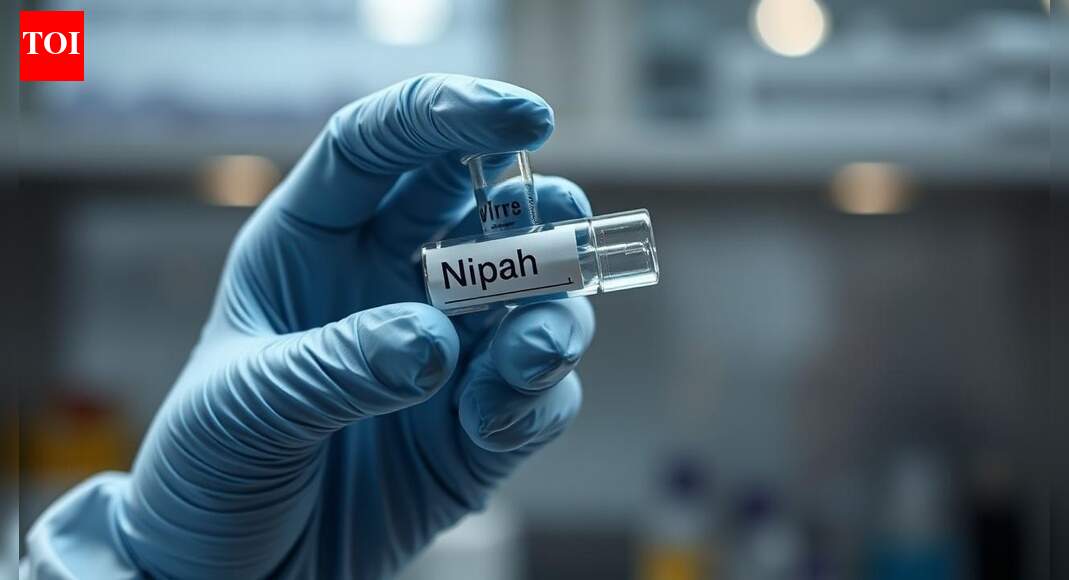
AI-generated image NEW DELHI: A potential vaccine against the deadly Nipah virus has shown encouraging safety and immune responses in an early human trial, according to a study published in The Lancet, offering fresh hope against a disease that has repeatedly caused fatal outbreaks in India and neighbouring countries.The World Health Organization has listed Nipah virus among its priority pathogens for accelerated research, citing its epidemic potential, high fatality rates and the absence of any approved vaccine or specific treatment.The phase 1 trial evaluated a recombinant soluble glycoprotein G vaccine (HeV-sG-V), originally developed against the closely related Hendra virus. The study was conducted at a single centre in the United States and enrolled 192 healthy adults aged 18–49 years in a randomised, observer-blind, placebo-controlled design.Safety findings were reassuring. Mild to moderate injection-site pain was the most commonly reported side effect, and no serious adverse events, hospitalisations or deaths were recorded during the trial.Crucially, the study demonstrated a clear dose-dependent immune response. While a single dose failed to generate sufficient immunity, two doses produced strong neutralising antibodies against both major strains of the Nipah virus. The strongest responses were seen in participants who received two 100-microgram doses 28 days apart, with antibody levels rising sharply within a week of the second dose.Researchers noted that antibodies were induced within one month of vaccination and were more durable with a two-dose regimen—an important feature for both preventive use and rapid deployment during outbreaks.India has faced repeated Nipah outbreaks, beginning with West Bengal in 2001 and 2007, and more recently in Kerala. The first major outbreak in Kerela in 2018 proved especially lethal, with 17 deaths among 18 confirmed cases, and subsequent flare-ups have kept health authorities on constant alert. Two deathS occurred there in 2025 also. The study was funded by the Coalition for Epidemic Preparedness Innovations While larger trials will be needed to establish effectiveness, experts say the findings mark a significant step toward developing the world’s first effective vaccine against one of the most lethal emerging viral threats.About the AuthorAnuja JaiswalAnuja Jaiswal is a Senior Assistant Editor at The Times of India, with an impressive 18-year career in narrative journalism. She specializes in health and heritage reporting, expertly simplifying complex health information to make it engaging and understandable for readers. Her deep dives into heritage topics are well-researched, resulting in captivating narratives that resonate with her audience. Over the years, she has worked in Chandigarh, Chhattisgarh and West UP, gaining diverse on-ground experience that shapes her storytelling.Read MoreEnd of ArticleFollow Us On Social MediaVideosBluebird Lift-Off Shows ISRO Commercial Power As Nambi Narayanan Calls LVM-3 Game Changer MoveYunus Govt Takes Responsibility Of Dipu Das Family After India Erupts Over Hindu Man’s LynchingOsman Hadi’s Brother Accuses Yunus Regime Of Murder Plot To Defer Bangladesh Polls Scheduled in FebPak Leader Exposes Munir’s Kabul Hypocrisy As Sharif’s Party Threatens India Over Bangladesh CrisisDRDO Completes User Trials Of Akash-NG Air Defence Missile System, Ready For InductionBangladesh Slipping Into Pakistan’s Pocket: Sushant Sareen Warns India Of New Eastern Security FrontISRO Launches Heaviest-Ever Satellite BlueBird Block-2 Onboard LVM3 RocketBJP Hits Out At Mamata Govt For Stopping Demonstrations Over Bangladesh ViolenceDelhi HC Grants Bail To Kuldeep Sengar; Victim’s Sister Says ‘Put Us In Jail To Keep Us Safe’India Summons Bangladesh High Commissioner Over Violence Against Hindus, Protests Continue123PhotostoriesWinter Special: How to make Kolkata-Style Egg Roll at homeFrom fear to fatality: Ganeshkhind Road exposes Pune’s pedestrian crisisJudi Dench to Bruce Willis: Heartbreaking reasons film legends had to QUIT actingFrom playground to powerhouse: Chennai’s Royapuram gets Rs 1.5cr sports complex2026 Messages for every birth date you need to knowTop AIIMS doctor lists 4 healthiest fruits and the right way to consume them6 teas that help support lung health in high AQIWinter Special: How to make Indian Railway–style Cream of Tomato Soup at homeNutrition fact of the day: How bok choy (pak choi) supports gut, bone and heart healthAhaan Panday and Aneet Padda to Dhanush and Kriti Sanon: Best onscreen jodis of 2025123Hot PicksUAE WeatherPAN-Aadhaar linkingKarbi Anglong CurfewGold rate todaySilver rate todayPublic Holidays DecemberBank Holidays DecemberTop TrendingShane Bieber and Kara Net WorthLIC Home Loan Interest RateMunetaka MurakamiConnor Bedard Net WorthAleksander Barkov GirlfriendAuston MatthewsJake GuentzelTrey Yesavage and Taylor Fricks EngagementJade Cargill and Brandon Net WorthMax Holloway Net Worth

NEW DELHI: A potential vaccine against the deadly Nipah virus has shown encouraging safety and immune responses in an early human trial, according to a study published in The Lancet, offering fresh hope against a disease that has repeatedly caused fatal outbreaks in India and neighbouring countries.The World Health Organization has listed Nipah virus among its priority pathogens for accelerated research, citing its epidemic potential, high fatality rates and the absence of any approved vaccine or specific treatment.The phase 1 trial evaluated a recombinant soluble glycoprotein G vaccine (HeV-sG-V), originally developed against the closely related Hendra virus. The study was conducted at a single centre in the United States and enrolled 192 healthy adults aged 18–49 years in a randomised, observer-blind, placebo-controlled design.Safety findings were reassuring. Mild to moderate injection-site pain was the most commonly reported side effect, and no serious adverse events, hospitalisations or deaths were recorded during the trial.Crucially, the study demonstrated a clear dose-dependent immune response. While a single dose failed to generate sufficient immunity, two doses produced strong neutralising antibodies against both major strains of the Nipah virus. The strongest responses were seen in participants who received two 100-microgram doses 28 days apart, with antibody levels rising sharply within a week of the second dose.Researchers noted that antibodies were induced within one month of vaccination and were more durable with a two-dose regimen—an important feature for both preventive use and rapid deployment during outbreaks.India has faced repeated Nipah outbreaks, beginning with West Bengal in 2001 and 2007, and more recently in Kerala. The first major outbreak in Kerela in 2018 proved especially lethal, with 17 deaths among 18 confirmed cases, and subsequent flare-ups have kept health authorities on constant alert. Two deathS occurred there in 2025 also. The study was funded by the Coalition for Epidemic Preparedness Innovations While larger trials will be needed to establish effectiveness, experts say the findings mark a significant step toward developing the world’s first effective vaccine against one of the most lethal emerging viral threats.


