
After China, US unveils ultra long range air-to-air missile — where does India stand in the race

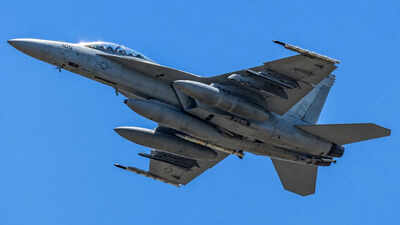
The AIM‑260 Joint Advanced Tactical Missile (JATM) represents a major leap in U.S. air‑to‑air weaponry, designed to counter the long‑range threat posed by China’s PL‑15 and PL‑17. First revealed in 2019, though development likely began around 2017, the missile has now been photographed in live testing on a Navy F/A‑18F at Eglin AFB in May 2026, according to Rome based The Aviationist.Built by Lockheed Martin, the AIM‑260 features a clean, finless body optimized for stealth fighter bays, a multi‑pulse solid rocket motor, and speeds exceeding Mach 5. Its expected range surpasses the 200 kilometers mark, with a minimum threshold of 190 kilometers, significantly outmatching the 160 km AIM‑120D variant of the AMRAAM it is set to replace. The missile retains AMRAAM’s dimensions for compatibility with F‑22, F/A‑18, and eventually F‑35 and unmanned Collaborative Combat Aircraft. The 200 km range, puts the missile in the range of the Meteor missile that arms the Indian Air Force’s Rafale fighters.
The US Air Force and Navy plan to spend $15.6 billion on development and production, with funding rising sharply through 2027. This weapon signals America’s entry into ultra‑long‑range beyond‑visual‑range warfare, echoing the Navy’s pioneering role with the AIM‑9 Sidewinder seventy years earlier, according to the same report.India too is likely to bring into service the Astra Mk-2. This missile too will have a range of 200 km and is expected to enter service either this year or in 2027. The air force plans to induct as many as 700 of these missiles for the Sukhoi-30 and Tejas fleets. Simultaneously, the Defence Research and Development Organisation (DRDO) is working to develop the Astra-Mk3 or the Gandiva missile. This missile will have a range of 350 km and will be based on the Solid Fuel Ducted Ramjet (SFDR) technology that is similar to the technology based on the European Meteor missile. The Astra family of missiles are expected to replace Russian, French and European air-to-air missiles in Indian service.China too has ultra long range air-to-air missiles. These missiles are the PL-15,with a range of 180 km, the PL-17 and the PL-21 have a range of 400 km according to the London based International Institute for Strategic Studies. India recovered PL-15s fired by the Pakistani air force on Indian aircraft during Operation Sindoor. The missiles failed to hit their targets and the nearly intact missiles were recovered on the ground.The quiet unveiling of the AIM‑260 JATM demonstrates that the United States is closing the range gap with China’s PL‑15 and PL‑17, while India is simultaneously pursuing its own indigenous solutions. The Astra Mk‑2, with a 200 km reach, and the upcoming Astra Mk‑3 Gandiva, projected at 350 km using solid fuel ducted ramjet technology, place India firmly in the same league of ultra‑long‑range air‑to‑air missiles. This trajectory reduces dependence on foreign suppliers and ensures parity with both American and Chinese advancements.


