
A groundbreaking study from New Delhi has shed light on acne scars, showing they can extend nearly 2 millimeters beneath the skin’s surface. This new perspective urges a re-evaluation of conventional treatments, which often fail to address deeper scars adequately. NEW DELHI: If you’ve spent money on creams, peels or lasers and your acne scars still refuse to fade, the issue may not be the treatment — it may be how deep the scars actually go.A new study by doctors at Delhi’s ABVIMS and Ram Manohar Lohia Hospital shows that acne scars are far more than a surface problem. They can run nearly 2 millimetres deep into the skin — deeper than many treatments are designed to reach.That is why results are often uneven. The research looked at different types of scars under the microscope. The narrow, pin-like ice-pick scars turned out to be the deepest. Broader boxcar and wavy rolling scars were slightly less deep, but still extended well below the upper layers of skin.Explaining the findings, one of the authors, Dr Kabir Sardana from RML’s dermatology department said, “We did a pilot study to assess how deep acne scars are as part of a thesis. Israel Iran WarUS-Israel-Iran War News Live Updates: Iran vows tit-for-tat strike after Trump’s 48hr ultimatum, threatens to hit US-Israel energy facilityIf America strikes us, we should attack Indian cities like Delhi and Mumbai: Ex-Pak envoyAfter Trump’s 48-hour ultimatum, Iran says ships can pass Hormuz Strait — except ‘enemy’ vesselsWe found that some scars are deep like ice picks and may not respond to lasers.”This depth mismatch is crucial. Many commonly used treatments work only on the top layers. If they don’t reach the base of the scar, the dent remains — even if the surface looks temporarily smoother.Dr Sardana added that the findings have practical implications: “One needs to know and tell patients that some scars may not completely go with even lasers. Also, laser dose can be tweaked to achieve a depth that reaches deep scars.”The study also shows that scarred skin is not just “damaged” — it is structurally altered. Collagen becomes disorganised, elastic fibres shrink, and normal structures like hair follicles and oil glands are largely lost. There are even signs of ongoing inflammation, suggesting scars are not fully inactive. The skin doesn’t return to how it was before. It heals by forming new tissue in a different way, which is why scars or uneven marks can appear, said doctors.The findings are particularly relevant for Indians and others with darker skin, where acne scarring is common and treatment carries a higher risk of pigmentation.Dr Abhinav Bansal from RML said that there is no one-size-fits-all fix. Each scar type needs a different approach, and treatment must go as deep as the scar itself.So if your acne scars aren’t improving, it may not be about trying harder — it may be about treating smarter.About the AuthorAnuja JaiswalAnuja Jaiswal is a Senior Assistant Editor at The Times of India, with an impressive 18-year career in narrative journalism. She specializes in health and heritage reporting, expertly simplifying complex health information to make it engaging and understandable for readers. Her deep dives into heritage topics are well-researched, resulting in captivating narratives that resonate with her audience. Over the years, she has worked in Chandigarh, Chhattisgarh and West UP, gaining diverse on-ground experience that shapes her storytelling.Read MoreEnd of ArticleFollow Us On Social MediaVideosIndian National Sustains Injury As Missile Debris Falls In Abu Dhabi’S Al ShawamekhIndia Replacing China? US-Based Journalist Fareed Zakaria’s Big Statement On Global Power ShiftFirst Dialogue Since Clashes: Manipur CM Meets Kuki-Zo Council To Ease Tensions‘Hit Delhi, Mumbai If US Attacks Pak’: Ex-Pak Envoy’s Bizarre Remark Sparks OutragePakistan Tops Global Terrorism Index With Highest Death Toll, Raises Global Alarm‘Was Tortured’: Wife Of Deceased PWC Official Seeks Bhullar’s Arrest Before Post-MortemSanjay Raut Fires ‘Jhola Uthaiye’ Salvo At Narendra Modi Over inflation, Rupee CrashFirst China-Bound Russian Oil Tanker Reaches India After US Sanctions WaiverNarendra Modi Reviews Energy Security As Middle East Crisis Deepens8931 Days In Office: PM Modi Becomes Longest-Serving Head Of Govt Overtaking Pawan Kumar Chamling123PhotostoriesWhat is Odisha’s Pakhala Bhaat and 5 similar fermented rice dishes enjoyed in other Indian statesMind-body Monday: Why you feel drained after social interactions (and it’s not just in your head)Why you wake up with a dry mouth or bad breath: What it reveals about hydration, sleep, and metabolism, and how to fix itOTT crime shows basedon memoirs: ‘Khakee’, ‘Scoop’ and moreZombie movies you can’t miss on OTT: ‘Train to Busan’, ‘World War Z’ and moreAneet Padda’s showstopper look just rewrote office fashion rules5 foods to combine with eggs to boost protein content and the right way to consumeHow to grow Goddess Durga’s favourite aparajita flowers in your balcony garden10 lucky house names in Sanskrit that are vastu-aligned and attract positive energySimple and strong names for babies born in April123Hot PicksIran newsStock Market todayLaGuardia AirportGold rate todayIncome Tax CalculatorPublic holidays March 2026Bank Holidays MarchTop TrendingBSEB Class 12th ResultChikkamagaluru BridgeBengaluru MurderKochi Vaduthala Family IncidentBengaluru Pink MetroConor McGregor Next FightSilver Rate TodayHDFC Bank Share8th Pay CommissionPremium Petrol Price Hike

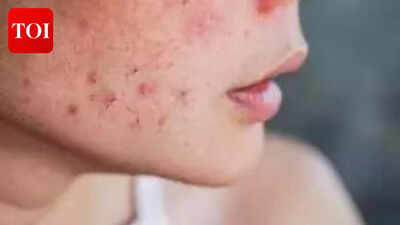
NEW DELHI: If you’ve spent money on creams, peels or lasers and your acne scars still refuse to fade, the issue may not be the treatment — it may be how deep the scars actually go.A new study by doctors at Delhi’s ABVIMS and Ram Manohar Lohia Hospital shows that acne scars are far more than a surface problem. They can run nearly 2 millimetres deep into the skin — deeper than many treatments are designed to reach.That is why results are often uneven. The research looked at different types of scars under the microscope. The narrow, pin-like ice-pick scars turned out to be the deepest. Broader boxcar and wavy rolling scars were slightly less deep, but still extended well below the upper layers of skin.Explaining the findings, one of the authors, Dr Kabir Sardana from RML’s dermatology department said, “We did a pilot study to assess how deep acne scars are as part of a thesis. We found that some scars are deep like ice picks and may not respond to lasers.”This depth mismatch is crucial. Many commonly used treatments work only on the top layers. If they don’t reach the base of the scar, the dent remains — even if the surface looks temporarily smoother.Dr Sardana added that the findings have practical implications: “One needs to know and tell patients that some scars may not completely go with even lasers. Also, laser dose can be tweaked to achieve a depth that reaches deep scars.”The study also shows that scarred skin is not just “damaged” — it is structurally altered. Collagen becomes disorganised, elastic fibres shrink, and normal structures like hair follicles and oil glands are largely lost. There are even signs of ongoing inflammation, suggesting scars are not fully inactive. The skin doesn’t return to how it was before. It heals by forming new tissue in a different way, which is why scars or uneven marks can appear, said doctors.The findings are particularly relevant for Indians and others with darker skin, where acne scarring is common and treatment carries a higher risk of pigmentation.Dr Abhinav Bansal from RML said that there is no one-size-fits-all fix. Each scar type needs a different approach, and treatment must go as deep as the scar itself.So if your acne scars aren’t improving, it may not be about trying harder — it may be about treating smarter.


