
NEW DELHI: Days before the Kerala assembly elections, the warning signs for the ruling Left Democratic Front (LDF) were already flashing — and they come from the ground up.The recent local body polls, often seen as a bellwether in the state, delivered a clear message: the Congress-led UDF has gained momentum, while the Left’s decade-long dominance shows signs of strain.In what effectively turned into a semi-final before the April 9 assembly polls, the UDF emerged as the principal gainer, winning four of the six municipal corporations and making sweeping gains across municipalities and panchayats. The LDF, in contrast, saw erosion in key urban strongholds, including long-held bastions like Kollam and Thrissur.The significance of these results goes beyond numbers. In Kerala’s political history, local body outcomes have often foreshadowed assembly verdicts, as seen in 2010 and 2020. Israel Iran WarUS-Israel-Iran War News Live Updates: Israel pounds Tehran as Iranians mark Nowruz; UAE, Kuwait defences respond to missile barrageTrump Rules Out Ceasefire: says US nears Iran war goals; signals wider military options’Enemy has been defeated’: Iran’s Mojtaba Khamenei claims victory over US, IsraelThis time, the trend suggests a more challenging road ahead for chief minister Pinarayi Vijayan, who is seeking an unprecedented third consecutive term.For a government that scripted history in 2021 by breaking the state’s pattern of alternating power, the script now appears less certain. With anti-incumbency quietly building, the opposition sensing an opening, and the BJP expanding its footprint, Kerala is shaping up for a far more competitive contest than the last election.Red flag for the Left?The recent local body polls in Kerala may offer more than just a snapshot of grassroots reality; they might signal shifting voter sentiment ahead of the assembly elections.In civic polls that resembled a referendum ahead of the assembly elections, the Congress-led alliance emerged as the principal gainer, outperforming the LDF across the board.It won four of the six municipal corporations in the state, while the LDF managed to secure only one. At the municipality level, the Congress-led front claimed 54 of the 86 bodies, with the Left restricted to 28 and the NDA securing two. The UDF also made significant gains at the grassroots, winning 504 of the 941 grama panchayats, compared to 341 for the Left and 26 for the NDA.At the block panchayat level, the UDF secured 79, while the LDF won 63. At the district panchayat level, both alliances were tied at seven each.One of the most striking aspects of the results was the scale of LDF’s losses in urban strongholds. The UDF bagged Kollam, Thrissur, and Kochi corporations from the Left while retaining Kannur. Kollam and Thrissur had remained under Left control for 25 and 10 years, respectively. In the Kozhikode Corporation, the contest was tight, with the LDF holding a slender lead before ultimately retaining the seat.What the civic polls indicateIn Kerala, local body elections have historically acted as a bellwether, with the winning party often carrying momentum into the assembly polls. In 2010, the last time Congress recorded a commanding performance in civic polls, the UDF went on to form the government the following year.Similarly, the LDF’s strong showing in the 2020 local body polls preceded chief minister Pinarayi Vijayan’s re-election in 2021. This time, however, the results suggest a potentially challenging road ahead for the Left.The stench of anti-incumbencyAs Vijayan seeks a third consecutive term, the inevitable ghost of anti-incumbency looms large. The government is grappling with concerns over fiscal stress, rising unemployment, the cost of living, and allegations of administrative centralisation and corruption.Meanwhile, the possibility of minority groups coming together against the Left has become an important factor. The government’s decision to give a Rs 1,600 monthly pension to Catholic nuns and other women in religious institutions without independent income shows a targeted effort to reach out to Christian communities. These steps suggest that identity politics, which used to be less central to the Left, is now a key part of its electoral strategy.In Kerala, anti-incumbency rarely erupts as a sudden wave; instead, it builds quietly across demographic segments. Several pre-poll surveys suggest the UDF is poised to make significant gains in the upcoming elections.The Poll Mantra survey, which interviewed around 26,000 respondents, shows the UDF leading with 38.2 per cent vote share, followed by the ruling LDF at 33.7 per cent and the BJP-led NDA at 20.4 per cent.On the chief ministerial preference, 46.8 per cent of respondents backed Congress leader KC Venugopal, surpassing Vijayan, who secured 27.9 per cent support.Public evaluation of governance also tilts unfavourably for the LDF: about 31 per cent rated its performance as “very poor” and another 20.9 per cent as “poor.” Only 23.8 per cent described the government’s work as “excellent,” and 10.7 per cent as “good.”On the development trust index, the UDF again leads, with 38.9 per cent expressing confidence in its ability to deliver development, compared to 27.8 per cent for the LDF and 23.1 per cent for the NDA.The surveys indicate that while Vijayan retains a strong base, the combination of anti-incumbency sentiment and UDF’s perceived development credibility could make the upcoming assembly elections highly competitive.Will BJP finally rise?The local body polls also signalled a strategic expansion for the BJP-led NDA. The party has steadily increased its vote share in recent elections, particularly in urban constituencies and areas with potential for strong Hindu consolidation.The NDA won 50 of 101 divisions in the prestigious Thiruvananthapuram corporation, which had been held by the CPM for 45 years. Prime Minister Narendra Modi hailed the victory, saying: “My gratitude to the people across Kerala who voted for BJP and NDA candidates in the local body polls. Kerala is fed up with UDF and LDF. They see NDA as the only option that can deliver good governance and build a Vikasita Keralam with opportunities for all.”The BJP has also emerged as a serious contender in several urban pockets and traditionally Left-leaning areas, including Palakkad municipality, where it is narrowly ahead of the UDF. In Kozhikode Corporation, even as the CPM retains a slim lead, the BJP has strengthened its presence by winning at least 14 seats. In Kollam, a traditional Left bastion, the UDF claimed victory, while the BJP made notable inroads.Together, these trends indicate that Kerala’s electoral politics may no longer be a straight contest between the Left and the Congress. Although still behind the two major fronts numerically, the BJP’s performance points to gradual but steady expansion across the state.This, however, does not guarantee a victory for the UDF or a loss for the LDF. Local body polls are shaped by a mix of factors, including local issues and decentralised campaigning. The results only gave a head start to the UDF and placed the Left government under mounting pressure.Now, it will be interesting to see whether the Congress can rise to the challenge or continue to falter in the face of a resurgent Left and a steadily expanding BJP.In the upcoming elections, Congress will contest 95 of Kerala’s 140 seats, two more than it did in 2021. The Indian Union Muslim League (IUML) has been allotted 27 seats, while Kerala Congress (Joseph) will contest 8 seats and the Revolutionary Socialist Party (RSP) 5 seats. Smaller allies, including Kerala Congress (Jacob), Communist Marxist Party, Revolutionary Marxist Party, Trinamool Congress (TMC), and Kerala Democratic Party, have been given one seat each.In the ruling LDF, the CPM dominates with 86 seats, followed by the CPI’s 25. Smaller allies hold limited but strategic spots: KC(M) with 12, RJD with 3 JD(S) and NCP with 3 each, INL with three seats, and one seat apiece for LJD, NSC, KC(B), Cong(S), and JKC.About the AuthorRohitashwa RanjanRohitashwa Ranjan is a digital journalist with The Times of India, where he decodes Indian politics as a carefully staged production with scripts, subtext and everything behind. His work tracks elections, party dynamics and the things that often are buried beneath the headlines. When not parsing vote shares or alliances, he is usually reading between the lines, where the real story tends to reside.Read MoreEnd of ArticleFollow Us On Social MediaVideosKerala Assembly Polls 2026: Rajeev Chandrasekhar & V Muraleedharan Files Nominations in KeralaAir India Wrong Plane Blunder Explained: Five Reasons Why Vancouver Flight U-Turn Was A Costly MistakeHigh Risk Voyage: India LPG Tankers Set To Cross Strait Of Hormuz After Diplomatic Push By Modi GovtPak Claims India Developing 12,000 Km Range Missile After US Report Places Islamabad Alongside IranAsaduddin Owaisi Slams PM Modi Over Iran War Says India Lost Neutral Voice In Global Peace EffortsMoD Reveals India Exploring Joining GCAP Or FCAS Sixth Generation Fighter ProgrammePM Modi Speaks To Bahrain King, Condemns Attacks On Energy Infra, Stresses Secure Shipping RoutesTrump Sending Troops To Strait Of Hormuz?; ‘Iran Being Decimated’: Bibi Denies Dragging U.S Into WarDiplomacy In New Avatar: Why Vikram Doraiswami Picked Chinese Name Wei Jiameng As India’s New EnvoyHow Iran’s Attack on Qatar’s Ras Laffan Gas Hub Sparks India’s Energy Emergency123Photostories10 oldest dishes that have survived for centuries5 reasons why everyone is talking about Chile right nowFrom shopping, applying mehendi to preparing the last Iftar: Shoaib Ibrahim and Dipika Kakar share their Eid 2026 preparationsChallaghatta railway bridge: Bengaluru’s long-awaited west corridor nears completionHow to reverse fatty liver naturally without medication: Proven diet, weight loss, and lifestyle changes that work7 things women find attractive in a man, reveals dating expert’Don 2,’ ‘Pathaan,’ ‘Jawan’: 8 Shah Rukh Khan films that prove he is the ultimate action hero6 living tiger subspecies and where you can see them in the wildTour of Sania Mirza’s ₹13 crore Hyderabad residence; a Greek-inspired luxury villa with personal styleMargot Robbie’s most stylish looks: From Barbiecore to timeless red carpet glamour123Hot PicksIran newsGautam SinghaniaStrait of HormuzGold rate todayIncome Tax CalculatorPublic holidays March 2026Bank Holidays MarchTop TrendingIga SwiatekAir India Boeing 77760% free seat ruleQatar LNG ExportsMojtaba KhameneiJames GraceySpring EquinoxDiesel price hike8th Pay CommissionPremium Petrol Price Hike

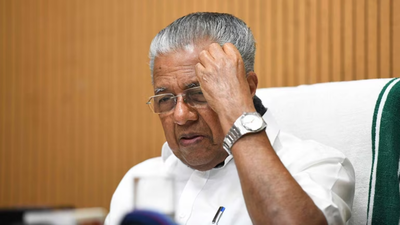
NEW DELHI: Days before the Kerala assembly elections, the warning signs for the ruling Left Democratic Front (LDF) were already flashing — and they come from the ground up.The recent local body polls, often seen as a bellwether in the state, delivered a clear message: the Congress-led UDF has gained momentum, while the Left’s decade-long dominance shows signs of strain.In what effectively turned into a semi-final before the April 9 assembly polls, the UDF emerged as the principal gainer, winning four of the six municipal corporations and making sweeping gains across municipalities and panchayats. The LDF, in contrast, saw erosion in key urban strongholds, including long-held bastions like Kollam and Thrissur.The significance of these results goes beyond numbers. In Kerala’s political history, local body outcomes have often foreshadowed assembly verdicts, as seen in 2010 and 2020. This time, the trend suggests a more challenging road ahead for chief minister Pinarayi Vijayan, who is seeking an unprecedented third consecutive term.
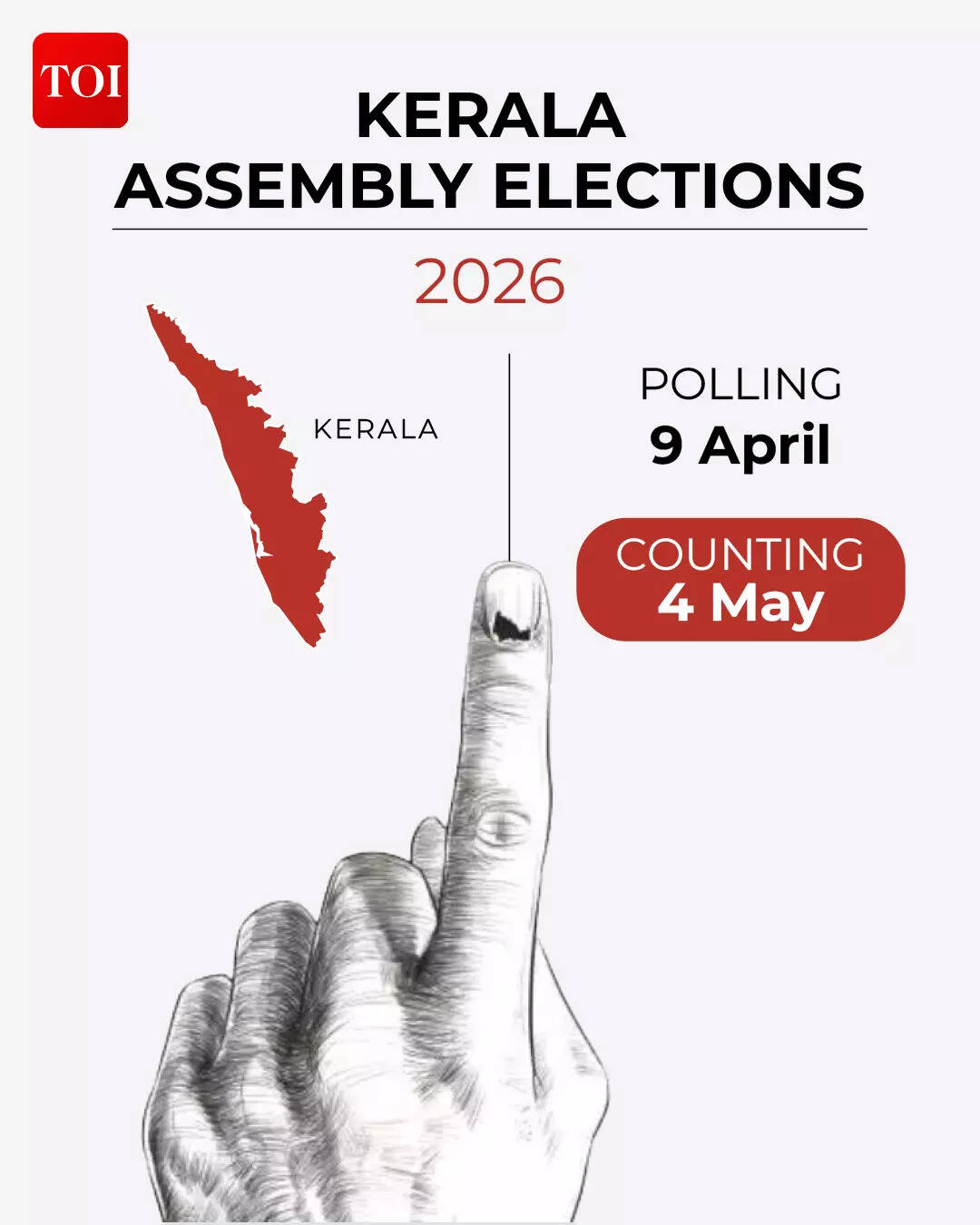
For a government that scripted history in 2021 by breaking the state’s pattern of alternating power, the script now appears less certain. With anti-incumbency quietly building, the opposition sensing an opening, and the BJP expanding its footprint, Kerala is shaping up for a far more competitive contest than the last election.Red flag for the Left?The recent local body polls in Kerala may offer more than just a snapshot of grassroots reality; they might signal shifting voter sentiment ahead of the assembly elections.In civic polls that resembled a referendum ahead of the assembly elections, the Congress-led alliance emerged as the principal gainer, outperforming the LDF across the board.
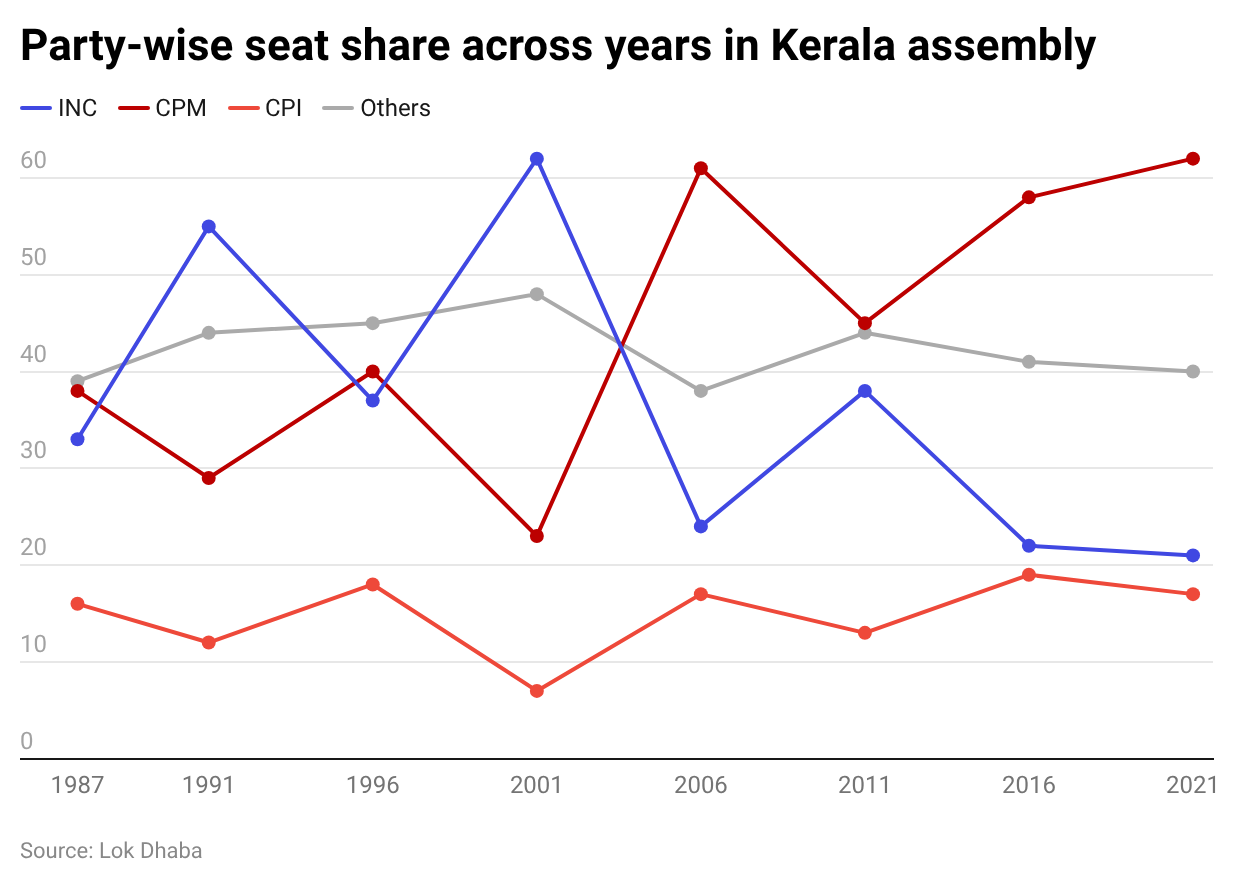
It won four of the six municipal corporations in the state, while the LDF managed to secure only one. At the municipality level, the Congress-led front claimed 54 of the 86 bodies, with the Left restricted to 28 and the NDA securing two. The UDF also made significant gains at the grassroots, winning 504 of the 941 grama panchayats, compared to 341 for the Left and 26 for the NDA.At the block panchayat level, the UDF secured 79, while the LDF won 63. At the district panchayat level, both alliances were tied at seven each.One of the most striking aspects of the results was the scale of LDF’s losses in urban strongholds. The UDF bagged Kollam, Thrissur, and Kochi corporations from the Left while retaining Kannur. Kollam and Thrissur had remained under Left control for 25 and 10 years, respectively. In the Kozhikode Corporation, the contest was tight, with the LDF holding a slender lead before ultimately retaining the seat.What the civic polls indicateIn Kerala, local body elections have historically acted as a bellwether, with the winning party often carrying momentum into the assembly polls. In 2010, the last time Congress recorded a commanding performance in civic polls, the UDF went on to form the government the following year.
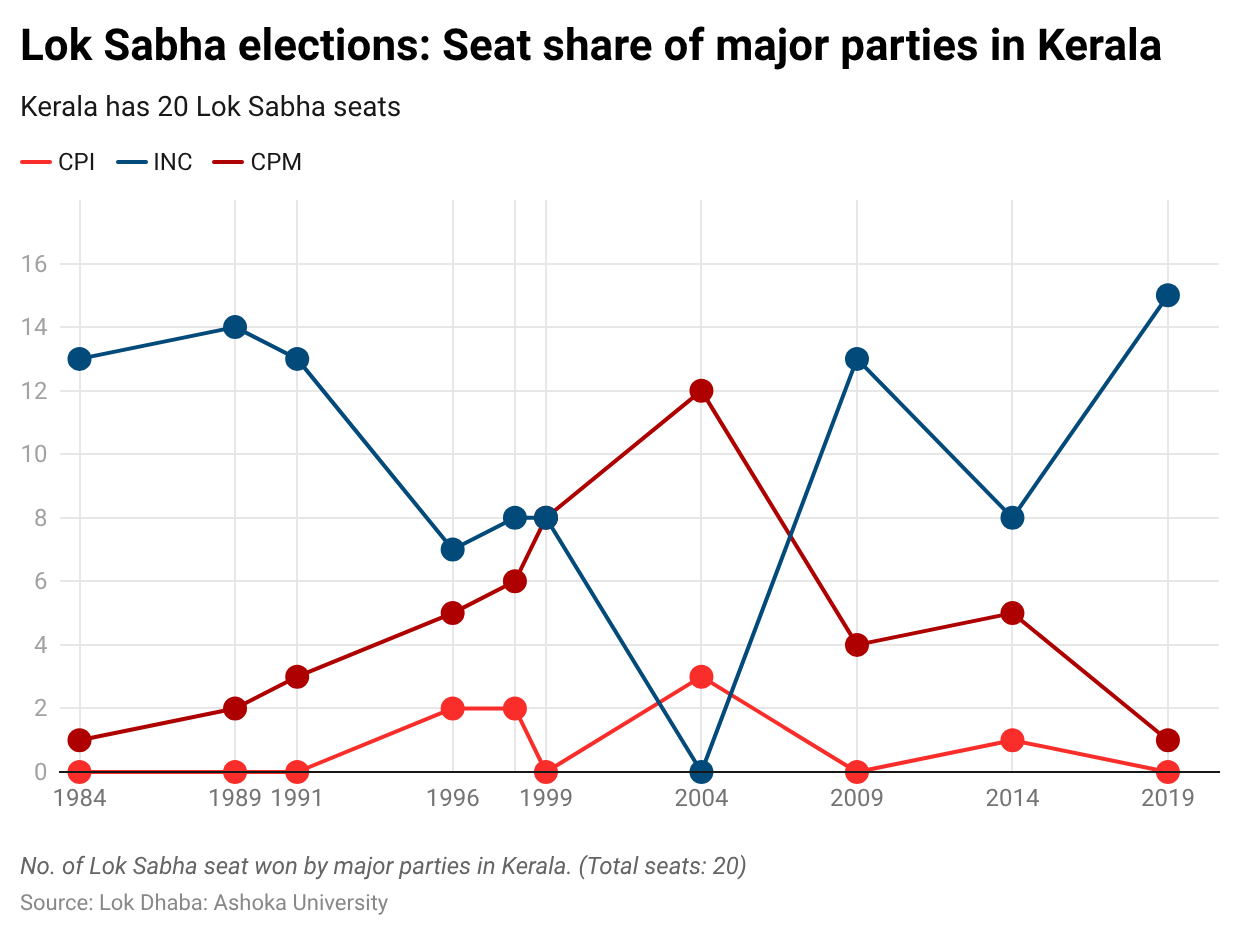
Similarly, the LDF’s strong showing in the 2020 local body polls preceded chief minister Pinarayi Vijayan’s re-election in 2021. This time, however, the results suggest a potentially challenging road ahead for the Left.The stench of anti-incumbencyAs Vijayan seeks a third consecutive term, the inevitable ghost of anti-incumbency looms large. The government is grappling with concerns over fiscal stress, rising unemployment, the cost of living, and allegations of administrative centralisation and corruption.Meanwhile, the possibility of minority groups coming together against the Left has become an important factor. The government’s decision to give a Rs 1,600 monthly pension to Catholic nuns and other women in religious institutions without independent income shows a targeted effort to reach out to Christian communities. These steps suggest that identity politics, which used to be less central to the Left, is now a key part of its electoral strategy.
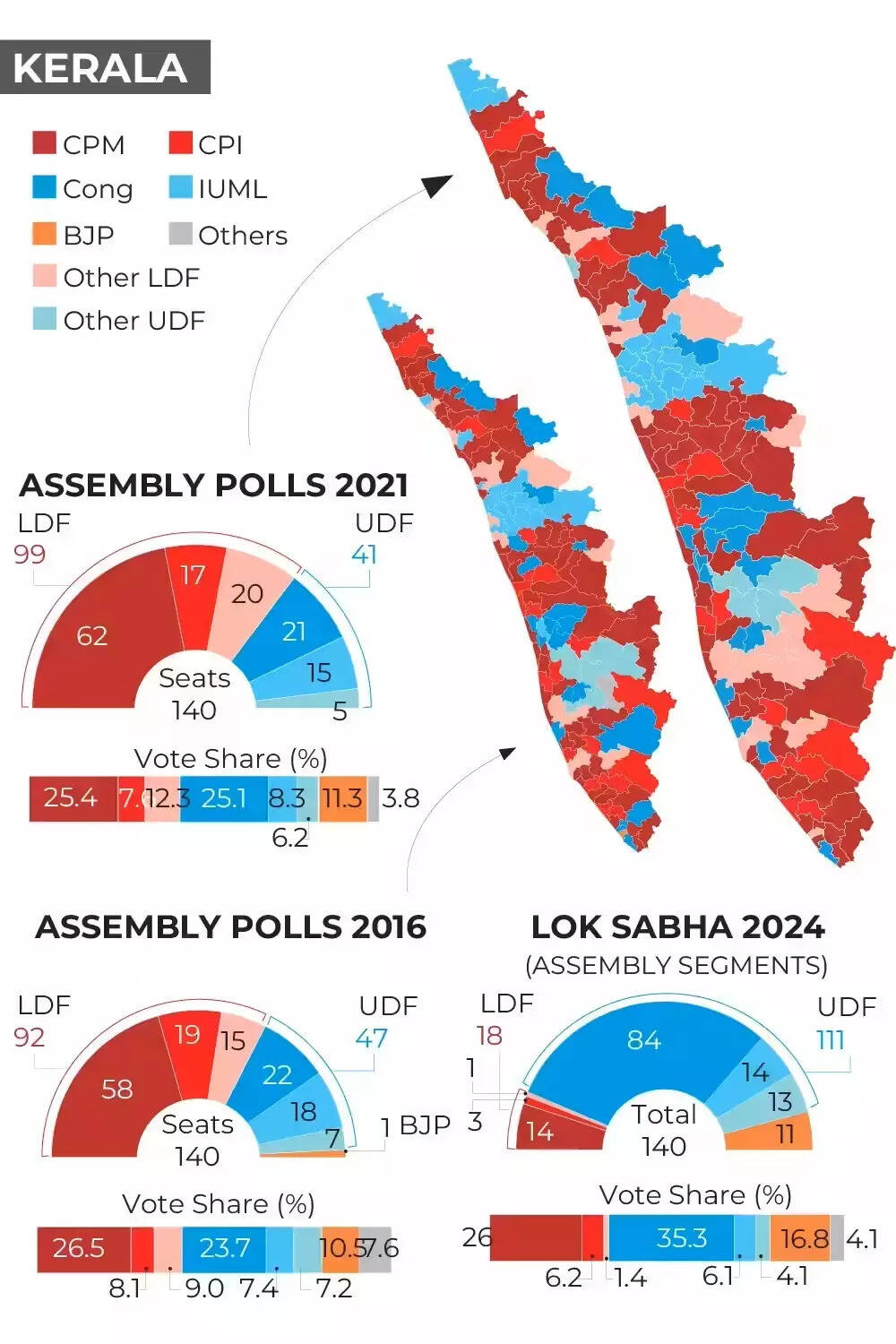
In Kerala, anti-incumbency rarely erupts as a sudden wave; instead, it builds quietly across demographic segments. Several pre-poll surveys suggest the UDF is poised to make significant gains in the upcoming elections.The Poll Mantra survey, which interviewed around 26,000 respondents, shows the UDF leading with 38.2 per cent vote share, followed by the ruling LDF at 33.7 per cent and the BJP-led NDA at 20.4 per cent.On the chief ministerial preference, 46.8 per cent of respondents backed Congress leader KC Venugopal, surpassing Vijayan, who secured 27.9 per cent support.Public evaluation of governance also tilts unfavourably for the LDF: about 31 per cent rated its performance as “very poor” and another 20.9 per cent as “poor.” Only 23.8 per cent described the government’s work as “excellent,” and 10.7 per cent as “good.”On the development trust index, the UDF again leads, with 38.9 per cent expressing confidence in its ability to deliver development, compared to 27.8 per cent for the LDF and 23.1 per cent for the NDA.The surveys indicate that while Vijayan retains a strong base, the combination of anti-incumbency sentiment and UDF’s perceived development credibility could make the upcoming assembly elections highly competitive.Will BJP finally rise?The local body polls also signalled a strategic expansion for the BJP-led NDA. The party has steadily increased its vote share in recent elections, particularly in urban constituencies and areas with potential for strong Hindu consolidation.The NDA won 50 of 101 divisions in the prestigious Thiruvananthapuram corporation, which had been held by the CPM for 45 years. Prime Minister Narendra Modi hailed the victory, saying: “My gratitude to the people across Kerala who voted for BJP and NDA candidates in the local body polls. Kerala is fed up with UDF and LDF. They see NDA as the only option that can deliver good governance and build a Vikasita Keralam with opportunities for all.”
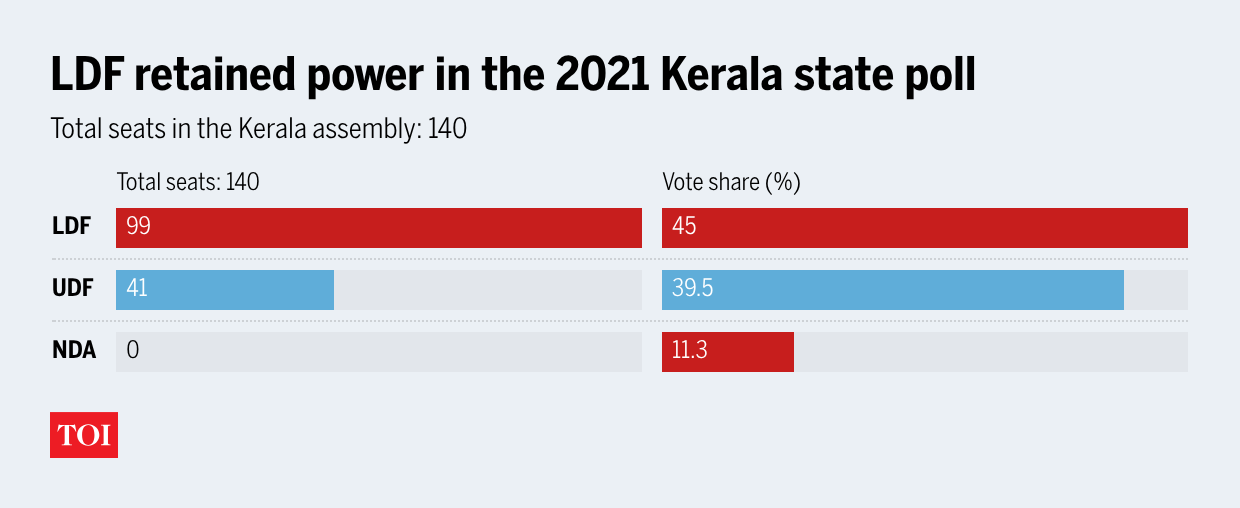
The BJP has also emerged as a serious contender in several urban pockets and traditionally Left-leaning areas, including Palakkad municipality, where it is narrowly ahead of the UDF. In Kozhikode Corporation, even as the CPM retains a slim lead, the BJP has strengthened its presence by winning at least 14 seats. In Kollam, a traditional Left bastion, the UDF claimed victory, while the BJP made notable inroads.Together, these trends indicate that Kerala’s electoral politics may no longer be a straight contest between the Left and the Congress. Although still behind the two major fronts numerically, the BJP’s performance points to gradual but steady expansion across the state.This, however, does not guarantee a victory for the UDF or a loss for the LDF. Local body polls are shaped by a mix of factors, including local issues and decentralised campaigning. The results only gave a head start to the UDF and placed the Left government under mounting pressure.Now, it will be interesting to see whether the Congress can rise to the challenge or continue to falter in the face of a resurgent Left and a steadily expanding BJP.In the upcoming elections, Congress will contest 95 of Kerala’s 140 seats, two more than it did in 2021. The Indian Union Muslim League (IUML) has been allotted 27 seats, while Kerala Congress (Joseph) will contest 8 seats and the Revolutionary Socialist Party (RSP) 5 seats. Smaller allies, including Kerala Congress (Jacob), Communist Marxist Party, Revolutionary Marxist Party, Trinamool Congress (TMC), and Kerala Democratic Party, have been given one seat each.In the ruling LDF, the CPM dominates with 86 seats, followed by the CPI’s 25. Smaller allies hold limited but strategic spots: KC(M) with 12, RJD with 3 JD(S) and NCP with 3 each, INL with three seats, and one seat apiece for LJD, NSC, KC(B), Cong(S), and JKC.


