
Rahul Gandhi, Manickam Tagore, MK Stalin Puducherry, the Union territory nestled within Tamil Nadu, will head to the polls in April alongside the state. But a growing rift between the Congress and its ally, the DMK — which governs Tamil Nadu on its own despite their alliance — now threatens to spill into Puducherry just months before the crucial assembly elections.At the heart of the conflict is the Congress’ demand for a share of power in Tamil Nadu if the DMK-led bloc wins again, along with a larger number of seats to contest than in 2021. Puducherry, given its geographical and cultural closeness to Tamil Nadu, is also emerging as a stage for this simmering rift.Manickam Tagore, a close confidant of former Congress president and current Lok Sabha leader of opposition, Rahul Gandhi, has been the public face of the party’s push for greater “respect” from the DMK in Tamil Nadu. Now, he is extending that demand for “respect” in Puducherry as well.How practical is Tagore’s demand? Can he — or the Congress — compel the DMK to concede? Where does the DMK stand on the issue? And with elections approaching, can the alliance afford internal strains? Let’s take a closer look.Congress: A giant of Puducherry politicsThe politics in Puducherry, a former French colony, has been dominated by the Congress. Three other parties have also formed governments here—DMK, AIADMK, and the All India NR Congress—but none have ever enjoyed the level of dominance that the Congress did.That dominance is evident in the numbers: of Puducherry’s 10 chief ministers, seven have hailed from the Congress. The UT’s lone Lok Sabha seat has also mirrored this political success. The constituency, also called Puducherry, has been contested in 15 general elections since 1967 and has been won by the grand old party — either directly or through its factions — 11 times.This legacy perhaps explains why the Congress sees Puducherry as politically significant. Given its long-standing dominance and the stakes of a potential defeat, the Congress would be keen to reclaim its supremacy here.Manickam Tagore’s ‘26% vs 8%’ salvoAgainst the backdrop of political tensions in Tamil Nadu, the first signs of a possible spillover to Puducherry emerged on February 6. That day, Tagore posted on social media, citing electoral data to argue that the Congress — and not the DMK — should lead their alliance in Puducherry. Manickam Tagore“Will the party with 8% of the votes lead the coalition? No, the party with 26% of the votes will lead. Why should the Congress party be talked down to in the coalition?” he asked.Also Read | ‘26% votes vs 8% votes’: Cong MP Tagore targets ally DMK; seeks leadership role for Puducherry unit in poll-bound UTThe data he referred to was from the 2014 general elections. He did not explain why he chose figures from more than a decade ago, particularly from a parliamentary election rather than an assembly contest. In that election, the Congress finished second in the Puducherry Lok Sabha constituency, while the DMK came fourth. The Congress candidate, V Narayanasamy, who became chief minister two years later and held the post for over four years, secured 26.35% of the vote, whereas DMK’s AMH Nazeem received 8.19% and came fourth.A visit to Puducherry by the DMK’s election in-charge and Lok Sabha MP, S Jagathrakshakan, appears to have triggered the current episode. During the trip, he did not meet Congress leaders, and this “snub,” coupled with the ongoing friction in Tamil Nadu, seems to have sparked Tagore’s outburst.But beyond the immediate provocation, the larger question is whether his assertion is merely rhetorical posturing or grounded in electoral reality.Congress in Puducherry: Historically dominant – not so much today?Despite Tagore’s assertive stance, the ground reality appears far less encouraging – if not outright alarming -for the Congress in Puducherry, where it was once the dominant political force. While the DMK remains the undisputed leader of the alliance in Tamil Nadu, the Congress now finds itself on comparatively weaker footing in Puducherry. Although it won the Puducherry seat in the two most recent general elections, its performance in the 2021 assembly polls was far less impressive. The Congress secured just two of the 14 seats it contested — a steep drop from the 15 it had won out of 21 during a successful campaign five years earlier. In contrast, the DMK, which contested 13 assembly constituencies under the seat-sharing arrangement, won six of them — securing the post of the leader of opposition in the assembly. The DMK, which is currently headed by Tamil Nadu CM MK Stalin, had managed just two of the nine seats it contested in 2016. Tagore’s remarks could, therefore, be read either as election-season posturing or as a calculated attempt to pressure the DMK — in Puducherry or even in Tamil Nadu.Leverage-less Congress?The DMK remains a significant political player in Puducherry, while the Congress has been largely marginal in Tamil Nadu — last heading a government there in 1967 and last holding the leader of opposition post in 1996.The Dravidian major’s categorical refusal to share power in the southern state — a stance reiterated by Stalin himself — presents a major challenge for the Congress, leaving it to try and assert itself in Puducherry, where its historical influence still exists and where the party held power as recently as 2021. We also know that it (power-sharing) will not work in Tamil Nadu. It is a problem created by some people. They are deliberately conspiring to see if there will be a rift in the alliance.MK StalinHowever, the Congress’ leverage — or lack thereof — in Tamil Nadu is already evident. The state Congress unit has urged the party’s national president, Mallikarjun Kharge, to take action against Tagore for his criticisms of the DMK, which itself has also called for action against the Virudhunagar MP.Also Read | TN Cong seeks action against party MP Manickam Tagore for putting DMK ties under ‘strain’Whether the DMK exercises this leverage in Puducherry too or concedes ground to the Congress to maintain alliance cohesion ahead of the elections would shape not only the immediate electoral battle with the UT’s ruling NDA coalition, but also the longer-term balance of power between the two allies.Why Congress can’t afford friction in PuducherryWith much at stake, the Congress can hardly risk tensions in Puducherry, especially on the eve of elections. With governments in only three states — Himachal Pradesh, Karnataka, and Telangana — the Congress can ill afford fresh tensions within the alliance. A victory in Puducherry would provide a much-needed additional governing foothold and strengthen its hand within INDIA, the national opposition bloc it leads. Tensions within the opposition coalition have been simmering after a series of electoral setbacks following the 2024 Lok Sabha elections, in which they succeeded in reducing the BJP below the majority mark for the first time since 2014.For now, the Congress appears to be adopting a wait-and-watch approach. Whether this strategy bolsters its position or strains a key alliance ahead of the elections will soon be revealed.About the AuthorKaran ManralKaran Manral is a journalist at the Times of India. He covers politics, social issues, and international affairs, exploring stories that affect people’s everyday lives. He also writes explainers to make these stories easier for readers to follow.Read MoreEnd of ArticleFollow Us On Social MediaVideos‘Swayed By Foreign Interests’: Trump Slams SCOTUS; Attacks US Firms, Attorneys With India TiesExplained: How US tariffs on India evolved amid Supreme Court ruling and trade disputes’Studying Developments For Their Implications’: India After US Top Court’s Order On Trump TariffsIndia, Brazil Sign Rare Earths Deal; Modi Calls It ‘Major Step’ Towards Supply Chain ResilienceBrazil President Lula Calls For Stronger Global South With India To Prevent A New Cold War DividePM Modi Sets 20 Billion Dollar Trade Target As India And Brazil Call Ties A Win Win PartnershipAI Summit Protest By Youth Congress May Be Linked To Nepal Gen Z Conspiracy Plot: Delhi PoliceI To The Power Of AI: Youngest Keynote Speaker Ranvir Sachdeva Wows India AI Summit With Bold VisionBig Terror Alert In Delhi As Lashkar e Taiba Targets Temple Near Red Fort Months After Deadly BlastUN Chief Antonio Guterres Meets President Murmu, Says India Is Proving Clean Energy Growth Possible123PhotostoriesZodiac signs that may face relationship challenges in 20268 Indian tea-time snacks you can air fryer instead of deep fry6 tandoori-style dishes made easily in an air fryer7 iconic paneer starters for guests and instant cravingsFrom decorating the house to preparing Iftaar: Dipika Kakar and Shoaib Ibrahim share their Ramadan preparationsBengaluru to Goa by Vande Bharat in just over 12 hours? What we know’e200x’: Chennai startup to develop first electric air taxi9 Indian breads beyond roti and naan you should know aboutWhy even non-vegetarians can be low on vitamin B12Jeh Ali Khan birthday special: Social media family moments123Hot PicksIndia-US trade dealGold rate todayDelhi traffic advisoryArjun’s wedding ceremonyIncome Tax CalculatorPublic holidays February 2026Bank Holidays februaryTop TrendingEllyse PerryAlysa Liu familyTommaso GiacomelMens Hockey OlympicsTravis Kelce MansionsSidney Crosby and Kathy Leutner Net WorthDillon GabrielNathan MacKinnonCade CunninghamMontreal Canadiens

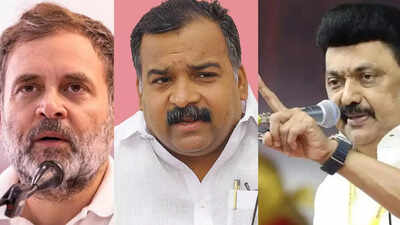
Puducherry, the Union territory nestled within Tamil Nadu, will head to the polls in April alongside the state. But a growing rift between the Congress and its ally, the DMK — which governs Tamil Nadu on its own despite their alliance — now threatens to spill into Puducherry just months before the crucial assembly elections.At the heart of the conflict is the Congress’ demand for a share of power in Tamil Nadu if the DMK-led bloc wins again, along with a larger number of seats to contest than in 2021. Puducherry, given its geographical and cultural closeness to Tamil Nadu, is also emerging as a stage for this simmering rift.Manickam Tagore, a close confidant of former Congress president and current Lok Sabha leader of opposition, Rahul Gandhi, has been the public face of the party’s push for greater “respect” from the DMK in Tamil Nadu. Now, he is extending that demand for “respect” in Puducherry as well.How practical is Tagore’s demand? Can he — or the Congress — compel the DMK to concede? Where does the DMK stand on the issue? And with elections approaching, can the alliance afford internal strains? Let’s take a closer look.
Congress: A giant of Puducherry politics
The politics in Puducherry, a former French colony, has been dominated by the Congress. Three other parties have also formed governments here—DMK, AIADMK, and the All India NR Congress—but none have ever enjoyed the level of dominance that the Congress did.That dominance is evident in the numbers: of Puducherry’s 10 chief ministers, seven have hailed from the Congress. The UT’s lone Lok Sabha seat has also mirrored this political success. The constituency, also called Puducherry, has been contested in 15 general elections since 1967 and has been won by the grand old party — either directly or through its factions — 11 times.This legacy perhaps explains why the Congress sees Puducherry as politically significant. Given its long-standing dominance and the stakes of a potential defeat, the Congress would be keen to reclaim its supremacy here.
Manickam Tagore’s ‘26% vs 8%’ salvo
Against the backdrop of political tensions in Tamil Nadu, the first signs of a possible spillover to Puducherry emerged on February 6. That day, Tagore posted on social media, citing electoral data to argue that the Congress — and not the DMK — should lead their alliance in Puducherry.
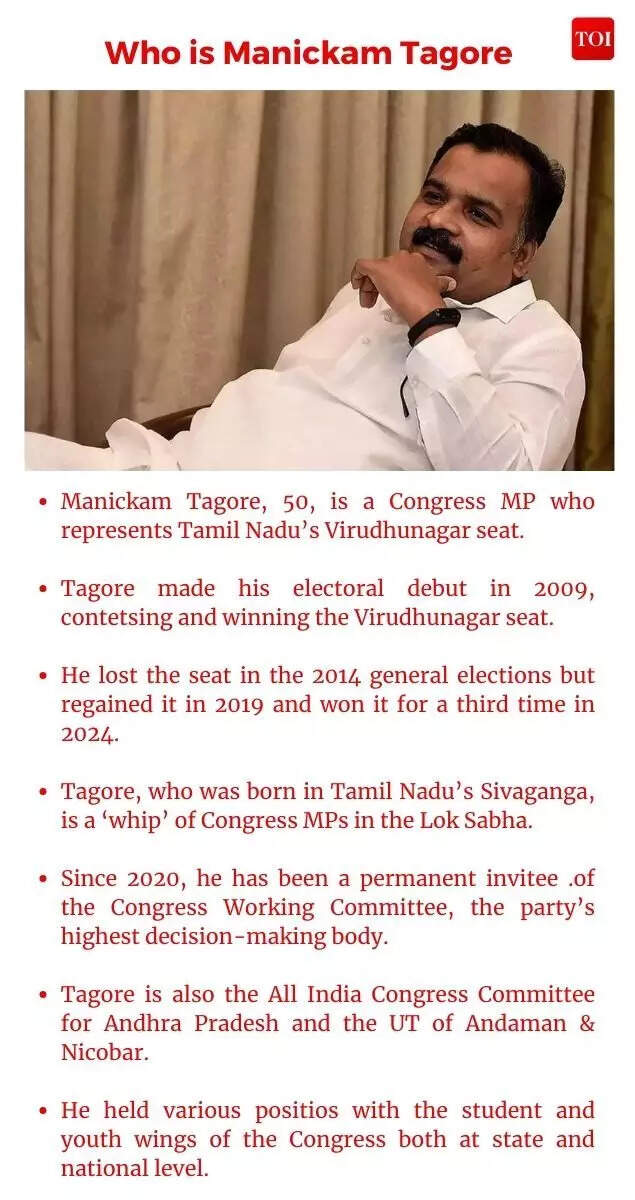
Manickam Tagore
“Will the party with 8% of the votes lead the coalition? No, the party with 26% of the votes will lead. Why should the Congress party be talked down to in the coalition?” he asked.Also Read | ‘26% votes vs 8% votes’: Cong MP Tagore targets ally DMK; seeks leadership role for Puducherry unit in poll-bound UTThe data he referred to was from the 2014 general elections. He did not explain why he chose figures from more than a decade ago, particularly from a parliamentary election rather than an assembly contest. In that election, the Congress finished second in the Puducherry Lok Sabha constituency, while the DMK came fourth. The Congress candidate, V Narayanasamy, who became chief minister two years later and held the post for over four years, secured 26.35% of the vote, whereas DMK’s AMH Nazeem received 8.19% and came fourth.A visit to Puducherry by the DMK’s election in-charge and Lok Sabha MP, S Jagathrakshakan, appears to have triggered the current episode. During the trip, he did not meet Congress leaders, and this “snub,” coupled with the ongoing friction in Tamil Nadu, seems to have sparked Tagore’s outburst.But beyond the immediate provocation, the larger question is whether his assertion is merely rhetorical posturing or grounded in electoral reality.
Congress in Puducherry: Historically dominant – not so much today?
Despite Tagore’s assertive stance, the ground reality appears far less encouraging – if not outright alarming -for the Congress in Puducherry, where it was once the dominant political force. While the DMK remains the undisputed leader of the alliance in Tamil Nadu, the Congress now finds itself on comparatively weaker footing in Puducherry. Although it won the Puducherry seat in the two most recent general elections, its performance in the 2021 assembly polls was far less impressive. The Congress secured just two of the 14 seats it contested — a steep drop from the 15 it had won out of 21 during a successful campaign five years earlier. In contrast, the DMK, which contested 13 assembly constituencies under the seat-sharing arrangement, won six of them — securing the post of the leader of opposition in the assembly. The DMK, which is currently headed by Tamil Nadu CM MK Stalin, had managed just two of the nine seats it contested in 2016. Tagore’s remarks could, therefore, be read either as election-season posturing or as a calculated attempt to pressure the DMK — in Puducherry or even in Tamil Nadu.
Leverage-less Congress?
The DMK remains a significant political player in Puducherry, while the Congress has been largely marginal in Tamil Nadu — last heading a government there in 1967 and last holding the leader of opposition post in 1996.The Dravidian major’s categorical refusal to share power in the southern state — a stance reiterated by Stalin himself — presents a major challenge for the Congress, leaving it to try and assert itself in Puducherry, where its historical influence still exists and where the party held power as recently as 2021.
We also know that it (power-sharing) will not work in Tamil Nadu. It is a problem created by some people. They are deliberately conspiring to see if there will be a rift in the alliance.
MK Stalin
However, the Congress’ leverage — or lack thereof — in Tamil Nadu is already evident. The state Congress unit has urged the party’s national president, Mallikarjun Kharge, to take action against Tagore for his criticisms of the DMK, which itself has also called for action against the Virudhunagar MP.Also Read | TN Cong seeks action against party MP Manickam Tagore for putting DMK ties under ‘strain’Whether the DMK exercises this leverage in Puducherry too or concedes ground to the Congress to maintain alliance cohesion ahead of the elections would shape not only the immediate electoral battle with the UT’s ruling NDA coalition, but also the longer-term balance of power between the two allies.
Why Congress can’t afford friction in Puducherry
With much at stake, the Congress can hardly risk tensions in Puducherry, especially on the eve of elections. With governments in only three states — Himachal Pradesh, Karnataka, and Telangana — the Congress can ill afford fresh tensions within the alliance. A victory in Puducherry would provide a much-needed additional governing foothold and strengthen its hand within INDIA, the national opposition bloc it leads. Tensions within the opposition coalition have been simmering after a series of electoral setbacks following the 2024 Lok Sabha elections, in which they succeeded in reducing the BJP below the majority mark for the first time since 2014.For now, the Congress appears to be adopting a wait-and-watch approach. Whether this strategy bolsters its position or strains a key alliance ahead of the elections will soon be revealed.


