
NEW DELHI: The United States has accused China of conducting a covert nuclear explosive test on June 22, 2020, just days after the deadly Galwan Valley clash in which 20 Indian soldiers were killed, saying the allegation underscores the need for a new global arms control framework following the expiry of the New START treaty.On June 15, 2020, a week before the alleged nuclear test, the Indian and Chinese troops clashed in Ladakh. Twenty Indian soldiers were killed, while reports at the time estimated Chinese casualties at over 35.US Under Secretary of State Thomas G DiNanno said China used techniques designed to evade international monitoring systems while carrying out yield-producing nuclear tests. “China has conducted nuclear explosive tests, including preparing for tests with designated yields in the hundreds of tons… China has used decoupling – a method to decrease the effectiveness of seismic monitoring – to hide its activities from the world. China conducted one such yield producing nuclear test on June 22, 2020,” DiNanno said in a post on X.The date cited by the US official comes a week after the June 15, 2020, Galwan Valley face-off between Indian and Chinese troops in eastern Ladakh. Twenty Indian soldiers were killed in the clashes, while intelligence reports at the time estimated Chinese casualties at over 30.Allegations surface as New START expiresDiNanno’s remarks came as the New START treaty, the last remaining nuclear arms control agreement between the United States and Russia, formally expired this week, leaving the world’s two largest nuclear powers without binding limits on their strategic arsenals for the first time in more than five decades.”New START was signed in 2010 and its limits on warheads and launchers are no longer relevant in 2026 when one nuclear power is expanding its arsenal at a scale and pace not seen in over half a century and another continues to maintain and develop a vast range of nuclear systems unconstrained by New START’s terms,” DiNanno said.He said the treaty imposed uneven constraints on nuclear powers.”…almost all of the U.S. deployed nuclear forces were subject to New START while only a fraction of Russia’s much larger stockpile was… exactly zero Chinese nuclear weapons were covered by New START,” he said.US presses for new nuclear architectureDiNanno said alleged covert testing by China, alongside Russian violations and the growth of global nuclear stockpiles, made it necessary to pursue a new arms control framework suited to present-day threats.”This confluence of factors – serial Russian violations, growth of worldwide stockpiles, and flaws in New START’s design and implementation – gives the United States a clear imperative to call for a new architecture that addresses the threats of today, not those of a bygone era,” he said.He added that Washington was now in a position to strengthen deterrence while remaining open to meaningful negotiations.”No longer constrained by the political-military circumstances of 2010 and the treaty they yielded and in response to the destabilizing behavior of these other countries, the United States can now finally take steps… to strengthen deterrence on behalf of the American people and our allies,” DiNanno said.Push for three-way talks with ChinaThe US has renewed calls for three-way nuclear arms control talks involving China and Russia following New START’s expiration. Washington has said any future agreement must include Beijing, a demand China has firmly rejected.China has denied the US allegations of covert nuclear testing and has said it will not participate in disarmament negotiations at this stage, arguing that its nuclear arsenal remains far smaller than those of the United States and Russia.Trump had hinted at testing earlierUS President Donald Trump had previously hinted at similar accusations without offering details. On October 31 last year, Trump said Washington would begin nuclear testing “on an equal basis” with Moscow and Beijing, without elaborating on the nature of such tests.Analysts have warned that the end of New START marks a turning point in global nuclear stability, with the absence of formal limits increasing the risk of a renewed arms race amid rising geopolitical tensions and mistrust.About the AuthorTOI World DeskAt TOI World Desk, our dedicated team of seasoned journalists and passionate writers tirelessly sifts through the vast tapestry of global events to bring you the latest news and diverse perspectives round the clock. With an unwavering commitment to accuracy, depth, and timeliness, we strive to keep you informed about the ever-evolving world, delivering a nuanced understanding of international affairs to our readers. Join us on a journey across continents as we unravel the stories that shape our interconnected world.Read MoreEnd of ArticleFollow Us On Social MediaVideosIndia Reiterates Energy Security Priority, Signals Russia Oil Imports Will ContinueGhaziabad Sisters’ Deaths: Father’s Three Marriages Add Twist To Probe“Deal Favours US farmers” Opposition Attacks India-US Trade FrameworkFrom Tamil Pride To Global Trust: How PM Modi Used Culture To Reset India-Malaysia RelationsPM Modi In Kuala Lumpur Says India Malaysia Ties Are Rising, Unveils IMPACT Vision For Asia”To Benefit Farmers….” Shivraj Singh Chouhan Big Claim On India-US Trade DealPiyush Goyal Says Agriculture Is Self Reliant Sector As India Refuses Farm Import Benefits To USFrom Design To Silicon, India Signals Semiconductor Breakout With Semicon 2.0 RoadmapMP Minister Vijay Shah Finally Apologises For Comment Targeting Op Sindoor Face Col Sofia QureshiTurkey Sides With Pakistan On Kashmir At UN After Sharif’s Rhetoric On India’s ‘Integral’ Territory123Photostories6 electrical mistakes that can increase your power billHow to make fiber-rich Oats and Sooji Idli for breakfast8 baby names you will hear everywhere in the next 5 yearsExclusive – Yuvika Choudhary on The 50: I took a break after my daughter’s birth to be there for her; now it’s time for me to return as a working momHow Taylor Swift turned fashion into her signature storytelling powerMukaish to Rabari: Underrated embroidery techniques in India that deserve more attention7 most colourful birds of Indian forestsThe 50: Major Fights That Grabbed Attention5 luxury sports cars that combine comfort with extreme powerThomas Edison once said, “I’ve not failed, I’ve just found 10,000 ways that won’t work”: 4 lessons it teaches students123Hot PicksBudget 2026Gold Silver PricesParliament Budget SessionGCC Unified Visa 2026Income Tax CalculatorPublic holidays February 2026Bank Holidays februaryTop TrendingIndia vs USA LiveCooper Kupp WifeKayla NicoleSuper Bowl LX TicketOliver RowlandJustin GaethjeLIV GolfLiam Paro vs Paddy Donovan Net WorthWinter Olympics 2026NBA Trade Update
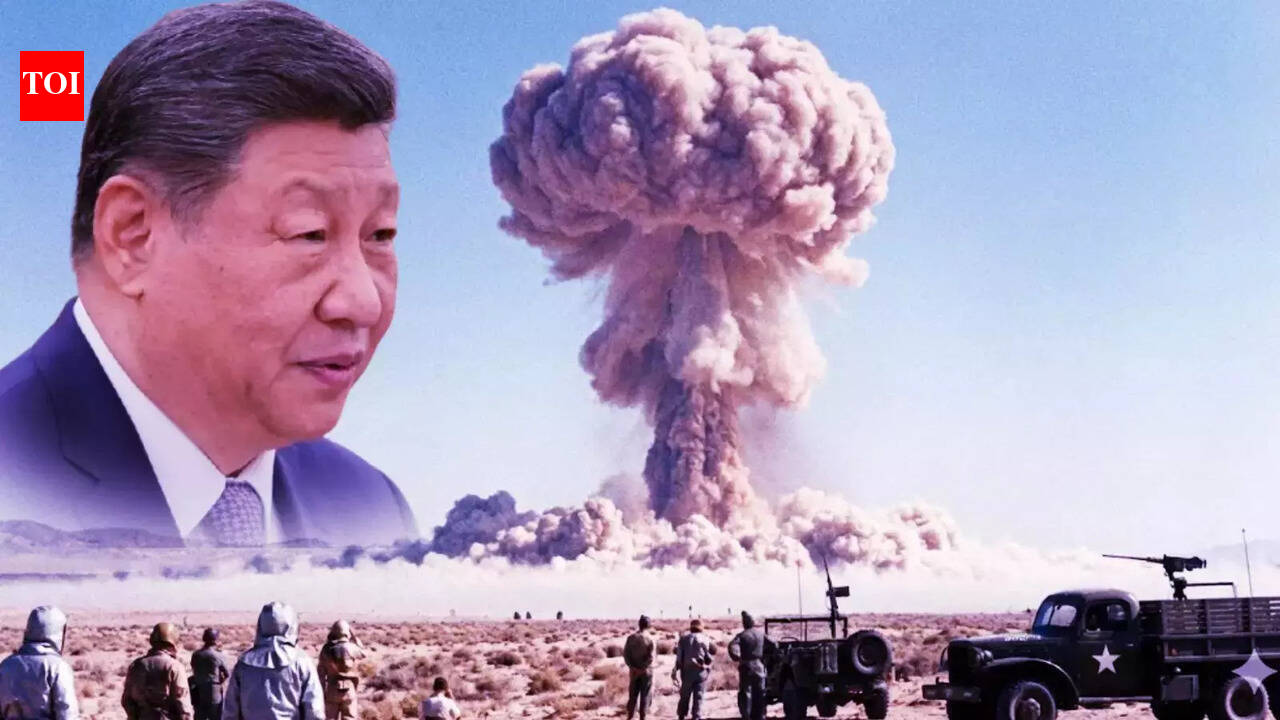
NEW DELHI: The United States has accused China of conducting a covert nuclear explosive test on June 22, 2020, just days after the deadly Galwan Valley clash in which 20 Indian soldiers were killed, saying the allegation underscores the need for a new global arms control framework following the expiry of the New START treaty.On June 15, 2020, a week before the alleged nuclear test, the Indian and Chinese troops clashed in Ladakh. Twenty Indian soldiers were killed, while reports at the time estimated Chinese casualties at over 35.US Under Secretary of State Thomas G DiNanno said China used techniques designed to evade international monitoring systems while carrying out yield-producing nuclear tests. “China has conducted nuclear explosive tests, including preparing for tests with designated yields in the hundreds of tons… China has used decoupling – a method to decrease the effectiveness of seismic monitoring – to hide its activities from the world. China conducted one such yield producing nuclear test on June 22, 2020,” DiNanno said in a post on X.The date cited by the US official comes a week after the June 15, 2020, Galwan Valley face-off between Indian and Chinese troops in eastern Ladakh. Twenty Indian soldiers were killed in the clashes, while intelligence reports at the time estimated Chinese casualties at over 30.
Allegations surface as New START expires
DiNanno’s remarks came as the New START treaty, the last remaining nuclear arms control agreement between the United States and Russia, formally expired this week, leaving the world’s two largest nuclear powers without binding limits on their strategic arsenals for the first time in more than five decades.“New START was signed in 2010 and its limits on warheads and launchers are no longer relevant in 2026 when one nuclear power is expanding its arsenal at a scale and pace not seen in over half a century and another continues to maintain and develop a vast range of nuclear systems unconstrained by New START’s terms,” DiNanno said.He said the treaty imposed uneven constraints on nuclear powers.“…almost all of the U.S. deployed nuclear forces were subject to New START while only a fraction of Russia’s much larger stockpile was… exactly zero Chinese nuclear weapons were covered by New START,” he said.
US presses for new nuclear architecture
DiNanno said alleged covert testing by China, alongside Russian violations and the growth of global nuclear stockpiles, made it necessary to pursue a new arms control framework suited to present-day threats.“This confluence of factors – serial Russian violations, growth of worldwide stockpiles, and flaws in New START’s design and implementation – gives the United States a clear imperative to call for a new architecture that addresses the threats of today, not those of a bygone era,” he said.He added that Washington was now in a position to strengthen deterrence while remaining open to meaningful negotiations.“No longer constrained by the political-military circumstances of 2010 and the treaty they yielded and in response to the destabilizing behavior of these other countries, the United States can now finally take steps… to strengthen deterrence on behalf of the American people and our allies,” DiNanno said.
Push for three-way talks with China
The US has renewed calls for three-way nuclear arms control talks involving China and Russia following New START’s expiration. Washington has said any future agreement must include Beijing, a demand China has firmly rejected.China has denied the US allegations of covert nuclear testing and has said it will not participate in disarmament negotiations at this stage, arguing that its nuclear arsenal remains far smaller than those of the United States and Russia.
Trump had hinted at testing earlier
US President Donald Trump had previously hinted at similar accusations without offering details. On October 31 last year, Trump said Washington would begin nuclear testing “on an equal basis” with Moscow and Beijing, without elaborating on the nature of such tests.Analysts have warned that the end of New START marks a turning point in global nuclear stability, with the absence of formal limits increasing the risk of a renewed arms race amid rising geopolitical tensions and mistrust.


