
. BENGALURU: Any space agency will tell you that every rocket launch comes with anxious moments, no matter what the record is. Yet, India’s Polar Satellite Launch Vehicle (PSLV) failing twice in consecutive attempts won’t be easy for Isro to digest given its workhorse’s record. PSLV has had 64 missions, of which four, including Monday’s PSLV-C62, failed to put the spacecraft in orbit, and one in 1997 placed the payload on a lower orbit than the intended one. When a launcher is seen as proven, scrutiny can soften. But back-to-back failures need to be treated as a structural warning – not bad luck – as they suggest deeper issues, whether with quality control, supply chains, testing protocols, or configuration management. When PSLV-C61 failed last year, it brought down the rocket’s success rate from 95.2% to 93.7%. Now, it has slipped further. Isro told TOI on Monday that the failures have affected the collective morale of the team. “It would have been different if any other launcher failed, but a PSLV failure worries us,” said a scientist. An analysis of setbacks shows that PSLV-C62’s failure could have been caused by unresolved issues from the failed PSLV-C61 on May 18, 2025. In both cases, PS3, or the third stage – a solid motor that provides a high-energy boost after the second stage burnout – suffered a glitch. While Isro has not made the previous failure analysis committee (FAC) report public, TOI has learnt there was a fall in chamber pressure of the motor case. The PSLV-C62 will now be analysed by another FAC. Isro said there was disturbance in the “roll rate” during the final stages of PS3 burning on Monday, and that caused a deviation. Failures before 2025 all point to different glitches. The first setback was on Sept 20, 1993 when PSLV-D1, the rocket’s first mission, failed due to a guidance system error during the separation of PS2 (a liquid stage). Isro launched again on Oct 15, 1994, and thereon PSLV showed no glitch until Sept 29, 1997, when PSLV-C1 mission became a “partial success”. Here, the pressure regulator on PS4 (which uses twin liquid engines) failed, resulting in the satellite being placed in a lower-than-intended orbit. The 1997 glitch has not repeated. The next failure came 20 years later, in Aug 2017, when the PSLV-C39 mission failed. In this case, the problem was with the heat shield, which has since been rectified. After the PSLV-C39 mission, the launch vehicle had 21 successful flights before the failure last year, followed by Monday’s.About the AuthorChethan KumarChethan Kumar is a Senior Assistant Editor with the Times of India. Aside from specialising in Space & Science, he has reported extensively on varied topics, with special focus on defence, policy and data stories. He has covered multiple elections, too. As a young democracy grows out of adolescence, Chethan feels, there are reels of tales emerging which need to be captured. To do this, he alternates between the mundane goings-on of the Common Man and the wonder-filled worlds of scientists and scamsters, politicians and soldiers. In a career spanning nearly 18 years, he has reported from multiple datelines — Houston, Florida, Kochi, Hyderabad, Chennai, Sriharikota (AP), NH-1 (J&K Highway), New Delhi, Ahmedabad, Raichur, Bhatkal, Mysuru, Chamarajanagar, to name a few — but is based out of Bengaluru, India’s science capital that also hosts the ISRO HQ.Read MoreEnd of ArticleFollow Us On Social MediaVideosCongress MP says India remains “heavily invested emotionally and politically” in Bangladesh”Our Youth Is Creative And Innovative,” PM Modi At Viksit Bharat Dialogue“Deeply Impressed,” CEOs Share Takeaways After Meeting PM Modi | VideoFrom Defence To AI: PM Modi Urges German CEOs To Make India Their Global Manufacturing Base’Real Friends Always…’: Trump’s New Envoy Sergio Gor Pledges To Reset India-US TiesNot Trade Or Defence: Why Four-Year Old Baby Ariha Shah Became Key Topic In Modi–Germany TalksAAP’s Raghav Chadha Turns Blinkit Delivery Agent for a Day Amid Gig Workers’ Row’Will Come to Mumbai, Try Cutting My Legs: Annamalai Hits Back at Raj ThackerayIndia Tests Indigenous Fire And Forget Anti-Tank Missile With Top Attack Strike On Moving TargetsShaksgam Valley Row Deepens As China Rejects India’s Claim And Defends CPEC Infra Project With Pak123PhotostoriesBreathtaking pictures of Nupur Sanon and Stebin Ben’s stylish Hindu wedding5 animals that survive by pretending to be deadHow to make Halwai Style Aloo Sabji at homeFrom mindful portions to intermittent fasting: When Taarak Mehta Ka Ooltah Chashmah’s Munmun Dutta gave a peek into her disciplined diet and daily routineTimothée Chalamet to Jacob Elordi: The Men of the 2026 Golden Globes who delivered a masterclass in modern tailoringThalapathy Vijay’s ‘Jana Nayagan’ delayed: 8 must-watch OTT hits to streamTamil Nadu Assembly Elections 2026: Alliances, numbers and the battle for 234 seats5 jungle survival tips Bear Grylls swears by, and how they apply beyond the wildChef Sanjeev Kapoor shares 5 crunchy snack recipes to enjoy with chai during winter `Best horror dramas on Apple TV: ‘The Enfield Poltergeist’, ‘Servant’ and more123Hot PicksISRO PSLV-C62 missionTrump tariffsGold rate todayBengaluru newsCigarette price hikePublic holidays January 2026Bank Holidays JanuaryTop TrendingNFL Football Playoff Schedule 2026George Kittle InjuryVanessa Bryant and Natalia Bryant Net WorthBrooks Koepka and Jena Sims Net WorthMorgan GeekieBryce Harper Net WorthTravis Kelce WeddingDonovan MitchellLeBron JamesBudget 2026
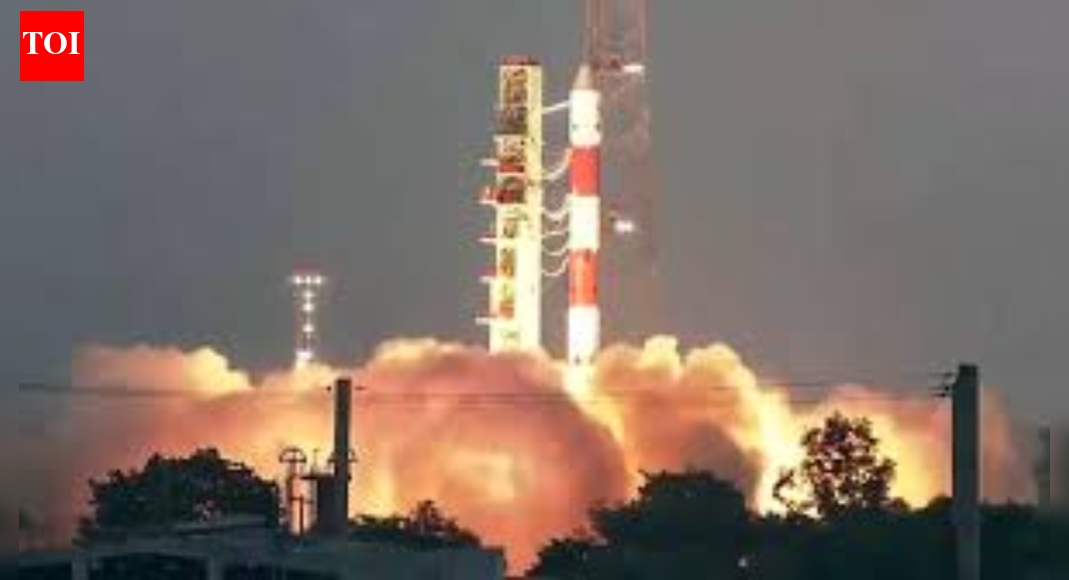
BENGALURU: Any space agency will tell you that every rocket launch comes with anxious moments, no matter what the record is. Yet, India’s Polar Satellite Launch Vehicle (PSLV) failing twice in consecutive attempts won’t be easy for Isro to digest given its workhorse’s record. PSLV has had 64 missions, of which four, including Monday’s PSLV-C62, failed to put the spacecraft in orbit, and one in 1997 placed the payload on a lower orbit than the intended one. When a launcher is seen as proven, scrutiny can soften. But back-to-back failures need to be treated as a structural warning – not bad luck – as they suggest deeper issues, whether with quality control, supply chains, testing protocols, or configuration management. When PSLV-C61 failed last year, it brought down the rocket’s success rate from 95.2% to 93.7%. Now, it has slipped further. Isro told TOI on Monday that the failures have affected the collective morale of the team. “It would have been different if any other launcher failed, but a PSLV failure worries us,” said a scientist. An analysis of setbacks shows that PSLV-C62’s failure could have been caused by unresolved issues from the failed PSLV-C61 on May 18, 2025. In both cases, PS3, or the third stage – a solid motor that provides a high-energy boost after the second stage burnout – suffered a glitch. While Isro has not made the previous failure analysis committee (FAC) report public, TOI has learnt there was a fall in chamber pressure of the motor case. The PSLV-C62 will now be analysed by another FAC. Isro said there was disturbance in the “roll rate” during the final stages of PS3 burning on Monday, and that caused a deviation. Failures before 2025 all point to different glitches. The first setback was on Sept 20, 1993 when PSLV-D1, the rocket’s first mission, failed due to a guidance system error during the separation of PS2 (a liquid stage). Isro launched again on Oct 15, 1994, and thereon PSLV showed no glitch until Sept 29, 1997, when PSLV-C1 mission became a “partial success”. Here, the pressure regulator on PS4 (which uses twin liquid engines) failed, resulting in the satellite being placed in a lower-than-intended orbit. The 1997 glitch has not repeated. The next failure came 20 years later, in Aug 2017, when the PSLV-C39 mission failed. In this case, the problem was with the heat shield, which has since been rectified. After the PSLV-C39 mission, the launch vehicle had 21 successful flights before the failure last year, followed by Monday’s.


