
. NEW DELHI: RSS chief Mohan Bhagwat on Tuesday said India’s rise on the global stage is “certain”, but stressed that the country’s development must be guided by a larger responsibility to offer a meaningful and humane model to the world, not merely pursue national advancement or material dominance.Speaking at the seventh edition of the Bharatiya Vigyan Sammelan 2025 organised by Vigyan Bharati, Bhagwat argued that modern development paradigms — particularly in the West — had delivered material prosperity but also produced deep social and ecological distress. “When we look at developed countries today, we see that development has come with destruction,” he said, noting that many societies were now rethinking growth models that prioritised consumption over balance.Viewing ‘Sangh’ Through the Lens of the BJP Is a Huge Mistake, Says RSS Chief Mohan BhagwatBhagwat underlined that the core purpose of development was sukh (well-being), and that the direction of progress depended on how happiness itself was understood. “All development is for happiness. Human beings want happiness; everyone in creation wants happiness,” he said. Questioning purely utilitarian approaches to knowledge, Bhagwat added: “Why do we want to know how far the sun is? Because human beings have a thirst to know, and on the basis of that knowledge they want to make their lives happy.”Critiquing dominant global thinking over the past two millennia, the RSS chief said happiness had largely been reduced to material satisfaction. “For the last 2,000 years, systems influencing the world assumed happiness to be only material,” he observed, drawing parallels with animal instincts of food, sleep, fear and survival — benchmarks he said were inadequate for measuring human progress.Contrasting this with India’s civilisational outlook, Bhagwat said Indian thought recognised both material needs and inner well-being. “Food, clothing, housing, health and education are necessary, and suffering must be reduced. But we should not stop there,” he said, arguing that happiness ultimately resides within and cannot be sustained in isolation from society and nature.He also cautioned against development models that create sharp social divides. “Development should not produce two classes — the happy and the unhappy, the haves and the have-nots. That is wrong development,” Bhagwat said, adding that inequality driven by unequal access and opportunity inevitably breeds conflict and instability.Bhagwat further said India’s growth must be anchored in ethical restraint and balance, which he described as dharma. “Dharma is not ritual or religion; it is that which sustains. It ensures harmony between individual progress, social welfare and nature,” he said.The conference, attended by scientists, academics and policymakers from across the country, focused on aligning scientific inquiry with sustainability, ethics and Indian knowledge traditions, with organisers describing it as an effort to shape a distinctly Indian vision of science-led development.About the AuthorManash Pratim GohainManash Pratim Gohain is a seasoned journalist with over two decades at The Times of India, where he has built a rich body of work spanning education policy, politics, and governance. Renowned for his incisive coverage of the National Education Policy (NEP) 2020, accreditation reforms, and skilling initiatives, he has also reported on student politics, urban policy, and social movements. His political reportage—both reflective and news-driven—adds depth to his writing, bridging policy with public impact. Through his 2,500 articles and related outlets, he has emerged as a trusted voice in national discourse, particularly in linking education reform to broader societal change.Read MoreEnd of ArticleFollow Us On Social MediaVideosMyanmar Heads to Polls After Five Years as Rights Groups Slam Military-Run Process’Can You Elect A Non-Muslim?’ Indian Student Dismantles Pakistan On Minority Rights, DemocracySix Shots On AMU Campus Kill Teacher As CCTV Shows Killers Firing Into His Head After He Fell DownPutin Called Pakistan A Junta With Nukes As Bush Feared Nuclear Leaks To Iran, Reveal TranscriptsTwo Indians Killed In Canada Within A Few Days, Families Raise Question On Safety Of Students AbroadUnnao Rape Convict Kuldeep Sengar’s Bail Triggers Protests In Delhi, Victim’s Mother Demands Hanging’Burn Houses, Murder People’: Brisbane Imam’s Expose of Pakistan’s Attitude Towards MinoritiesBig Test For BNP Chief Tarique Rahman To Rein In Islamists, Calm Bangladesh Amid Violence: Ex-Envoys’Not Genocide But Anger Against Govt’: Cleric On Bangladesh Unrest, Questions Selective OutrageChina Counters Pentagon Report, Extends India Hand On Trust, Borders, Cooperation And Stability123Photostories5 types of demons as per mythologyand what do they signifyAhead of ‘Jana Nayagan’ audio launch: Revisiting Thalapathy Vijay’s most ICONIC audio launch moments10 books whose first line is enough to convince anyone to read them6 stinkiest foods in the world you won’t believe people eat8 villages in India that are experiences, not just destinations’Timeless message of love, peace and compassion’: PM Modi joins Christmas prayers at Delhi cathedral – In picsFrom Mouni Roy to Tejasswi Prakash: A look back at the leading ladies of ‘Naagin’ ahead of season 7 releaseDelhi’s major wholesale markets one must explore as a tourist5 viral fashion trends and aesthetics that took over Instagram feeds in 2025How to be a good dad: 10 ways to be the father you always wished for123Hot PicksUAE WeatherPAN-Aadhaar linkingAmrit MondalGold rate todayIncome Tax RefundIndian Railways fareBank Holidays DecemberTop TrendingCharles BarkleyAnthony DavisStephen CurryJaipur Mosque ViolenceTravis KelceConor McgregorShivank AvasthiSophie CunninghamVanessa BryantUS Strike Nigeria

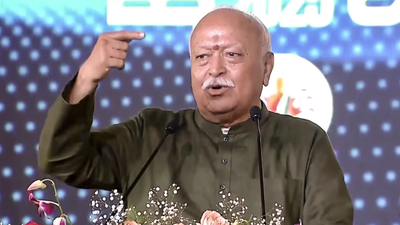
NEW DELHI: RSS chief Mohan Bhagwat on Tuesday said India’s rise on the global stage is “certain”, but stressed that the country’s development must be guided by a larger responsibility to offer a meaningful and humane model to the world, not merely pursue national advancement or material dominance.Speaking at the seventh edition of the Bharatiya Vigyan Sammelan 2025 organised by Vigyan Bharati, Bhagwat argued that modern development paradigms — particularly in the West — had delivered material prosperity but also produced deep social and ecological distress. “When we look at developed countries today, we see that development has come with destruction,” he said, noting that many societies were now rethinking growth models that prioritised consumption over balance.
Bhagwat underlined that the core purpose of development was sukh (well-being), and that the direction of progress depended on how happiness itself was understood. “All development is for happiness. Human beings want happiness; everyone in creation wants happiness,” he said. Questioning purely utilitarian approaches to knowledge, Bhagwat added: “Why do we want to know how far the sun is? Because human beings have a thirst to know, and on the basis of that knowledge they want to make their lives happy.”Critiquing dominant global thinking over the past two millennia, the RSS chief said happiness had largely been reduced to material satisfaction. “For the last 2,000 years, systems influencing the world assumed happiness to be only material,” he observed, drawing parallels with animal instincts of food, sleep, fear and survival — benchmarks he said were inadequate for measuring human progress.Contrasting this with India’s civilisational outlook, Bhagwat said Indian thought recognised both material needs and inner well-being. “Food, clothing, housing, health and education are necessary, and suffering must be reduced. But we should not stop there,” he said, arguing that happiness ultimately resides within and cannot be sustained in isolation from society and nature.He also cautioned against development models that create sharp social divides. “Development should not produce two classes — the happy and the unhappy, the haves and the have-nots. That is wrong development,” Bhagwat said, adding that inequality driven by unequal access and opportunity inevitably breeds conflict and instability.Bhagwat further said India’s growth must be anchored in ethical restraint and balance, which he described as dharma. “Dharma is not ritual or religion; it is that which sustains. It ensures harmony between individual progress, social welfare and nature,” he said.The conference, attended by scientists, academics and policymakers from across the country, focused on aligning scientific inquiry with sustainability, ethics and Indian knowledge traditions, with organisers describing it as an effort to shape a distinctly Indian vision of science-led development.


