
Raised red markings create vibration under tyres, alerting drivers to the forest stretch, prompting them to slow downRaised red markings create vibration under tyres, alerting drivers to the forest stretch, prompting them to slow down12 BHOPAL: On a forested stretch of Bhopal-Jabalpur national highway, the National Highways Authority of India has introduced what it describes as India’s first integrated “wildlife-safe” road corridor, combining speed-calming design, fencing, animal underpasses and electronic monitoring on a section of NH-45 that cuts through a critical tiger habitat in MP. The features, on a 12km stretch through Veerangana Durgavati Tiger Reserve, aim to reduce animal road deaths by addressing not just where wildlife crosses, but how vehicles move.On this section, traffic volumes and speeds have risen sharply as a two-lane road has been widened to four, carrying faster vehicles, heavier loads and far less tolerance for interruptions.It’s country’s first wildlife-sensitive ‘red road’: NHAIHighways cutting through forests often place animals at risk as they cross roads to reach different parts of their habitat. Speeding vehicles on such stretches have historically led to frequent & often fatal collisions. At the centre of the new design is a 2km zone that looks, at first glance, almost decorative. The asphalt is overlaid with raised red thermoplastic markings, 5mm thick, laid out in a continuous band across the carriageway. “To mitigate this risk, NHAI applied a 5mm thick red surface layer – the ‘table-top’ – over the road in the designated danger zone within the tiger reserve. The bright red texture signals to drivers that they are entering a wildlife-sensitive stretch and its slightly raised surface automatically reduces vehicle speed,” said S K Singh, regional officer, NHAI. “As per my knowledge, it is the first such concept implemented in the country,” he added.Officials involved in the project say the markings serve two purposes. Visually, they announce that the driver is entering a forest stretch where the rules of the road subtly change. Physically, they produce a mild vibration under the tyres, enough to encourage drivers to ease off the accelerator without the abrupt jolt of a speed breaker, which is considered unsafe on high-speed highways. The technique is widely used in other countries but has rarely been seen on Indian national highways, particularly in wildlife zones.Speed, conservation scientists have long argued, is the variable that determines whether an animal crossing a road is seen in time, and whether a driver has the distance needed to stop or swerve. Underpasses and fencing decide where animals cross; speed decides what happens when something goes wrong. On NH-45, the red-marked stretch is meant to slow vehicles gradually, well before they reach the points where animals are most likely to emerge.Below the road, the more conventional work has been done. Along the forest section, 25 wildlife underpasses have been built, their locations chosen on the basis of observed animal movement rather than engineering convenience. Continuous iron fencing runs on both sides of the highway, guiding animals towards these openings and preventing them from wandering onto the carriageway at random. Similar structures elsewhere in the country, including near Pench, have shown that when crossings align with natural routes, animals do use them, from ungulates to large carnivores.Former IFS officer and wildlife expert Jagdish Chandra said the red-road concept could make a significant difference. “There will be positive results. This is the first such project implemented in the country,” he said.End of ArticleFollow Us On Social MediaVideosBangladesh Unrest: Another Hindu Man Lynched; Police Claim Extortion Bid‘Hurt Hindu Sentiments’: Bajrang Dal Protests Outside Bareilly Church, Video Viral‘Bit Late but Strong’: Amit Shah Highlights India’s Semiconductor Industry Growth‘One Family Rule’: PM Modi Slams Congress at Prerna Sthal InaugurationBNP Chairman Tarique Rahman Makes Grand Comeback To Bangladesh, Evokes Martin Luther King In SpeechMajor anti-Naxal success: Rs 1.2-crore bounty Maoist Ganesh Uike among four gunned down in Odisha’Every Indian Is Assaulted When…’: Shashi Tharoor Slams Attacks On Christmas Celebrations In IndiaNitin Gadkari Reveals Shocking Experience of Meeting Hamas Leader Before His Assassination in Iran’You’ll Know Me Now’: Gunman’s Chilling Threat Before Killing AMU Teacher Inside Campus In UPWhy Tarique Rahman’s Return To Dhaka After 17 Years Could Reshape Bangladesh Politics After Hasina123PhotostoriesAvoid making these 5 worst sleep mistakesWhat happens when you practice ‘sideways walking’How to take calcium and magnesium supplements for maximum absorption and why taking them together may not be idealExclusive – From facing blame for breaking the team to claiming Shubhangi Atre copied her Angoori; Shilpa Shinde on Bhabhi Ji Ghar Par Hai, comeback, and comparisonsNew parents of 2025: Chris Evans-Alba Baptista to Millie Bobby Brown-Jake BongioviPost-festive detox: Simple ways to detox your body with turmericWhy South India is the ultimate January escape: 10 places to prove it!Year ender 2025: From Akshaye Khanna, Adarsh Gourav to Sanya Malhotra, actors who redefined their craft beyond the blockbustersFrom fitness to confidence: Why kids should be encouraged to pick up sportsYour Soul’s Biggest Fear Based On Your Birth Date123Hot PicksUAE WeatherPAN-Aadhaar linkingKarbi Anglong CurfewGold rate todayIncome Tax RefundPublic Holidays DecemberBank Holidays DecemberTop TrendingTaylor SwiftPaul RuddPatrick MahomesMegan Thee Stallion Net Worth 2025Travis KelceJoel EmbiidSavannah James Net WorthSophie CunninghamDrew McIntyre and Kaitlyn Frohnapfel Net WorthKhamzat Chimaev
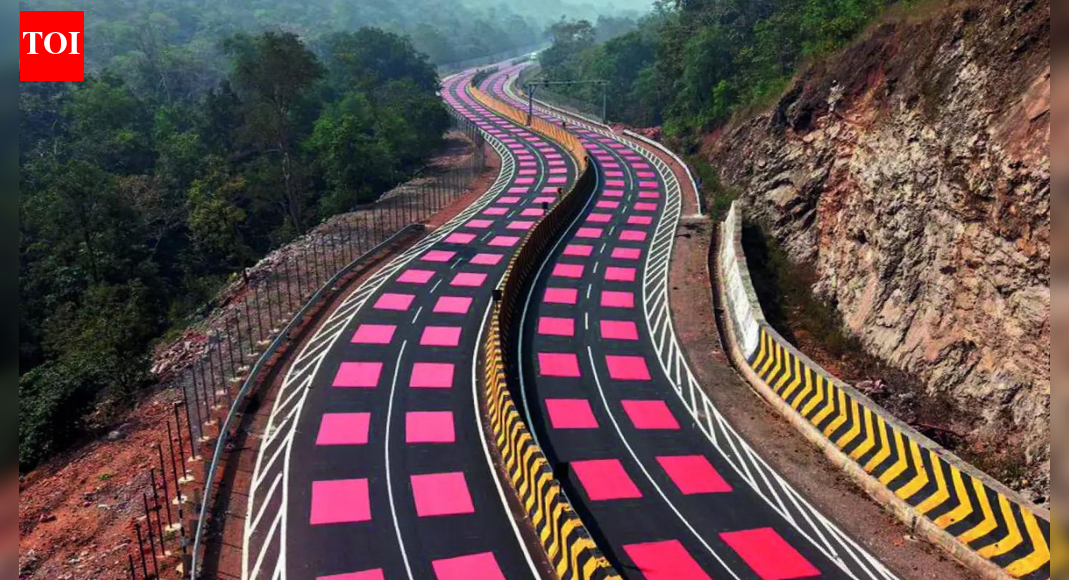
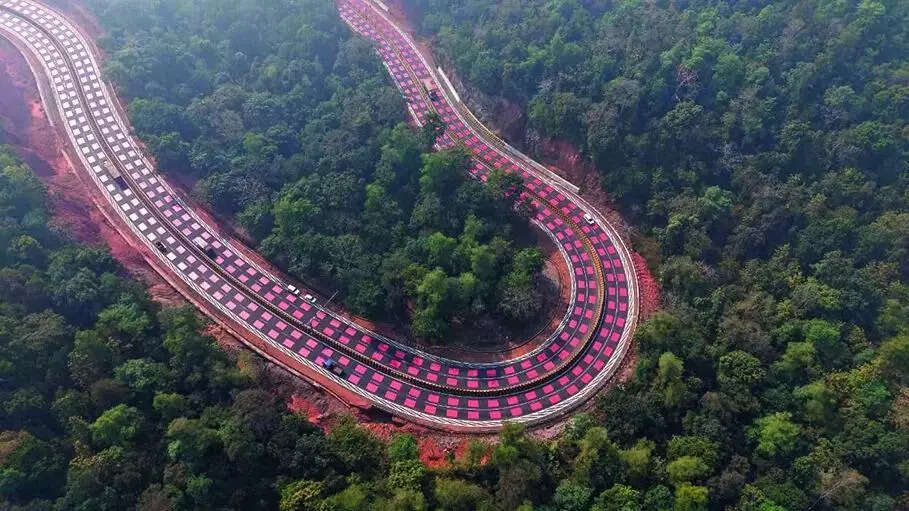
“To mitigate this risk, NHAI applied a 5mm thick red surface layer – the ‘table-top’ – over the road in the designated danger zone within the tiger reserve. The bright red texture signals to drivers that they are entering a wildlife-sensitive stretch and its slightly raised surface automatically reduces vehicle speed,” said S K Singh, regional officer, NHAI. “As per my knowledge, it is the first such concept implemented in the country,” he added.Officials involved in the project say the markings serve two purposes. Visually, they announce that the driver is entering a forest stretch where the rules of the road subtly change. Physically, they produce a mild vibration under the tyres, enough to encourage drivers to ease off the accelerator without the abrupt jolt of a speed breaker, which is considered unsafe on high-speed highways. The technique is widely used in other countries but has rarely been seen on Indian national highways, particularly in wildlife zones.Speed, conservation scientists have long argued, is the variable that determines whether an animal crossing a road is seen in time, and whether a driver has the distance needed to stop or swerve. Underpasses and fencing decide where animals cross; speed decides what happens when something goes wrong. On NH-45, the red-marked stretch is meant to slow vehicles gradually, well before they reach the points where animals are most likely to emerge.Below the road, the more conventional work has been done. Along the forest section, 25 wildlife underpasses have been built, their locations chosen on the basis of observed animal movement rather than engineering convenience. Continuous iron fencing runs on both sides of the highway, guiding animals towards these openings and preventing them from wandering onto the carriageway at random. Similar structures elsewhere in the country, including near Pench, have shown that when crossings align with natural routes, animals do use them, from ungulates to large carnivores.Former IFS officer and wildlife expert Jagdish Chandra said the red-road concept could make a significant difference. “There will be positive results. This is the first such project implemented in the country,” he said.


