
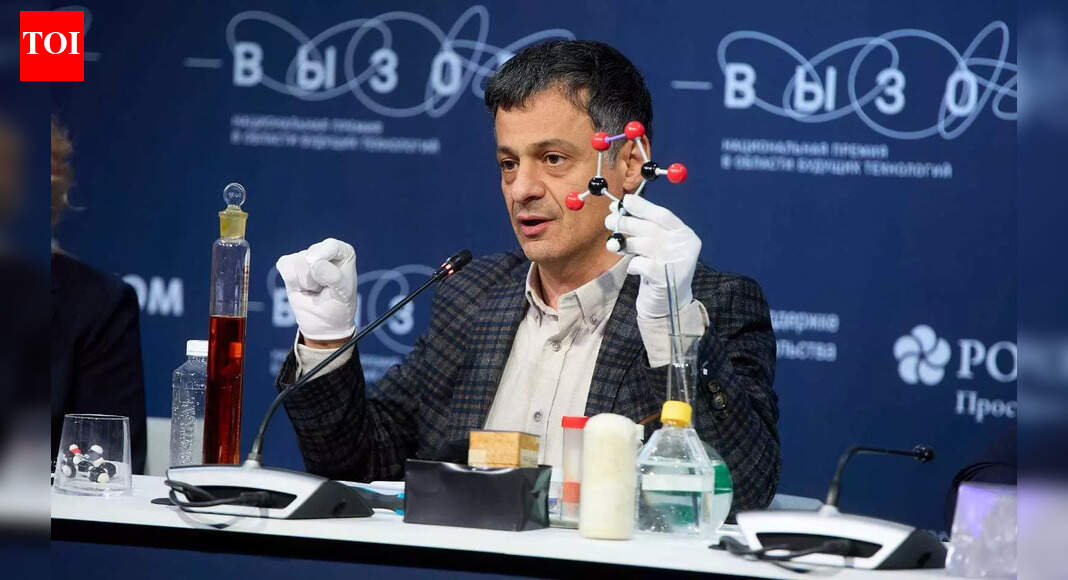
Artem Oganov, Chairman of the VYZOV Prize Scientific Committee The VYZOV Prize has expanded its international footprint in 2025, drawing applications from researchers across 40 countries and reinforcing its evolution from a national award into a global scientific honour.The prize, which recognises high-technology research with potential for practical application within the next decade, received 632 applications this year. The international “Discovery” category recorded the highest number of submissions, reflecting growing participation from outside Russia. Applications came from countries including the United States, China, India, Brazil, Italy, the Netherlands, Germany, Switzerland, Turkey and Iran, as well as Indonesia, Egypt, Pakistan, Kazakhstan and Venezuela.”The VYZOV Prize is an important step towards international scientific unity. I would like to note the increase not only in the quantity but also in the quality of applications this year, particularly in the international category. Indian science and technology have a great history and a great future – we got quite a few applications from Mumbai and Delhi this year, and I’m looking forward to receiving many strong submissions from India next year,” said Artem Oganov, Chairman of the VYZOV Prize Scientific Committee.The VYZOV Prize features five categories covering a wide range of scientific fields. In the Engineering Solution category, Mikhail Skupov was recognised for developing industrial production of nitride nuclear fuel. The Breakthrough award went to Ilya Yampolsky for research into the molecular mechanics of bioluminescence, leading to the development of glowing plants with biomedical applications.The Scientist of the Year award was given to Stepan Kalmykov for advances in radiochemistry aimed at safer radioactive waste management. Vera Vil received the Future Prize for developing environmentally friendly chemical synthesis methods, while the International Discovery award went to Valery Fokin of the United States for pioneering click chemistry, a technique used in diagnostics and cancer research.Each laureate will receive a prize of $150,000.Organisers said the growing international participation highlights the role of cross-border cooperation in advancing scientific research. Applications for the next edition of the VYZOV Prize are scheduled to open in February 2026.End of ArticleFollow Us On Social MediaVideosBondi Beach Terror Suspect Visited Hyderabad Six Times After Leaving India, Telangana Police Reveal’To Delay Elections, Instigate India’: Former Minister Blames Yunus Govt For Bangladesh ViolenceBangladesh Crisis: Tharoor Panel Red Flags 5 Reasons That Make It India’s Biggest Test Since 1971Rijiju Blames Congress As Parliament Session Ends Without Pollution Debate, Jairam Ramesh RespondsBangladesh: Hindu Man Lynching Sparks Outrage, Former Indian Envoy Calls Situation Total MobocracyExplained: Why Bangladesh’s Fresh Unrest Ahead Of Polls Is One Of India’s Biggest Strategic WorriesWho Was Sharif Osman Hadi, The Anti-India Face Of Bangladesh Whose Death Has Set Dhaka AblazePakistan Embarrassed Globally As Saudi Deports 56000 Beggars Despite No Fly Lists And Warnings’Countries Like Us Must Stick Together’: Jaishankar And Dutch FM On Strengthening India-EU Ties’Can’t Breathe, You Are Killing Me’: Trapped Journalist Cries As Dhaka Protesters Torch Media Houses123Photostories5 gym mistakes that can put heart health at riskFrom Labubu dolls to Prada Kolhapuris: 5 viral fashion moments of 2025 that broke the internetHarrison Ford, aging gracefully at 83: 6 habits behind his long-term vitalityNot just reindeer: 5 animals that make Christmas specialExclusive – Bigg Boss 19 Winner Gaurav Khanna on the dull phase in his career, facing hate from Farrhana, and reacting to trolls targeting wife Akanksha over her choice to not have childrenFrom Samosa to White Butter: Kareena Kapoor’s cheat meals to try this winter10 countries that feature birds and animals on their national flagsTV actors who spoke about body shaming: From Ashnoor Kaur to Tejasswi PrakashYear ender 2025: From Katrina–Vicky to Kiara–Sidharth, celebrity couples who stepped into parenthood this yearSleeping with a heater or blower on? Health risks you must know123Hot Picksvb g ram gICICI Prudential AMCUAE RainGold rate todaySilver rate todayPublic Holidays DecemberBank Holidays DecemberTop TrendingTravis Kelce Retirement RumorsAnthony Richardson InjuryCAT ResultWNBASan Francisco GiantsCam SkatteboPuka NacuaJake PaulSidney CrosbyGisele Bndchen
The VYZOV Prize has expanded its international footprint in 2025, drawing applications from researchers across 40 countries and reinforcing its evolution from a national award into a global scientific honour.The prize, which recognises high-technology research with potential for practical application within the next decade, received 632 applications this year. The international “Discovery” category recorded the highest number of submissions, reflecting growing participation from outside Russia. Applications came from countries including the United States, China, India, Brazil, Italy, the Netherlands, Germany, Switzerland, Turkey and Iran, as well as Indonesia, Egypt, Pakistan, Kazakhstan and Venezuela.“The VYZOV Prize is an important step towards international scientific unity. I would like to note the increase not only in the quantity but also in the quality of applications this year, particularly in the international category. Indian science and technology have a great history and a great future – we got quite a few applications from Mumbai and Delhi this year, and I’m looking forward to receiving many strong submissions from India next year,” said Artem Oganov, Chairman of the VYZOV Prize Scientific Committee.The VYZOV Prize features five categories covering a wide range of scientific fields. In the Engineering Solution category, Mikhail Skupov was recognised for developing industrial production of nitride nuclear fuel. The Breakthrough award went to Ilya Yampolsky for research into the molecular mechanics of bioluminescence, leading to the development of glowing plants with biomedical applications.The Scientist of the Year award was given to Stepan Kalmykov for advances in radiochemistry aimed at safer radioactive waste management. Vera Vil received the Future Prize for developing environmentally friendly chemical synthesis methods, while the International Discovery award went to Valery Fokin of the United States for pioneering click chemistry, a technique used in diagnostics and cancer research.Each laureate will receive a prize of $150,000.Organisers said the growing international participation highlights the role of cross-border cooperation in advancing scientific research. Applications for the next edition of the VYZOV Prize are scheduled to open in February 2026.


