
File photo NEW DELHI: The air quality in Delhi sharply deteriorated to the ‘severe’ category on Saturday as a toxic greyish haze blanketed the city. The 24-hour average overall AQI released at 4pm was 431, as opposed to 349 a day earlier. However, the AQI subsequently slipped into the ‘severe plus’ category for the first time this year, reaching 452 at 8pm.This prompted CAQM to impose stringent measures under GRAP, first under stage 3 and then stage 4 as the air worsened, on the same day. No respite from hazardous air quality is expected on Sunday. Experts said the AQI spiked due to high emission loads and unfavourable meteorological conditions. The farm fire season is over, while an increase in moisture due to the formation of fog, calm winds, and inversion trapped the pollutants.Among the measures invoked are a ban on construction and demolition, no entry of non-essential trucks, hybrid mode for schools, and a ban on BS-III petrol and BS-IV diesel vehicles.The Delhi govt has directed that all govt and private offices operate at 50% strength, with the rest working from home. Data from the Central Pollution Control Board showed that the AQI rose rapidly on Saturday. It was 397 at 9am, in the higher end of the ‘very poor’ category, but reached the severe range at 10am at 401.According to the India Meteorological Department, the lowest visibility at Safdarjung, the city’s base station, was observed at 400 metres at 8am. It improved to 500 metres at 9.30am.Anumita Roychowdhury, executive director (research and advocacy), Centre for Science and Environment, said, “As the atmospheric conditions are turning unfavourable with low wind speed and poor dispersion of pollutants, high emissions from local sources are getting trapped, spiking the peak levels.”CAQM said a feeble western disturbance is approaching north-west India, and the prevailing meteorological condition has marked a reduction in wind speed, at times becoming calm, a shift in wind direction from westerly to easterly, and an increase in moisture content in the lower atmosphere. “Such conditions during the winter season are conducive to the formation of smog,” it said.About the AuthorPriyangi AgarwalPriyangi Agarwal writes on environmental and climate change issues, connecting these topics to the everyday lives of people. She tracks developments across the capital’s transport hubs—Delhi Metro, Namo Bharat Trains, and Delhi Airport—while also reporting on pressing social issues. Her stories blend data analysis with voices from the ground to tell human-centred narratives. Previously stationed in western Uttar Pradesh, she focused her coverage on minority issues, health, and human rights.Read MoreEnd of ArticleFollow Us On Social MediaVideosCongress Questions BJP’s Renaming Of MGNREGA, Hits Out At Gandhi HatredMessi Event Chaos In Kolkata Triggers BJP Attack On Mamata Over Law Order And MismanagementMessi Event Chaos In Kolkata: Bengal Police Detain Organiser, Refunds Announced‘Namaste Trump’ Era Is Over As India–US Relations Turn Fragile Over Tariffs, Says Jairam RameshHouse Democrats Push To Scrap Donald Trump’s India Tariffs As Congress Challenges Emergency PowersMessi’s Kolkata Visit Turns Chaotic As Angry Fans Vandalise Banners At Salt Lake Stadium’PM Not Always Wrong’: Ex-Congress Leader Ashwani Kumar, Calls Party Revival A National ObligationAction Over Rhetoric: CDS Anil Chauhan Sends A Calm But Clear Signal To Pakistan Amid Op SindoorWhen Optics Fail: Top Five Global Moments That Turned Pakistan PM Shehbaz Sharif Into A Meme’No Free Lift For India’: PM Modi’s Chief Economic Adviser Says China Won’t Repeat West’s Mistake123PhotostoriesKohinoor and 5 other legendary diamonds every diamond lover should know aboutLow on Energy? Read This According To Your Birth Date5 everyday habits that unknowingly attract rhodents, insects, lizards into your homeThis actress went from TV star to OTT sensation, has a history with Karan Kundrra, and is now linked to a popular cricket commentatorVadodara-Mumbai Expressway Expansion: Rs 100 Crore Construction of 14km Morbe-Kalamboli Road Begins to Ease Traffic and Freight5 reasons why ‘Made-in-India’ sneakers are having a momentWhat your dad secretly taught you about lifeYour hidden spiritual gift revealed… based on your date of birthLonger locals, more relief: Western Railway begins work to extend 15-car locals up to Bandra7 Brilliant leftover rice recipes that are a must try123Hot PicksMukesh Ambani vs Gautam AdaniDonald TrumpAnurag ThakurGold rate todaySilver rate todayPublic Holidays NovemberBank Holidays NovemberTop TrendingSherrone MooreKell MooreH1B Fee HikeWho is Mia SoretyWho is Jeff ShiverNick FuentesDaniel JonesMeghan MarkleShehbaz SharifPaige Shiver Net Worth
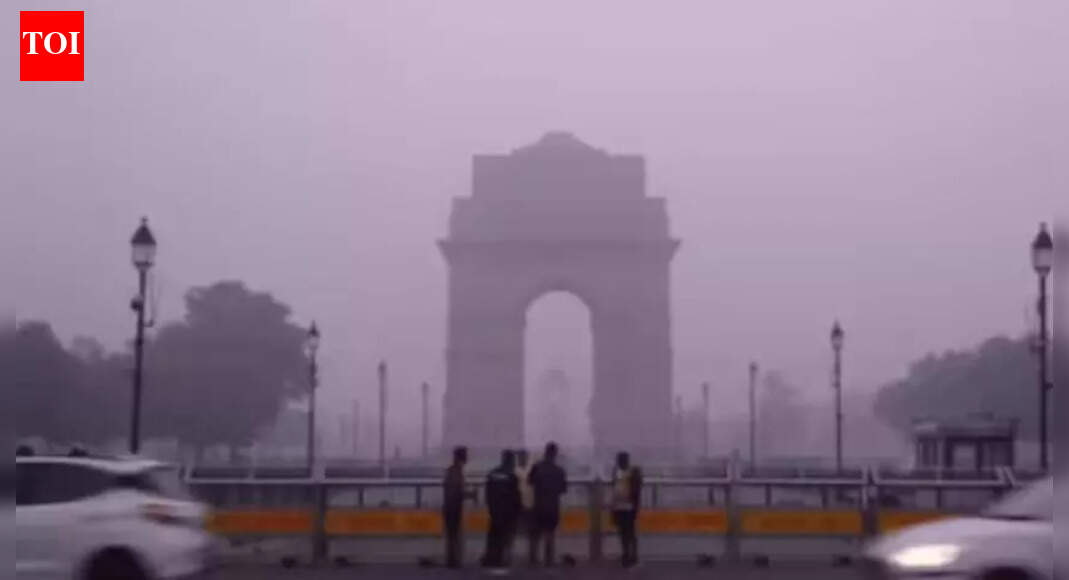
NEW DELHI: The air quality in Delhi sharply deteriorated to the ‘severe’ category on Saturday as a toxic greyish haze blanketed the city. The 24-hour average overall AQI released at 4pm was 431, as opposed to 349 a day earlier. However, the AQI subsequently slipped into the ‘severe plus’ category for the first time this year, reaching 452 at 8pm.This prompted CAQM to impose stringent measures under GRAP, first under stage 3 and then stage 4 as the air worsened, on the same day. No respite from hazardous air quality is expected on Sunday. Experts said the AQI spiked due to high emission loads and unfavourable meteorological conditions. The farm fire season is over, while an increase in moisture due to the formation of fog, calm winds, and inversion trapped the pollutants.Among the measures invoked are a ban on construction and demolition, no entry of non-essential trucks, hybrid mode for schools, and a ban on BS-III petrol and BS-IV diesel vehicles.The Delhi govt has directed that all govt and private offices operate at 50% strength, with the rest working from home. Data from the Central Pollution Control Board showed that the AQI rose rapidly on Saturday. It was 397 at 9am, in the higher end of the ‘very poor’ category, but reached the severe range at 10am at 401.According to the India Meteorological Department, the lowest visibility at Safdarjung, the city’s base station, was observed at 400 metres at 8am. It improved to 500 metres at 9.30am.Anumita Roychowdhury, executive director (research and advocacy), Centre for Science and Environment, said, “As the atmospheric conditions are turning unfavourable with low wind speed and poor dispersion of pollutants, high emissions from local sources are getting trapped, spiking the peak levels.”CAQM said a feeble western disturbance is approaching north-west India, and the prevailing meteorological condition has marked a reduction in wind speed, at times becoming calm, a shift in wind direction from westerly to easterly, and an increase in moisture content in the lower atmosphere. “Such conditions during the winter season are conducive to the formation of smog,” it said.


