
Calls For A Change Of Mindset President Murmu, V P Radhakrishnan and PM Modi read the Preamble during Constitution Day celebrations at Samvidhan Sadan Wednesday NEW DELHi: President Droupadi Murmu on Wednesday said women representation in judiciary, legislature and executive continues to be low despite Parliament amending the Constitution to enact Women’s Reservation Act in 2023 to reserve one-third of seats for women in Lok Sabha and state assemblies.”Nari Shakti Vandan Adhiniyam is a historic step towards empowering women and a homage to all women who took part in the Constituent Assembly to frame the Constitution. But we continue to lag in giving women adequate representation in judiciary, legislature and executive,” Murmu said at the Constitution Day celebrations organised by Supreme Court, which has only one woman among 33 judges.Speaking in the presence of CJI Surya Kant and law minister Arjun Ram Meghwal, the President said taking steps to give adequate representation to women in all three wings of governance will require a change of mindset. It was SCBA president Vikas Singh who mentioned extremely low representation of women in judiciary – 13% in HCs and 35% in trial courts.She said annual commemoration of the Constitution’s adoption on Nov 26, 1949, is often marked by speeches made by dignitaries. “Have we ever looked back and assessed in the last 75 years how much we have progressed in achieving the constitutional goals of justice, equality, liberty and fraternity for every citizen? If not, can we do it in the next 24 years when we will be celebrating the centenary of the adoption of the Constitution? That is the question, not only for the judiciary, legislature or executive, but for everyone.”Addressing another Constitution Day event in Central Hall of old Parliament building or Samvidhan Sadan, Murmu described the Constitution as the bedrock of “our national pride and national identity”, and as a guiding text for taking India forward with a “nationalist mindset by abandoning the colonial mindset”.In front of an audience that included Vice-President C P Radhakrishnan, PM Narendra Modi, Lok Sabha Speaker Om Birla, opposition leaders of Rajya Sabha and Lok Sabha, Mallikarjun Kharge and Rahul Gandhi, respectively, and members of both Houses of Parliament, Murmu cited implementation of legislations related to the criminal justice system as an example of the effort to shun the colonial mindset. Murmu also said that by repealing the provisions of Article 370, an obstacle that had been hindering the country’s inclusive political integration was removed.At the function in SC, Murmu praised CJI’s renewed focus on mediation and termed it a big step to reduce litigation. CJI Kant said when it comes to justice delivery system, there is still a disquieting gap between constitutional vision and the experience of many, especially the marginalised section of population for whom the access to justice remains elusive because of exorbitant cost of litigation, language of courts, distance and delay. Promising to improve the justice delivery system on all these fronts, the CJI said, “The time is also ripe for us to reinforce predictability in our judicial approach.”End of ArticleFollow Us On Social MediaVideos“Being Examined”: MEA On Dhaka’S Request To Extradite Sheikh Hasina”There Was No Fear on His Face”: Survivor Recounts Trauma of Mumbai 26/11 AttacksPakistan On Edge As Imran Khan’s Sisters Assaulted At Jail And Social Media Fuels Death Speculation’Spur Of The Moment’: Former CJI Gavai Reacts To Shoe-Attack Attempt, Reveals Why He Took No Action’No Amount of Denial’ Will Change Arunachal’s Status: India’s BOLD Response To China Over Border Row’No Moral Standing’: India Slams Pakistan’s Rant On Ayodhya Event, Calls Out Bigotry And RepressionKhawaja Asif Admits Pakistan Can’t Trust Taliban As Deadly Border Strikes Trigger New FlashpointFormer CJI B.R. Gavai Clarifies He Never Faced Political Or Executive Pressure During His Tenure“India Matters To Safran,” Ceo Oliver Andriès Highlights Partnership At New Mro Facility LaunchKorean Lawmaker Highlights Ancient Ties, Calling Ayodhya A Symbolic Bridge Between Two Nations123PhotostoriesDipika Kakar gets emotional after visiting Ajmer Sharif Dargah with Shoaib Ibrahim and son; says ‘Jab Ruhaan NICU mein tha tab maine mannat maangi thi’Harvard trained Gastroenterologist lists 6 best seeds for different health problemsThanksgiving 2025: 10 décor ideas you won’t cost you anything5 kings with the longest reigns in history, and how they are shining examples of a lasting legacyThis drink can help burn cholesterol naturally and effectively; recipe inside‘Mass Jathara’ to ‘The Pet Detective’: South movies to stream on OTT this weekend5 Ayurvedic mistakes to avoid and 8 comforting vegetarian soups for winterShraddha Kapoor to Fatima Sana Sheikh: 5 viral celeb looks of the day you need to seeMarried to THIS Bollywood actress and running a Rs 60,000-crore empire, the net worth of this Harvard-trained business tycoon will leave you stunned‘GST’ to ‘Revolver Rita’: South Indian movies to watch in theatres this weekend123Hot PicksDelhi AQI TodayNew Labour CodeCyclone SenyarGold rate todaySilver rate todayPublic Holidays NovemberBank Holidays NovemberTop TrendingGianis AntetokounmpoAyesha CurryJosh Jacobs InjuryOmarion Hampton InjuryStefon DiggsNHL Trade RumorsCharlie McAvoyIShowSpeedShophie CunninghamJaiquawn Jay
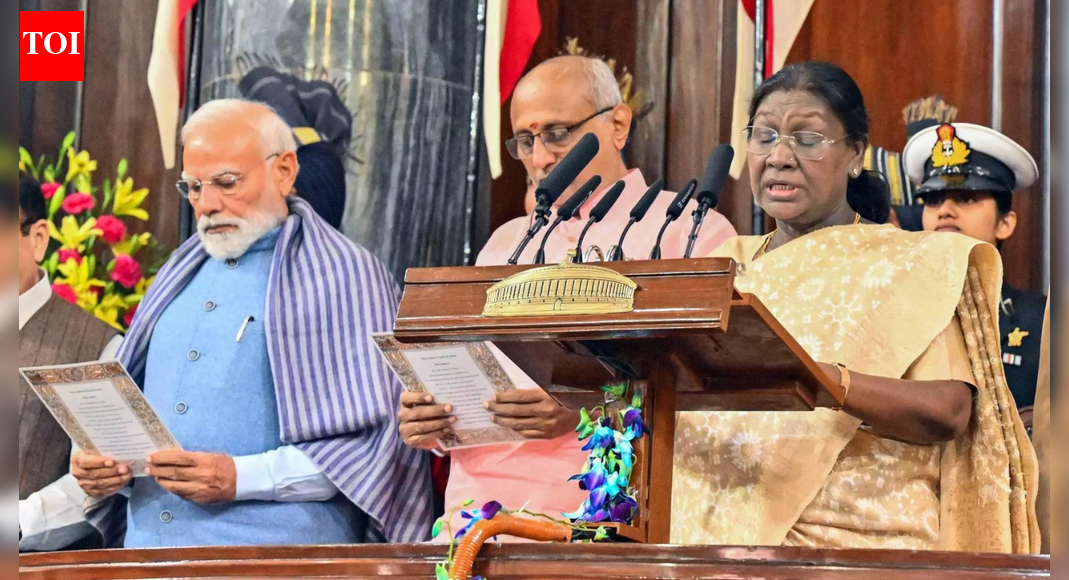

President Murmu, V P Radhakrishnan and PM Modi read the Preamble during Constitution Day celebrations at Samvidhan Sadan Wednesday
NEW DELHi: President Droupadi Murmu on Wednesday said women representation in judiciary, legislature and executive continues to be low despite Parliament amending the Constitution to enact Women’s Reservation Act in 2023 to reserve one-third of seats for women in Lok Sabha and state assemblies.“Nari Shakti Vandan Adhiniyam is a historic step towards empowering women and a homage to all women who took part in the Constituent Assembly to frame the Constitution. But we continue to lag in giving women adequate representation in judiciary, legislature and executive,” Murmu said at the Constitution Day celebrations organised by Supreme Court, which has only one woman among 33 judges.Speaking in the presence of CJI Surya Kant and law minister Arjun Ram Meghwal, the President said taking steps to give adequate representation to women in all three wings of governance will require a change of mindset. It was SCBA president Vikas Singh who mentioned extremely low representation of women in judiciary – 13% in HCs and 35% in trial courts.She said annual commemoration of the Constitution’s adoption on Nov 26, 1949, is often marked by speeches made by dignitaries. “Have we ever looked back and assessed in the last 75 years how much we have progressed in achieving the constitutional goals of justice, equality, liberty and fraternity for every citizen? If not, can we do it in the next 24 years when we will be celebrating the centenary of the adoption of the Constitution? That is the question, not only for the judiciary, legislature or executive, but for everyone.”Addressing another Constitution Day event in Central Hall of old Parliament building or Samvidhan Sadan, Murmu described the Constitution as the bedrock of “our national pride and national identity”, and as a guiding text for taking India forward with a “nationalist mindset by abandoning the colonial mindset”.In front of an audience that included Vice-President C P Radhakrishnan, PM Narendra Modi, Lok Sabha Speaker Om Birla, opposition leaders of Rajya Sabha and Lok Sabha, Mallikarjun Kharge and Rahul Gandhi, respectively, and members of both Houses of Parliament, Murmu cited implementation of legislations related to the criminal justice system as an example of the effort to shun the colonial mindset. Murmu also said that by repealing the provisions of Article 370, an obstacle that had been hindering the country’s inclusive political integration was removed.At the function in SC, Murmu praised CJI’s renewed focus on mediation and termed it a big step to reduce litigation. CJI Kant said when it comes to justice delivery system, there is still a disquieting gap between constitutional vision and the experience of many, especially the marginalised section of population for whom the access to justice remains elusive because of exorbitant cost of litigation, language of courts, distance and delay. Promising to improve the justice delivery system on all these fronts, the CJI said, “The time is also ripe for us to reinforce predictability in our judicial approach.“


