
A NatStrat report details Pakistan’s use of terrorism as a state instrument against India since 1947, evolving through five distinct phases. The study highlights a consistent strategy by Pakistan’s military and intelligence to deploy terrorism as part of its policy framework, despite India’s resilience and evolving responses. NEW DELHI: A report released on Wednesday by NatStrat, a Delhi-based strategic affairs think tank, claims that Pakistan has used terrorism as a state instrument against India since 1947, with cross-border operations evolving through five distinct phases over nearly eight decades. The release coincided with the 17th anniversary of the 26/11 Mumbai terror attacks.The study, titled ‘Chronology of Pakistani Terror Attacks on India: 1947–2025’, says records since Independence indicate a “consistent strategy” by Pakistan’s military and intelligence establishment, particularly the inter-services intelligence (ISI), to deploy terrorism as part of its policy framework.”The history of Pakistan-sponsored terrorism against India needs to be told and retold,” the NatStrat compilation states.’Red Fort To Kashmir’: Pak Leader’s SHAMEFUL Comment on Delhi Blast; Terror a Badge of Honour?Five phases of cross-border terror: 1947–2025The report categorises the trajectory of Pakistan-origin terrorism into five periods – foundational conflicts (1947–71), the rise of proxy warfare (1972–89), escalation and urban attacks (1990–2000), targeting national symbols (2001–09), and adaptive terrorism with hardened Indian responses (2010–25).Phase I (1947–1971): Foundational conflictsThe period begins with the Poonch uprising and the tribal invasion of Jammu & Kashmir in 1947–48, followed by Operation Gibraltar (1965) and Operation Chengiz KhanPakistan’s pre-emptive strike in 1971. India’s counteroffensive culminated in the surrender of 93,000 Pakistani troops and the creation of Bangladesh.Phase II (1972–1989): Proxy warfareThe report recounts plane hijackings, targeted killings – including the 1984 murder of diplomat Ravindera Mhatre – and ISI backing the Khalistan movement. The hijackings of Indian Airlines flights in 1971 and 1984 are cited as early examples of Pakistan’s covert strategy.Phase III (1990–2000): Urban terror expandsPakistan-backed groups, including Lashkar-e-Taiba (LeT), escalated militancy in J&K through the K2 project. Major urban attacks included the 1993 Mumbai serial blasts, 1996 Lajpat Nagar blast, 1998 Coimbatore bombings, the 1999 Kargil intrusion, and the IC-814 hijacking.Phase IV (2001–2009): National symbols targetedKey attacks in this era include the 2001 Parliament attack, 2002 Akshardham temple assault, the 2005 Delhi blasts, 2006 Mumbai train bombings, and the 26/11 Mumbai attacks, which killed 166 and brought India-Pakistan ties to a breaking point.Phase V (2010–2025): Adaptive terrorism and stronger Indian responseThe report tracks attacks like the 2010 German Bakery blast, 2016 Pathankot and Uri attacks, and 2019 Pulwama bombing. It also lists recent incidents, including the 2025 Pahalgam attack, claimed by ‘The Resistance Front,’ and India’s retaliatory Operation Sindoor, which defence minister Rajnath Singh described as treating “any attack on Indian soil as an act of war.”India’s resilienceThe report stresses that cross-border terror has not deterred India’s progress. “They have not stopped India’s march as a nation. Instead, Indian society and polity have pushed back attempts to divide the country or slow down its progress,” it notes.Calling terrorism an affront to humanity, the report says state-backed terrorism poses a grave threat to global stability.”It is a scourge that affects the whole world and must be fought unitedly, without reservation or double standards.”NatStrat is convened by Pankaj Saran, a former diplomat with four decades of experience, who has served in the prime minister’s office, national security council secretariat, and as India’s envoy to Russia and Bangladesh. He also served as deputy national security adviser.The compilation is dedicated to victims of terrorism and those who have fought against it, offering a detailed account of what it calls Pakistan’s “decades-long hybrid warfare” and India’s evolving response.(With inputs from agencies)About the AuthorTOI News DeskThe TOI News Desk comprises a dedicated and tireless team of journalists who operate around the clock to deliver the most current and comprehensive news and updates to the readers of The Times of India worldwide. With an unwavering commitment to excellence in journalism, our team is at the forefront of gathering, verifying, and presenting breaking news, in-depth analysis, and insightful reports on a wide range of topics. The TOI News Desk is your trusted source for staying informed and connected to the ever-evolving global landscape, ensuring that our readers are equipped with the latest developments that matter most.”Read MoreEnd of ArticleFollow Us On Social MediaVideos’No Amount of Denial’ Will Change Arunachal’s Status: India’s BOLD Response To China Over Border Row’No Moral Standing’: India Slams Pakistan’s Rant On Ayodhya Event, Calls Out Bigotry And RepressionKhawaja Asif Admits Pakistan Can’t Trust Taliban As Deadly Border Strikes Trigger New FlashpointFormer CJI B.R. Gavai Clarifies He Never Faced Political Or Executive Pressure During His Tenure“India Matters To Safran,” Ceo Oliver Andriès Highlights Partnership At New Mro Facility LaunchKorean Lawmaker Highlights Ancient Ties, Calling Ayodhya A Symbolic Bridge Between Two NationsSC Upholds Removal Of Army Lieutenant Who Declined Gurdwara Entry And Labels It Act Of Religious EgoH-1B Controversy Erupts After US Economist Alleges Industrial-Scale Fraud Targeting Indian VisasPM Modi Pens Powerful Letter On Duties And Democracy, Reflects On His Constitutional JourneyPM Modi Opens India’s First Global Engine MRO Facility As Safran Launches Advanced LEAP Centre123Photostories10 landlocked countries in Asia and their travel highlights9 South Indian Chicken Curries perfect for weekday dinner5 exercises for a sculpted back and bicepsBK Sister Shivani shares 7 daily gratitude thoughts for wellness and wealth2 easy recipes to detox the liver naturally and how to make them at home9 unique five-letter baby names that begin with letter N10 most colourful freshwater fish that make your aquarium look like a paintingYour soul temple: 6 powerful temples to visit in India based on personality typesHow to talk about money with your partner: 5 easy ways to approach finances in a relationshipHarvard doctor-approved 3 herbal teas to prevent bloating123Hot PicksDelhi AQI TodayNew Labour CodeCyclone SenyarGold rate todaySilver rate todayPublic Holidays NovemberBank Holidays NovemberTop TrendingJill Roord and Pien SandersAyesha CurryVirat Kohli BrotherKarnataka Road CrashStefon DiggsMLB Trade RumorsRiley GainesJordon HudsonShophie CunninghamJaiquawn Jay

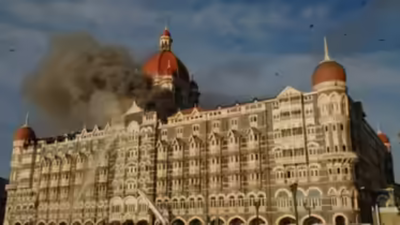
NEW DELHI: A report released on Wednesday by NatStrat, a Delhi-based strategic affairs think tank, claims that Pakistan has used terrorism as a state instrument against India since 1947, with cross-border operations evolving through five distinct phases over nearly eight decades. The release coincided with the 17th anniversary of the 26/11 Mumbai terror attacks.The study, titled ‘Chronology of Pakistani Terror Attacks on India: 1947–2025’, says records since Independence indicate a “consistent strategy” by Pakistan’s military and intelligence establishment, particularly the inter-services intelligence (ISI), to deploy terrorism as part of its policy framework.“The history of Pakistan-sponsored terrorism against India needs to be told and retold,” the NatStrat compilation states.
Five phases of cross-border terror: 1947–2025
The report categorises the trajectory of Pakistan-origin terrorism into five periods – foundational conflicts (1947–71), the rise of proxy warfare (1972–89), escalation and urban attacks (1990–2000), targeting national symbols (2001–09), and adaptive terrorism with hardened Indian responses (2010–25).
Phase I (1947–1971): Foundational conflicts
The period begins with the Poonch uprising and the tribal invasion of Jammu & Kashmir in 1947–48, followed by Operation Gibraltar (1965) and Operation Chengiz KhanPakistan’s pre-emptive strike in 1971. India’s counteroffensive culminated in the surrender of 93,000 Pakistani troops and the creation of Bangladesh.
Phase II (1972–1989): Proxy warfare
The report recounts plane hijackings, targeted killings – including the 1984 murder of diplomat Ravindera Mhatre – and ISI backing the Khalistan movement. The hijackings of Indian Airlines flights in 1971 and 1984 are cited as early examples of Pakistan’s covert strategy.
Phase III (1990–2000): Urban terror expands
Pakistan-backed groups, including Lashkar-e-Taiba (LeT), escalated militancy in J&K through the K2 project. Major urban attacks included the 1993 Mumbai serial blasts, 1996 Lajpat Nagar blast, 1998 Coimbatore bombings, the 1999 Kargil intrusion, and the IC-814 hijacking.
Phase IV (2001–2009): National symbols targeted
Key attacks in this era include the 2001 Parliament attack, 2002 Akshardham temple assault, the 2005 Delhi blasts, 2006 Mumbai train bombings, and the 26/11 Mumbai attacks, which killed 166 and brought India-Pakistan ties to a breaking point.
Phase V (2010–2025): Adaptive terrorism and stronger Indian response
The report tracks attacks like the 2010 German Bakery blast, 2016 Pathankot and Uri attacks, and 2019 Pulwama bombing. It also lists recent incidents, including the 2025 Pahalgam attack, claimed by ‘The Resistance Front,’ and India’s retaliatory Operation Sindoor, which defence minister Rajnath Singh described as treating “any attack on Indian soil as an act of war.”The report stresses that cross-border terror has not deterred India’s progress. “They have not stopped India’s march as a nation. Instead, Indian society and polity have pushed back attempts to divide the country or slow down its progress,” it notes.Calling terrorism an affront to humanity, the report says state-backed terrorism poses a grave threat to global stability.“It is a scourge that affects the whole world and must be fought unitedly, without reservation or double standards.”NatStrat is convened by Pankaj Saran, a former diplomat with four decades of experience, who has served in the prime minister’s office, national security council secretariat, and as India’s envoy to Russia and Bangladesh. He also served as deputy national security adviser.The compilation is dedicated to victims of terrorism and those who have fought against it, offering a detailed account of what it calls Pakistan’s “decades-long hybrid warfare” and India’s evolving response.(With inputs from agencies)


