
An ash cloud from Ethiopia’s Hayli Gubbi volcano has reached parts of India, impacting Gujarat, Rajasthan, Maharashtra, Delhi, Haryana, and Punjab. Travelling at high altitudes, the plume carries volcanic ash and sulphur dioxide, potentially darkening skies and causing flight disruptions. Aviation authorities have issued warnings, leading to some flight cancellations. (Photo credit: ANI) NEW DELHI: An ash cloud from Ethiopia’s Hayli Gubbi volcano hit parts of India Monday evening, according to IndiaMetSky Weather. The plumes first entered Gujarat from the west and then moved rapidly toward Rajasthan, northwest Maharashtra, Delhi, Haryana and Punjab by around 10 pm, and is drifting towards the Himalayas and other northern regions.Authorities watched the plume’s movement towards Delhi and Jaipur, with early signs spotted near Jamnagar around 5.30 pm, leading to disruptions as the situation developed.The ash plume is travelling at altitudes between 15,000-25,000 feet, rising up to 45,000 feet in some layers, and carries volcanic ash, sulphur dioxide, and tiny particles of glass and rock. IndiaMetSky Weather warned that skies could appear “darker and hazier than usual” and said that the plume may disrupt air traffic and lead to “delays and longer travel.”What it is, how it travelled?The Toulouse Volcanic Ash Advisory Centre (VAAC) said the explosive eruption began around 8:30 am GMT on Sunday, marking the first activity from the almost 10,000-year-dormant Hayli Gubbi volcano.Thick columns of ash rose up to 14 kilometres into the sky from the Afar region, located around 800 km northeast of Addis Ababa near the Eritrean border.The VAAC confirmed that while the eruption had stopped, “a large ash plume is moving toward northern India.”The volcano sits within the geologically active Rift Valley, where two tectonic plates meet. After erupting, the ash swept across the Red Sea toward Yemen and Oman before drifting eastwards into India and northern Pakistan, according to VAAC and regional media outlets.What are the major cities impacted?The windborne ash cloud swept across vast stretches of northwest India on Monday night, passing over Rajasthan, Gujarat, Maharashtra, Delhi-NCR and Punjab. Visibility dipped in several pockets as the plume drifted eastward.IndiaMetSky Weather said, “Ash clouds moving towards North India. A large ash plume can be seen stretching from #HayliGubbi Volcano region upto #Gujarat. The eruption has stopped ever since the eruption, but this Ash plume has been sent up into the atmosphere, which is moving at a speed of 100-120km/h toward North India.”It added that the plume, containing volcanic ash, sulphur dioxide and “small particles of glass/rock,” would likely darken the skies and impact flight routes. “The Ash cloud is about to enter #Gujarat (West side) and move towards #Rajasthan NW #Maharashtra, #Delhi, #Haryana and #Punjab by 10 pm and later it will impact the Himalayas and other regions,” the agency said.By late night, the sulphur dioxide–rich plume was already moving over Delhi, NCR, Haryana and adjoining districts of Uttar Pradesh. IndiaMetSky Weather explained that although some pockets of ash could be seen over Rajasthan, chances of ashfall on the plains remained “less.” Will the Ash effect AQI?According to the meteorological service, the ash cloud’s altitude means that India’s surface-level AQI is not expected to deteriorate.It reiterated that the event was “mostly safe” and said it would “not like to impact surface AQI levels as Ash clouds are in 25,000 to 45,000 feet above the surface.”The agency said the plume was stretching from the Oman–Arabian Sea region into northern and central India. “Its will not impact AQI levels but it will impact So2 level at #Hills of #Nepal, #Himalayas and adjoining Terai belt of #UttarPradesh as some of the material will bump into the hills and later move into China,” it posted on X. It clarified that the plume would drift over Delhi, Haryana and Rajasthan, but the impact on the ground would be limited to darker skies and hazier conditions. While a few particles might fall to the surface, IndiaMetSky described the likelihood as “low.”The agency also noted that residents might notice skies resembling a dust storm, though without harmful concentrations of particulate matter at ground level. People were advised to wear masks as a precaution, but officials stressed that the event was occurring at “middle levels of the atmosphere.”Aviation authorities issue warningsFollowing the ash drift, airlines issued cautionary notices for flights operating through Middle Eastern airspace. In India, the Directorate General of Civil Aviation (DGCA) released an advisory on Monday instructing airlines and airports to prepare for possible disruptions. It directed carriers to avoid volcanic-ash-affected routes and adjust flight plans, routing and fuel loads based on the latest advisories. The DGCA also said airports must immediately inspect runways, taxiways and aprons if ash contamination is suspected and restrict operations until cleaning is completed.Several carriers, including Akasa Air, IndiGo and KLM, cancelled flights on Monday. Mumbai’s Chhatrapati Shivaji Maharaj International Airport also alerted passengers that volcanic activity in Ethiopia had affected West Asian airspace and may impact some international routes, advising travellers to check with their airlines before heading to the airport.About the AuthorTOI News DeskThe TOI News Desk comprises a dedicated and tireless team of journalists who operate around the clock to deliver the most current and comprehensive news and updates to the readers of The Times of India worldwide. With an unwavering commitment to excellence in journalism, our team is at the forefront of gathering, verifying, and presenting breaking news, in-depth analysis, and insightful reports on a wide range of topics. The TOI News Desk is your trusted source for staying informed and connected to the ever-evolving global landscape, ensuring that our readers are equipped with the latest developments that matter most.”Read MoreEnd of ArticleFollow Us On Social MediaVideosSpectacular Tribute: 350th Martyrdom Day of Guru Tegh Bahadur Marked with Light-&-Sound ShowSecond Day of Guru Tegh Bahadur’s 350th Martyrdom Tribute Marked with Devotion in Punjab“Indian market offers smooth trade opportunities,” says ASSOCHAM Secretary‘Why? Why? Why?’ Mamata Slams EC, Flags ‘Unusual & Alarming’ Moves Ahead of Bengal Polls’Doesn’t Deserve LoP Post’: BJP Slams Rahul Gandhi For Missing CJI Surya Kant’s Oath CeremonyAs Pakistan Halts Afghan Transit, Kabul Boosts India Partnership And Fast-Tracks The Chabahar RouteIndia’s Soft Power Rises As Jaishankar Expands Global Gita Mahotsav, Kurukshetra Festival OutreachPunjab: Anandpur Sahib Hosts 3-Day Tribute on Guru Tegh Bahadur’s 350th Martyrdom Year’They Said Arunachal Is China’: Indian Woman Alleges Harassment After Passport Rejection In ShanghaiRajnath Says India Followed Krishna’s Message In Operation Sindoor After Pakistan Misread Decency123PhotostoriesDharmendra’s final curtain: A journey through his rarest unseen memoriesTop oncologist shares 5 foods that can help starve cancer and lower riskDouble the stardom: Shah Rukh Khan and Salman Khan’s sharp power-suit moment breaks the internet10 phrases to raise an emotionally mature childBollywood star daughters step out of shadow to build real careers beyond famous surnamesBollywood dramas where a vanished kid storms back as an adult and blows open buried family secretsExpert-approved 4 foods you should never eat on an empty stomachHow to make Paneer stuffed Beetroot Paratha for breakfastHow 1 cup of this drink before bed can help burn belly fat in 30 days and how one can make it at homeDharmendra’s demise: From Krushna Abhishek, Karan Kundrra to Ankita Lokhande; TV celebs pay an emotional tribute to the legendary actor123Hot PicksDelhi AQI TodayNew Labour CodeChennai rainGold rate todaySilver rate todayPublic Holidays NovemberBank Holidays NovemberTop TrendingTatsuya ImaiBlake LivelyJoe Thornton Net WorthStem OPT ExtensionMLB Trade RumorsTravis TurnerBrad MarchandTyson FuryDrake LondonDenver Nuggets vs Memphis Grizzlies
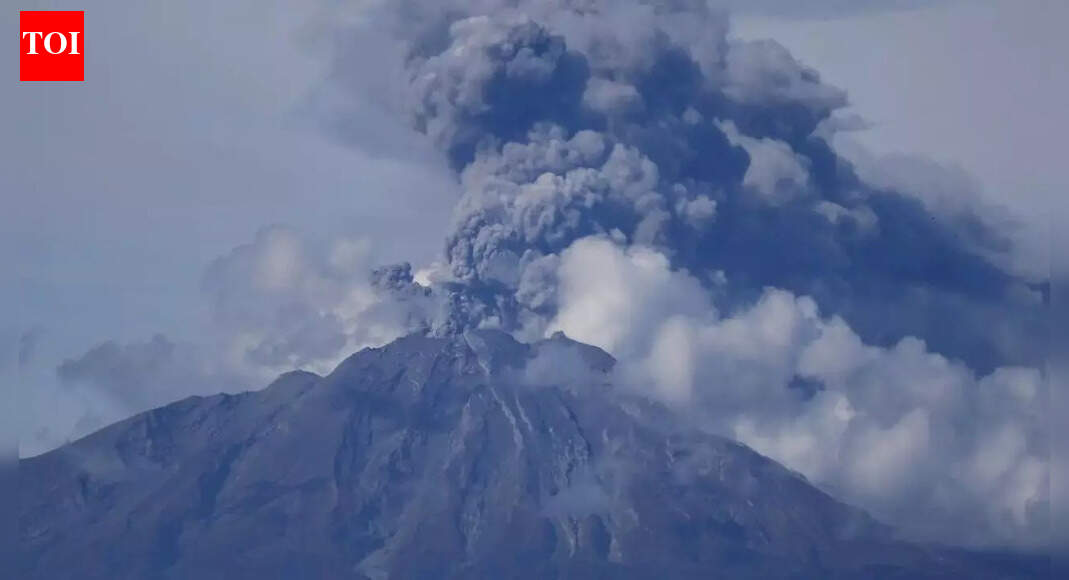

NEW DELHI: An ash cloud from Ethiopia’s Hayli Gubbi volcano hit parts of India Monday evening, according to IndiaMetSky Weather. The plumes first entered Gujarat from the west and then moved rapidly toward Rajasthan, northwest Maharashtra, Delhi, Haryana and Punjab by around 10 pm, and is drifting towards the Himalayas and other northern regions.Authorities watched the plume’s movement towards Delhi and Jaipur, with early signs spotted near Jamnagar around 5.30 pm, leading to disruptions as the situation developed.The ash plume is travelling at altitudes between 15,000-25,000 feet, rising up to 45,000 feet in some layers, and carries volcanic ash, sulphur dioxide, and tiny particles of glass and rock. IndiaMetSky Weather warned that skies could appear “darker and hazier than usual” and said that the plume may disrupt air traffic and lead to “delays and longer travel.”
What it is, how it travelled?
The Toulouse Volcanic Ash Advisory Centre (VAAC) said the explosive eruption began around 8:30 am GMT on Sunday, marking the first activity from the almost 10,000-year-dormant Hayli Gubbi volcano.Thick columns of ash rose up to 14 kilometres into the sky from the Afar region, located around 800 km northeast of Addis Ababa near the Eritrean border.The VAAC confirmed that while the eruption had stopped, “a large ash plume is moving toward northern India.”The volcano sits within the geologically active Rift Valley, where two tectonic plates meet. After erupting, the ash swept across the Red Sea toward Yemen and Oman before drifting eastwards into India and northern Pakistan, according to VAAC and regional media outlets.
What are the major cities impacted?
The windborne ash cloud swept across vast stretches of northwest India on Monday night, passing over Rajasthan, Gujarat, Maharashtra, Delhi-NCR and Punjab. Visibility dipped in several pockets as the plume drifted eastward.IndiaMetSky Weather said, “Ash clouds moving towards North India. A large ash plume can be seen stretching from #HayliGubbi Volcano region upto #Gujarat. The eruption has stopped ever since the eruption, but this Ash plume has been sent up into the atmosphere, which is moving at a speed of 100-120km/h toward North India.”It added that the plume, containing volcanic ash, sulphur dioxide and “small particles of glass/rock,” would likely darken the skies and impact flight routes. “The Ash cloud is about to enter #Gujarat (West side) and move towards #Rajasthan NW #Maharashtra, #Delhi, #Haryana and #Punjab by 10 pm and later it will impact the Himalayas and other regions,” the agency said.By late night, the sulphur dioxide–rich plume was already moving over Delhi, NCR, Haryana and adjoining districts of Uttar Pradesh. IndiaMetSky Weather explained that although some pockets of ash could be seen over Rajasthan, chances of ashfall on the plains remained “less.”
Will the Ash effect AQI?
According to the meteorological service, the ash cloud’s altitude means that India’s surface-level AQI is not expected to deteriorate.It reiterated that the event was “mostly safe” and said it would “not like to impact surface AQI levels as Ash clouds are in 25,000 to 45,000 feet above the surface.”The agency said the plume was stretching from the Oman–Arabian Sea region into northern and central India. “Its will not impact AQI levels but it will impact So2 level at #Hills of #Nepal, #Himalayas and adjoining Terai belt of #UttarPradesh as some of the material will bump into the hills and later move into China,” it posted on X. It clarified that the plume would drift over Delhi, Haryana and Rajasthan, but the impact on the ground would be limited to darker skies and hazier conditions. While a few particles might fall to the surface, IndiaMetSky described the likelihood as “low.”The agency also noted that residents might notice skies resembling a dust storm, though without harmful concentrations of particulate matter at ground level. People were advised to wear masks as a precaution, but officials stressed that the event was occurring at “middle levels of the atmosphere.”
Aviation authorities issue warnings
Following the ash drift, airlines issued cautionary notices for flights operating through Middle Eastern airspace. In India, the Directorate General of Civil Aviation (DGCA) released an advisory on Monday instructing airlines and airports to prepare for possible disruptions. It directed carriers to avoid volcanic-ash-affected routes and adjust flight plans, routing and fuel loads based on the latest advisories. The DGCA also said airports must immediately inspect runways, taxiways and aprons if ash contamination is suspected and restrict operations until cleaning is completed.Several carriers, including Akasa Air, IndiGo and KLM, cancelled flights on Monday. Mumbai’s Chhatrapati Shivaji Maharaj International Airport also alerted passengers that volcanic activity in Ethiopia had affected West Asian airspace and may impact some international routes, advising travellers to check with their airlines before heading to the airport.


