
Supreme Court allows Trump administration to use controversial voter citizenship database before midterms

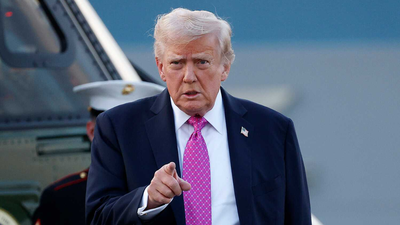
The US Supreme Court on Friday allowed the Trump administration to use a controversial federal database to help states check the citizenship status of registered voters, handing President Donald Trump a victory in his broader effort to increase federal involvement in election administration ahead of the midterm elections.The court’s conservative majority lifted restrictions on the Trump administration’s use of the Systematic Alien Verification for Entitlements (SAVE) programme, which allows officials to verify citizenship and immigration information.Critics have questioned the reliability of the data, warning that the system could result in US citizens being wrongly flagged or removed from voter rolls.The ruling came after a federal judge in June found the expanded use of the system illegal and said it violated Americans’ privacy rights. A federal appeals court had allowed that ruling to remain in place before the Supreme Court intervened.
Supreme Court limits scope of voter-roll purges
While allowing the administration to use the database, the Supreme Court said the National Voter Registration Act prohibits broad voter-roll purges in the weeks immediately before an election.The restriction limits the “potential impact” of Friday’s decision ahead of the midterm elections.States can, however, continue checking the citizenship status of individual voters using information obtained through the federal system.The three liberal-leaning justices dissented from the decision.Justice Ketanji Brown Jackson warned that the use of the system could result in eligible voters losing their voting rights.“The harm caused by burdening or disenfranchising even a few lawful voters outweighs the non-existent harm that the government experiences when it is prevented from taking an action that it likely lacks the authority to take,” she wrote.
What is the SAVE programme?
The Department of Homeland Security’s SAVE programme was created in 1986 to help government officials verify the citizenship or immigration status of people applying for public benefits.The Trump administration expanded the system’s capabilities last year, allowing officials to conduct bulk searches using sensitive information from Social Security records.The administration has argued that the system is lawful and necessary to prevent non-citizens from voting.The Supreme Court ruled that a 1996 law allows the Department of Homeland Security to obtain citizenship and immigration information from federal agencies and “has an obligation to respond” to states seeking such information.Participation in the SAVE programme by individual states remains voluntary.The court also said the earlier judicial order “prevents the federal government from using the programme it believes is best suited to the task”.
Judge had ruled expanded system violated privacy rights
In June, US District Judge Sparkle L Soonnan, a Biden appointee, ruled against the administration’s expanded use of the system.Soonnan said the revamped programme showed that the federal government “knowingly trampled on the privacy rights” of US citizens “in a manner that threatens the sacred right to vote”.A federal appeals court allowed her ruling to stand before the Supreme Court overturned the restrictions on Friday.The case has drawn opposition from voting rights organisations, which argue that errors in federal citizenship data could lead to eligible voters being wrongly targeted.The League of Women Voters, the lead plaintiff in the case, called the ruling “profoundly disappointing”.“…it puts millions of Americans at risk of being unlawfully targeted by the administration’s unreliable voter purge database weeks before the midterm elections,” the organisation said in a statement.“We will be doing everything in our power to protect Americans’ voting and privacy rights by ensuring that the district court decision stands,” it said.
Critics point to errors in voter citizenship checks
A total of 27 states currently use the SAVE system to check voter citizenship, according to the report.Critics have pointed to cases where the system has produced incorrect results.In Travis County, Texas, officials found that at least 10% of nearly 100 voters identified as non-citizens were actually US citizens, according to US media reports. Officials also indicated that the proportion could have been higher.Since Texas began checking its voter rolls through SAVE last year, only three non-citizen voters have been charged with illegally voting in the state.The examples have fuelled concerns among voting rights groups about the reliability of citizenship data and the potential consequences of acting on inaccurate records.
Georgia says safeguards are in place
Some states, including Georgia, have worked with the federal government on the SAVE programme.Georgia Secretary of State Brad Raffensperger, a Republican, has publicly supported his office’s work with the system and offered recommendations for improving it.Raffensperger told the BBC that his office thoroughly reviewed government-provided information before determining whether people flagged by the system were non-citizens.He said officials also interviewed some of the voters in question to verify the information.“There’s always guardrails in place, to make sure that we never denied the right to vote,” Raffensperger said.
Trump’s broader push to change US election rules
The Supreme Court ruling comes as the Trump administration pursues broader changes to the US electoral system.Since returning to the White House in January last year, Trump has sought changes involving voter eligibility and election procedures, including an effort to restrict the use of mail-in ballots that was rejected by the Supreme Court.States have also carried out voter-roll reviews.In 2024, Texas Gov. Greg Abbott announced that 1,930 people with a “voter history” had been removed from the state’s electoral rolls out of nearly 18 million registered voters.The figure was far below the hundreds of thousands of non-citizen voters that Trump and the Department of Homeland Security have previously suggested could be present on voter rolls.Friday’s ruling allows the federal government to continue using the SAVE system for citizenship checks, while existing federal restrictions on broad voter-roll removals close to elections remain in place.


