
NASA astronaut John Young carried a corned beef sandwich hidden in his spacesuit aboard Gemini III in 1965; rye crumbs floated through the cabin, and it became a $30 million problem for NASA

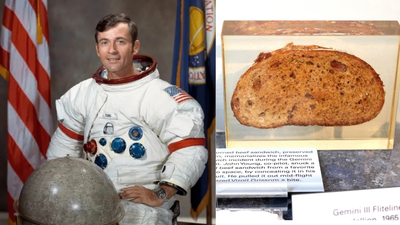
NASA astronaut John W. Young secretly carried a freshly made corned-beef sandwich on rye into space during the Gemini III mission on March 23, 1965, hiding it in a pocket of his spacesuit. Nearly two hours into the flight, Young pulled it out and offered some to commander Virgil ‘Gus’ Grissom. The rye bread quickly crumbled, sending pieces floating inside the cabin and raising concerns about debris getting into equipment or an astronaut’s eyes. What began as a practical joke soon became a serious issue back on Earth. The episode reached a US House appropriations hearing, where the sandwich was mocked in the press as the ‘$30 million sandwich’, a reference to the estimated $30 million cost of the Gemini III mission. NASA subsequently tightened rules on what astronauts could take aboard spacecraft.
Why NASA astronaut John Young brought a sandwich into space
Gemini III was the first crewed mission of NASA’s Gemini programme and the first US spaceflight to carry two astronauts. Young served as pilot, while Grissom was the command pilot. The mission launched on March 23, 1965, and lasted about 4 hours and 52 minutes, completing three orbits of Earth. One of the mission’s secondary objectives was to evaluate NASA’s newly developed space-food system. The astronauts had practised eating specially prepared meals that were freeze-dried or otherwise packaged so they could be rehydrated and consumed in microgravity. The food was functional, but it was not particularly popular with the astronauts. Young later explained that Grissom had become bored with the food they had been eating during training. The idea of bringing a conventional sandwich into space therefore seemed amusing. Fellow astronaut Walter ‘Wally’ Schirra, who was the backup command pilot for Gemini III, bought a corned-beef sandwich from a restaurant in Cocoa Beach, Florida. Young then slipped it into a pocket of his pressure suit before launch.
The sandwich appeared nearly two hours into the flight
The sandwich remained hidden until Young began the mission’s food and waste evaluation roughly two hours after launch. He pulled it from his spacesuit and offered it to Grissom. According to NASA’s account of the flight, Grissom asked Young what it was and where it came from. Young acknowledged that he had brought it with him and suggested that they see how it tasted. Grissom took a bite, but the sandwich immediately demonstrated why conventional bread was unsuitable for a spacecraft. The rye bread began breaking apart, with crumbs floating around the cabin. Grissom put the unfinished sandwich into his own spacesuit pocket in an attempt to keep the crumbs contained. NASA says the exchange lasted less than a minute. There was also the smell. Contemporary accounts describe the strong aroma of corned beef filling the small spacecraft. NASA’s historical record notes that Grissom was surprised by the sandwich and its pungent smell.
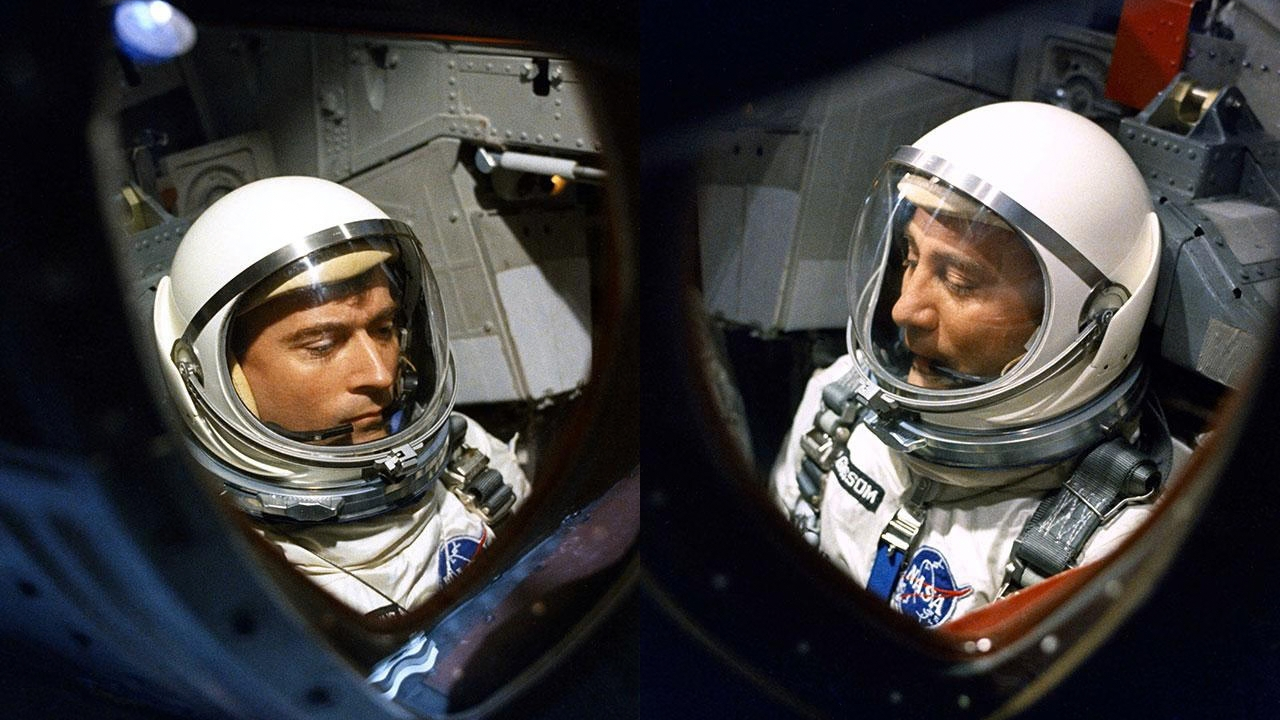
John Young and Gus Grissom before the Gemini III flight.
Why a few crumbs became a serious problem
The incident may sound trivial today, but loose food particles could create genuine problems inside a spacecraft. The Gemini cabin contained instruments, switches and other equipment that had to function reliably. Floating crumbs could potentially become lodged behind instrument panels or interfere with equipment. They could also get into an astronaut’s eyes. NASA’s historical account specifically notes these concerns. The approved Gemini food system had been designed partly to avoid this problem. Food was packaged in ways that reduced loose particles, while some items were coated or compressed to make them easier to handle in microgravity. The sandwich therefore provided an accidental demonstration of why NASA had been so careful about space-food design. Importantly, NASA says the sandwich did not damage the spacecraft or disrupt the mission’s experiments. The agency’s later historical account states that there was no detriment to the experimental programme or the actual conduct of Gemini III because of the sandwich.
The ‘$30 million sandwich’ reached Congress
The story became much bigger after Gemini III returned to Earth. At a post-flight press conference in Cocoa Beach, reporters asked Young about the sandwich, and the incident soon attracted the attention of lawmakers during hearings on NASA’s 1966 budget. Representative George E. Shipley of Illinois criticised the decision to bring an unauthorised sandwich aboard the spacecraft, comparing the tightly controlled cabin to a surgeon’s operating room. NASA Associate Administrator George Mueller told the House Committee on Appropriations that the agency had taken steps to prevent another corned-beef sandwich from being carried on a future mission.The famous ‘$30 million sandwich’ nickname came from the estimated cost of the Gemini III mission, not from the value of the food. Young later recalled that some members of Congress believed the astronauts had brought the sandwich into a mission that was specifically supposed to evaluate approved space food, raising concerns that the stunt could undermine an extremely expensive government-funded programme. One committee member therefore used the ‘$30 million’ figure to highlight the disproportion between the cheap sandwich and the enormous cost of the mission. NASA’s official history cites the Evening Star headline “$30 Million Sandwich”: House Doesn’t Relish Astronauts’ Snack, published on April 15, 1965.NASA subsequently tightened its rules. Beginning with Gemini IV, astronauts were required to provide lists of items they intended to take aboard, and sandwiches were specifically prohibited.
NASA banned sandwiches, but Young’s career continued
The sandwich episode had a practical consequence. Beginning with Gemini IV, NASA required crews to provide a list of items they intended to take aboard their spacecraft. Sandwiches were specifically prohibited, along with certain bulky, heavy or metallic objects that could interfere with spacecraft equipment. Astronauts could still carry approved personal items in their personal preference kits.Young did not receive a formal reprimand, although NASA made clear that officials and lawmakers were unhappy with the stunt. Other astronauts were advised not to repeat similar pranks. The incident ultimately became a tiny footnote in Young’s extraordinary career. He went on to fly six space missions, including two Gemini flights, two Apollo missions and two Space Shuttle missions. He commanded STS-1, the first Space Shuttle mission, and served as chief of NASA’s Astronaut Office for 13 years.The irony continued decades later. NASA eventually became more accommodating of sandwiches and bread-based foods in space. During Apollo 13, astronauts had bread and sandwich fillings available, although NASA had developed much better food systems by then.The Gemini III sandwich itself became part of spaceflight folklore. A replica preserved in resin has been displayed at the Grissom Memorial Museum in Mitchell, Indiana, commemorating the snack that briefly became one of NASA’s strangest controversies.


