
Scientists found a new amoeba in California’s Lassen Volcanic National Park that can reproduce at 145°F, stay active at 147°F and recover after five minutes at 158°F, setting a new heat record for complex life

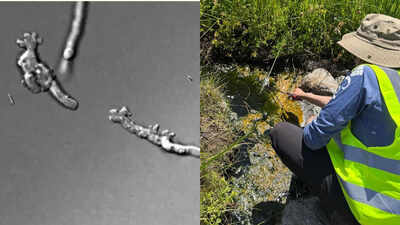
In the steaming pools of California’s Lassen Volcanic National Park, life has found a way to thrive where most cells would begin to fall apart. Hidden in geothermal waters, a newly identified amoeba is pushing the known limits of how much heat complex life can tolerate, challenging long-held assumptions about the survival of cells with intricate internal structures, states an online report by NASA.The organism, named Incendiamoeba cascadensis and informally known as the fire amoeba, can reproduce at temperatures reaching 145°F (63°C), states the NASA website. It remains active at 147°F (64°C), moving through the scorching water in search of food. Researchers also found that it can recover after being exposed to 158°F (70°C) for five minutes. The findings, published in Cell, establish a new upper temperature record for known eukaryotes.
A record for complex cells
According to NASA, the discovery is particularly striking because I. cascadensis is a eukaryote, a group whose cells are far more structurally complex than those of bacteria and archaea. Eukaryotic cells contain a nucleus that protects genetic material along with membrane-bound structures such as mitochondria and the endoplasmic reticulum. Those internal components perform essential jobs but can also create vulnerabilities under extreme conditions, the report adds.Heat can cause proteins to lose their proper structure, damage DNA and destabilize cell membranes. Researchers had previously suggested that the membranes surrounding eukaryotic organelles could not remain stable above about 144°F (62°C). As per the report, before its discovery, the upper temperature limit for eukaryotic life was about 140°F (60°C), based on a handful of heat-tolerant fungi and red algae. The new organism demonstrates that at least one type of complex cell can function at significantly higher temperatures.
Built for a hostile environment
To understand how the amoeba manages such intense heat, the research team sequenced its genome and examined which genes became more active at different temperatures. The results revealed several potential survival strategies. Some genes help protect and stabilize DNA, while others are involved in sensing changes in the surrounding environment. At elevated temperatures, genes associated with maintaining the correct folding of proteins became more active.The researchers also identified proteins with unusually high positive surface charges. Similar characteristics have been observed in proteins produced by heat-loving bacteria and archaea, suggesting that some of the molecular strategies used to withstand extreme heat may cross the boundaries between very different branches of life.The amoeba stops reproducing once temperatures rise above 145°F, but it can continue moving at slightly higher temperatures. Its ability to recover after a brief exposure to 158°F adds another layer to its unusual heat tolerance.
What makes an extremophile ?
As per NASA, organisms capable of thriving under environmental conditions that would be lethal to most life are known as extremophiles. Those adapted specifically to extreme heat are called thermophiles. For an organism to qualify as a true heat-loving thermophile, it must be able to carry out essential activities such as growing, feeding, moving and reproducing above 113°F (45°C).Much of what scientists know about life in extreme heat comes from bacteria and archaea. Their comparatively simple cellular organization is thought to make them better suited to environments where heat, acidity, radiation or other stresses can damage delicate cellular machinery. Eukaryotes were considered more vulnerable because their cells contain numerous membrane-bound components. The fire amoeba suggests that this complexity does not necessarily impose such a strict temperature ceiling.
Clues for the search beyond Earth
The discovery also has implications far beyond Lassen Volcanic National Park. Astrobiologists study extremophiles to understand the physical and chemical boundaries within which life can survive. Those limits can help scientists determine which environments on other worlds might potentially support life. The researchers found another intriguing clue while comparing the amoeba’s genetic information with environmental DNA collected from geothermal sites around the world. Related sequences appeared in samples from places including New Zealand and Yellowstone National Park. That raises the possibility that I. cascadensis is not an isolated oddity. Similar heat-tolerant amoebas could be living in geothermal environments elsewhere, waiting to be identified.


