
In 2016, a Florida businessman began buying four Siesta Key beach lots; a decade and multiple lawsuits later, a county land swap will make them public and let him build a 5,000-sq-ft home on another parcel

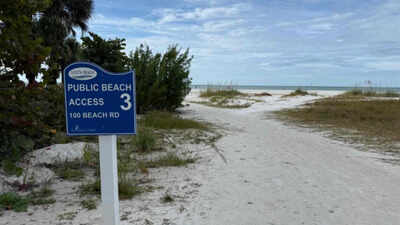
In 2016, Florida businessman Michael Holderness began buying four beachfront lots on Siesta Key. A decade and several lawsuits later, those four lots are set to become public beach property under a settlement with Sarasota County, while Holderness will receive another nearby parcel where he can build a 5,000-square-foot house, Suncoast Searchlight reported.The land swap is meant to end a long-running dispute between Holderness and Sarasota County over public access to the beach near Beach Access 3. Holderness had argued that county signs encouraged people to enter his private property and that the county had failed to prevent trespassing. He eventually took the county to court over the issue.The settlement, approved by county commissioners, will see Sarasota County receive Holderness’ four beachfront lots, which are valued at less than $100,000 combined. In return, Holderness will receive a county-owned property at 162 Beach Road, which was valued at nearly $2.8 million by the county property appraiser. The agreement also includes $500,000 in cash and a memorial at Beach Access 3 in honour of Holderness’ mother.The deal has faced opposition from Siesta Key resident Lourdes Ramirez and the nonprofit Protect Siesta Key. Ramirez challenged the agreement arguing that the county did not have the legal authority to give up land that had been bought for preservation. A judge rejected her challenge, clearing the way for the land swap and the planned house.
How the dispute began
Holderness bought the four sandy parcels through his company, Siesta Beach Lots, in 2016 and 2017. The properties are about a mile north of the Siesta Key public beach and were intended to serve as private beach areas for tenants of the company’s holiday rental properties.The dispute with the county soon grew. In 2019, the county removed a flagpole that Siesta Beach Lots had placed on one of the parcels. County officials said the pole stood on a public beach access easement rather than private property. Holderness challenged the move in court, arguing that the county had abandoned the easement and that he owned the section of sand.The next dispute involved two catamarans kept on one of the lots. In 2020, the county told Holderness that the boats violated an ordinance against storing recreational vehicles or boats on a public right of way or vacant property. The county ordered him to move them or face fines.Around the same period, Siesta Beach Lots also tried to build a structure on one of the beachfront parcels. That plan was blocked by the Gulf Beach Setback Line, a protected zone intended to preserve dunes and natural storm buffers.The disputes continued through several years of legal action. The parties eventually settled the earlier lawsuits in 2023. But Holderness filed another case in 2024, this time in the US District Court for the Middle District of Florida.
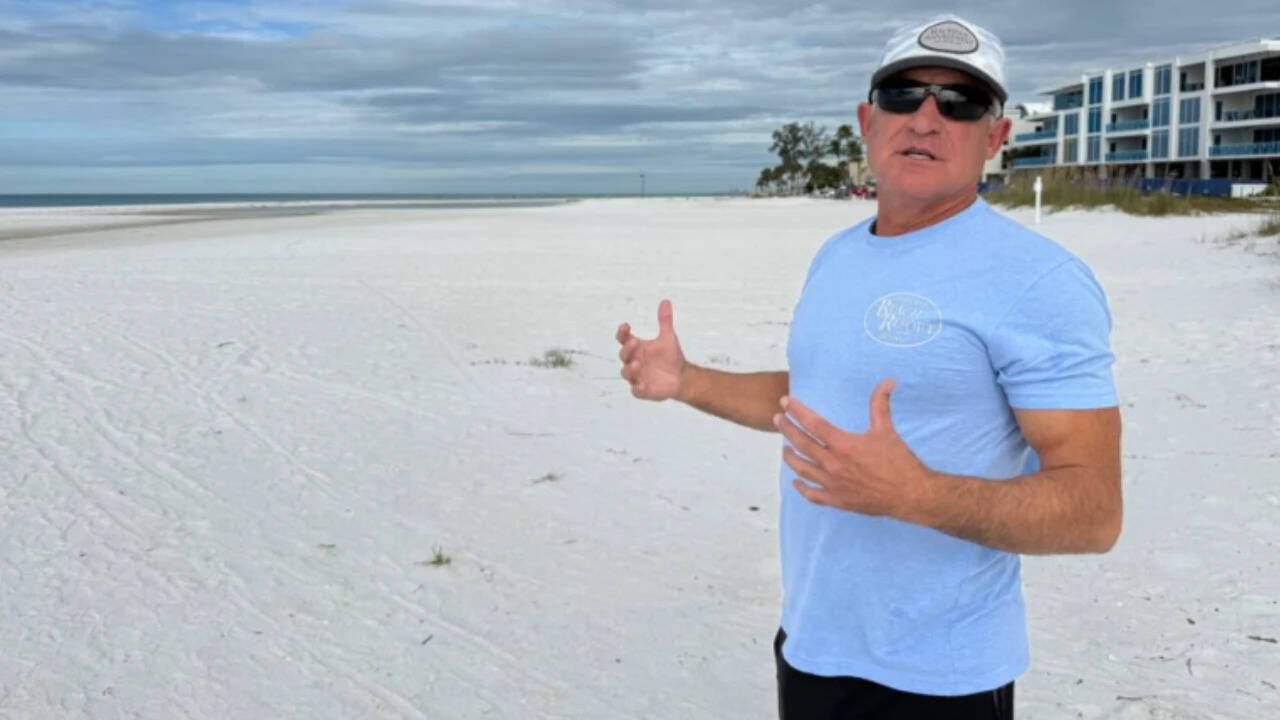
Holderness stands on one of the four beachfront lots he will trade to Sarasota County.
Holderness sued over beach access
In the federal lawsuit, Holderness accused Sarasota County of violating his property rights. He claimed the county had effectively turned his private lots into a public beach by allowing public access and putting up a sign that said, ‘Enjoy Your Park’.Holderness also said that as many as 500,000 people a year trespassed on his private beach. He alleged that some visitors had left glass beer bottles, used drugs and fought on the property. He said the lack of lifeguards or sheriff’s deputies on the private beach added to the problem.“The county has effectively converted the privately-owned lots into a public beach by not doing anything meaningful to prevent or restrict the public’s use,” the federal lawsuit stated. The new settlement offered a way to resolve that dispute.
Why county’s property became controversial
The Beach Road property was not an ordinary vacant parcel. Sarasota County bought it in 2017 for $1.4 million through the Neighborhood Parkland Acquisition Program. The purpose was partly to keep the property preserved after the county had rejected requests to build there.The county had denied similar requests for a variance four times over three decades, most recently in 2015. The property sits seaward of the Gulf Beach Setback Line, which limits construction in the coastal area.The decision to allow Holderness to build on the property therefore drew questions from some commissioners. Commissioner Tom Knight said he had not known in 2024 that the property had been bought for preservation or that its value had risen to nearly $2.8 million. Knight later told Suncoast Searchlight, “misleading by omission is no better than a lie”.Commissioner Mark Smith voted against the request, saying the deal went against county plans to protect sand dunes and natural habitats. Other beachfront property owners also questioned the deal.
Judge rejects challenge
Ramirez and Protect Siesta Key challenged the land deal in court. Ramirez argued that the county could not dispose of land purchased for preservation with dedicated funds.Circuit Judge Hunter Carroll rejected the challenge saying that Ramirez and the other plaintiffs had not shown they had the required legal grounds to bring the case.“Ramirez does not live close by, and she has, in both her testimony and letters, not demonstrated a special injury, nor has her organization shown a special injury,” Carroll said.The judge also questioned whether another petitioner, John Phair, had sufficient grounds to bring the case. Phair lives in a condominium across from the Beach Road property and had argued that allowing a single-family home would conflict with county zoning rules.Ramirez said she was disappointed by the ruling but planned to explore other legal options. “It was a disappointment because I know the merits of the case are very strong,” she said.Holderness welcomed the decision and said the swap would ensure the disputed beach becomes public. “Now, we can have a public beach forever; complete with Park and Recreation rules our great deputies can use to enforce the law,” he said.


