
Scientists found a fungus that turns ants into ‘zombies’, forcing them to bite leaves and die so the parasite can spread

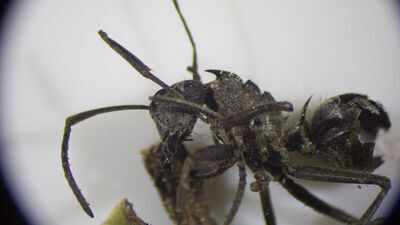
A fungus can turn an infected ant into what scientists describe as a real-life ‘zombie ’, taking over its behaviour in a way that helps the parasite reproduce. The phenomenon is linked to Ophiocordyceps unilateralis, a fungus that infects several ant species. After infection, the ant may continue behaving normally for several hours before its movements begin to change. It starts walking randomly and can experience repeated convulsions that cause it to fall from elevated vegetation. The infected ant then climbs a nearby plant and moves towards the underside of a leaf. There, it bites firmly into a major leaf vein and remains locked in a ‘death grip’.The ant eventually dies, leaving its body attached to the leaf. The fungus eventually grows from the ant’s body, forming a structure that produces and releases spores. The remarkable behaviour allows the fungus to place its host in a position that supports the next stage of its life cycle, which turns an ordinary ant into part of the parasite’s reproductive strategy.
How does the Cordyceps fungus turn an ant into a ‘zombie’
The process begins when an ant becomes infected with Ophiocordyceps. The fungus does not immediately disrupt its host’s normal behaviour. For several hours, the ant may continue moving as usual before the infection begins to alter its actions. It starts wandering unpredictably and can suffer repeated convulsions, which eventually cause it to fall from the forest canopy. The infected ant then moves and climbs nearby vegetation. It eventually reaches the underside of a leaf, where it bites firmly into a major leaf vein.This powerful grip, known as the ‘death grip’, keeps the ant attached to the leaf as the infection progresses. The ant eventually dies in this position. Its body then becomes a site where the fungus can grow and develop the structures needed to complete its reproductive cycle.
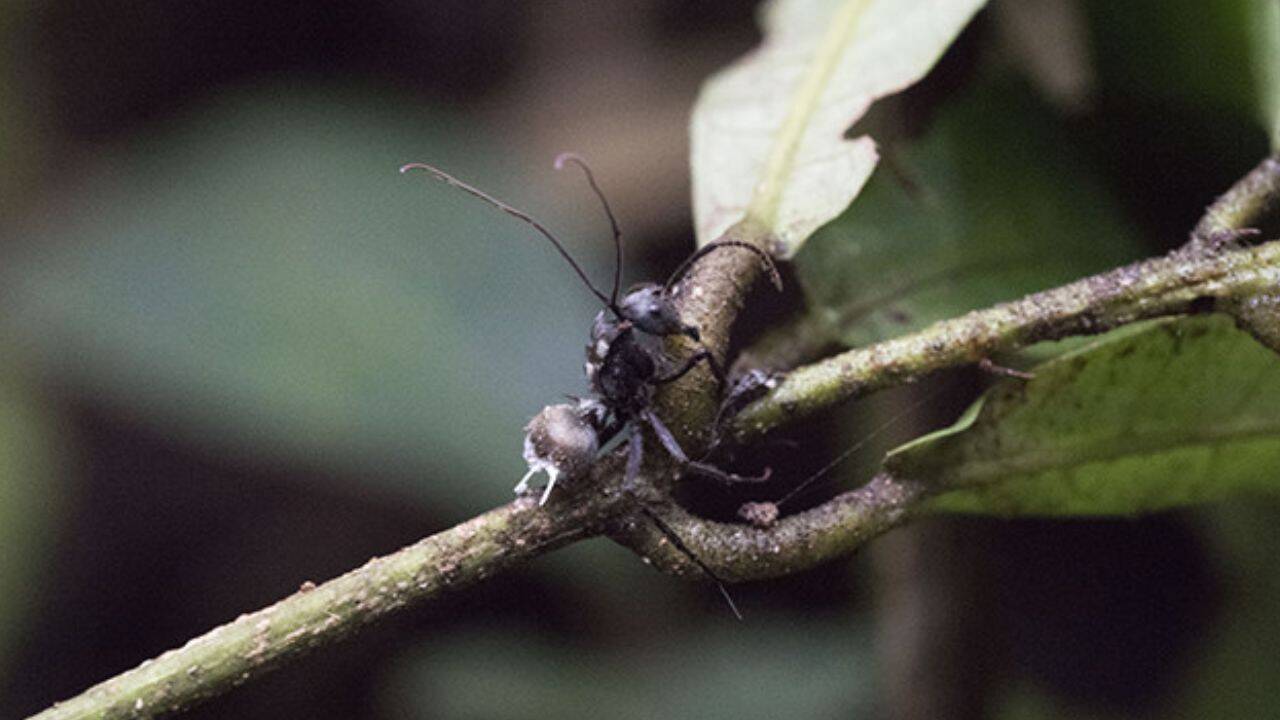
PC: Natural History Museum of Utah
Why zombie ants are forced toward leaves near the ground
The fungus does not make the ant wander randomly without a purpose. Its behavioural changes eventually bring the infected insect to a location that can favour fungal growth and spore dispersal. According to the research published in the National Library of Medicine titled ‘Behavioral mechanisms and morphological symptoms of zombie ants dying from fungal infection’ found that, infected ants died in small clusters on leaves close to the forest floor, around 25 centimetres above the ground. The ants left their usual routes in the forest canopy and moved into the understory before biting the underside of leaves. Repeated convulsions appeared to prevent them from climbing back into the canopy. Once an ant secured its jaws around a leaf vein, its body remained firmly attached as the fungus developed. This position is important because conditions near the forest floor can support fungal growth and allow the fungus to release spores from the dead ant, increasing the chances of infecting other ants nearby.
Does the zombie fungus actually control the ant’s brain
The behaviour may look like a form of mind control, but scientists have found that the fungus does not simply take over the ant’s brain. According to research published in the Journal of Experimental Biology titled ‘Zombie ant death grip due to hypercontracted mandibular muscles’, extensive fungal growth occurred in the ant’s mandibular muscles, while the brain was not colonised in the same way. The infected muscles showed signs of extreme contraction, helping explain how the ant can clamp its jaws onto a leaf and remain attached even after death. Scientists are still investigating how Ophiocordyceps produces the wider changes in behaviour that lead the ant to its final position. The research notes that fungal proteins and biological rhythms may play a role in this manipulation.
Are zombie ants the only animals parasites can manipulate
Zombie ants are not the only example of a parasite changing an animal’s behaviour to complete its life cycle. The Natural History Museum of Utah describes a similar case involving horsehair worms, which infect grasshoppers and crickets. The worms live mainly in small bodies of water such as streams and ponds, while their hosts can become infected after ingesting water containing the parasite. As the worm matures inside its host, it begins to alter the animal’s behaviour. The infected grasshopper or cricket is eventually driven towards water and may fall into a pond or stream.


