
Gulabo Sapera: Meet Gulabo Sapera: She was buried alive as a baby for being a girl child, later became the Padma Shri-winning queen of Kalbelia dance after learning from the flexibility of snakes, and now runs dance schools for girls across India and Denmark

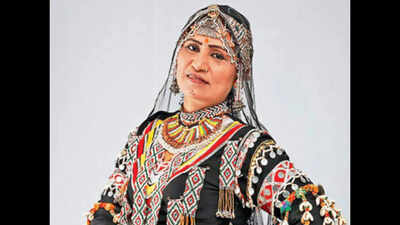
Gulabo Sapera’s story is one that compels us to sit down and wonder how it even happened!She was born in 1973 into a nomadic snake-charmer community in Rajasthan and wasn’t expected to survive even her first day, but she did, and decades later, also created an entire dance form that the world now recognises as one of India’s cultural treasures.She is a Padma Shri awardee and has a UNESCO honour to her name for the dance she invented by simply copying the way snakes moved.It’s the story about a girl who was told that she didn’t have a right to exist, and yet she went on to prove otherwise, again and again.
She was buried at birth because she was born a girl child
Gulabo was born in 1973 in Rajasthan, as the seventh child of her parents in the Kalbaliya community. Because she was a girl, some family members buried her within a day of her birth, treating her as an unwanted burden. Her parents dug her out nearly seven hours later. Gulabo has described the ordeal herself to Better India, “I was buried alive for nearly seven hours before my mother and aunt dug my grave and pulled me out after hearing my incessant cries.” She also said she isn’t sure what kept her alive that long, only that something in her refused to give up.
How was she named Gulabo?
Her father, a snake charmer by trade, fought with the community to keep her alive and was shunned by the community for it. As an infant, she fell seriously ill, and doctors feared the worst then a rose was placed beside her as a gesture of hope, leading her father to rename her Gulabi, according to Better India. Later, a magazine misspelled that name in print, and the world simply adopted the error, which is how “Gulabo” became permanent, even though few people know her birth name, Dhanvantari.
How did she learn to dance?
Her father used to carry her along on his rounds as a snake charmer while she was still an infant. Watching the snakes move to the sound of the been (a wind instrument), she began imitating their fluid, swaying motion, and that instinctive mimicry became the basis of what we now know as Kalbelia dance. She never trained formally; she built the entire form from observation and instinct.
From village fairs to Washington DC
She was discovered performing at the Pushkar Mela by officials from the Rajasthan Tourism Department, who helped her get proper stage opportunities in Jaipur. According to the Rajasthan Studio, in 1985, she travelled to Washington DC as part of an Indian government cultural exchange promoting Indian cultures in the US.This came as a life-altering trip for a teenager who, only a few years earlier, had no formal recognition at all. She later went through a stretch of real hardship too, living in roadside tents in the early 1990s before Maharani Gayatri Devi declared her ‘daughter of Rajasthan’ and took her in, which helped shape her career.
She designed the famous Kalbelia costume by herself
Gulabo designed the iconic Kalbelia costume herself, which includes a flowing black ghagra-choli with a dupatta and colourful piping that has since become the visual signature of the dance.Her performances took her across India and abroad, into Bollywood, French music collaborations, and eventually to a street named after her in France. In 2016, she received the Padma Shri, India’s fourth-highest civilian honour. In 2010, UNESCO added Kalbelia songs and dance to its Representative List of the Intangible Cultural Heritage of Humanity, and this recognition exists largely because of her.
She turned to online platforms during the pandemic
Even during the pandemic, Gulabo kept teaching; she turned to live video classes and continued running online dance classes, using the income to buy rations for other artists who’d lost their livelihoods. She now runs schools in Pushkar and in Denmark, focused on keeping Kalbelia alive and, just as importantly, on making sure girls in her community get an education she never had access to herself.


