
IIT graduate Vidit Aatrey left his IAS dream then his corporate career but failed twice before building Meesho; today he has turned the e-commerce giant into a Rs 30,000-crore business

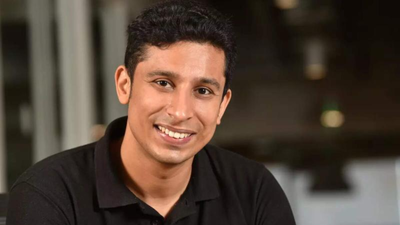
There was a time when a government job seemed like the obvious destination for Vidit Aatrey. Coming from a middle-class family with parents in government service, the civil services was among the career paths his family had in mind. But the IIT Delhi graduate eventually took a route that was far removed from the one expected of him- and built Meesho, a company that would go on to reshape India’s e-commerce landscape.Today, Aatrey is the co-founder and CEO of Meesho, which he started with fellow IIT Delhi alumnus Sanjeev Barnwal. The company has since grown from a small social-commerce experiment into a listed e-commerce platform. In FY25, Meesho’s net merchandise value was close to Rs 30,000 crore, while its operating revenue stood at ₹9,390 crore. By August 20, 2026, its market capitalisation was around ₹95,000 crore.
From IIT Delhi to a career that was never straightforward
Aatrey completed his BTech in Electrical Engineering from IIT Delhi in 2012. The conventional path after an IIT degree could have taken him into a comfortable corporate career or the civil services. Instead, he first stepped into the corporate world, working with ITC and later InMobi.Those jobs gave him something that would prove useful later: an understanding of how businesses function and, perhaps more importantly, how technology could be used to solve everyday problems. But entrepreneurship was still an experiment rather than a certainty.According to an India Today report, Aatrey and Barnwal eventually decided to build something of their own. Their first attempt, Fashnear, was a hyperlocal fashion-delivery platform. The idea appeared promising on paper, but the business failed to find the product-market fit the founders were looking for.The lesson was simple but important- customers did not necessarily want fashion delivered faster; they wanted more choice. So the founders changed direction.

Vidit Aatrey with Meesho co-founder Sanjeev Barnwal
The first failure did not end the story
The second version of their idea also struggled. Instead of continuing to build from assumptions, Aatrey and Barnwal began spending time with small businesses and sellers.They travelled to markets in places such as Surat, Jaipur and Delhi’s Chandni Chowk, speaking to shopkeepers and observing how they actually sold their products. What they discovered was more interesting than the original idea.Small sellers were already using WhatsApp and social networks to find customers. Women, in particular, were running informal businesses through their personal networks. They would source products from suppliers, share photographs with potential buyers and manage sales through messaging apps. There was clearly a business happening. It simply lacked the infrastructure of a conventional online store. And that observation changed everything.
How WhatsApp sellers became the inspiration for Meesho
WhatsApp could help sellers communicate with customers, but it could not run an entire business. Payments, orders, logistics and customer management still had to be handled separately.Aatrey and Barnwal decided not to force these entrepreneurs to completely change the way they worked. Instead, they built a platform around the behaviour that was already happening.They developed Meesho Supply, a managed marketplace connecting suppliers with people who wanted to sell products through their own social networks. The idea was deceptively simple: give ordinary individuals the tools to operate a digital shop without requiring them to invest heavily in technology or inventory.The company was eventually renamed Meesho, short for “Meri Shop”. What began as a platform aimed at social sellers gradually became something much bigger.
Then came Y Combinator
The founders’ willingness to experiment eventually brought another turning point. Meesho was selected by Y Combinator, the prominent US-based startup accelerator. The backing gave the young company access to funding, mentorship and a global startup network.More importantly, the founders had found a problem worth solving at scale. Instead of competing head-on for India’s urban consumers, Meesho was building around a different segment- small sellers, first-time entrepreneurs and price-conscious consumers beyond the biggest cities. That focus became one of the company’s biggest advantages.
From social commerce to a Rs 30,000-crore business

Vidit Aatrey and Sanjeev Barnwal turned their startup idea into Meesho
Meesho’s original identity as a social-commerce platform has changed considerably. The company has expanded into a broader e-commerce marketplace, serving millions of shoppers and sellers across India.According to figures cited by Moneycontrol, Meesho’s annual transacting user base had grown substantially, while the company had hundreds of thousands of sellers on its platform. Its FY25 operating revenue rose to ₹9,390 crore, while net merchandise value reached nearly ₹30,000 crore.The company also made the transition from startup to publicly listed business. Meesho’s IPO opened in December 2025, with a fresh issue of ₹4,250 crore and an offer for sale of about ₹1,171 crore. Its shares were listed on the NSE and BSE on December 10, 2025. As of August 20, 2026, Meesho’s market capitalisation stood at around ₹95,000 crore, according to the reports.
The bigger lesson in Aatrey’s journey
Aatrey’s story is easy to reduce to an IIT-to-billion-dollar-startup success story. But the more interesting part lies in what happened before Meesho became successful. There was the expected civil-services path. There were corporate jobs. There was a failed startup. There was another model that did not take off. And then there was the decision to stop guessing and start observing how small businesses actually operated.That eventually led the founders to a business model built around something Indians were already doing- selling through their personal networks. In that sense, Meesho’s success was not born from one perfect idea. It emerged from a series of imperfect ones.For the IIT Delhi graduate who once had a conventional career in mind, the journey has ended up being anything but conventional. The civil services dream did not become his destination. Instead, a string of experiments, failures and pivots took him towards building one of India’s most prominent e-commerce companies.


