
In 2012, a derelict 1866 Washington house was listed on a waterfront lot worth more without it; preservationists spent 6 years buying it and 8 more restoring it before reopening it in 2026

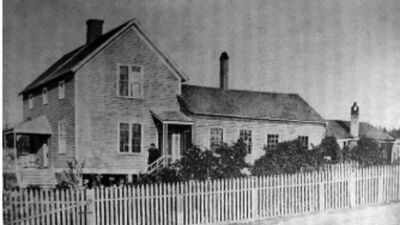
In 2012, a crumbling 1866 farmhouse sat on a prized waterfront lot in Coupeville, Washington, listed for sale at a price that reflected the land’s value far more than the building’s. The Haller House, one of the oldest surviving structures on Whidbey Island, was in such poor condition that many assumed it would be demolished to make way for a new home. Instead, a group of local preservationists stepped in, spending six years raising funds and negotiating to save the house, then another eight years carefully restoring it. In 2026, the Haller House finally reopened to the public as a museum and community space, a testament to what can happen when a community decides a piece of its history is worth fighting for, according to updates and historical accounts from Historic Whidbey, the nonprofit that led the rescue and restoration.A house older than the state itselfThe Haller House was built in 1866 by early settlers on Whidbey Island, just a few years after the Civil War and three decades before Washington became a state. Originally a modest farmhouse, it grew over time as the family expanded, adding rooms and outbuildings that reflected changing needs and tastes.For more than a century, the house stood as a quiet witness to the island’s transformation: from logging and farming to tourism and commuter communities. But by the early 2000s, years of neglect, water damage and deferred maintenance had left the structure in serious trouble. Roofs leaked, foundations shifted, and parts of the framing were compromised. To many observers, the house looked like a lost cause.The moment it almost disappearedIn 2012, the Haller House and its waterfront lot came up for sale. The asking price was driven largely by the value of the land, with its views of Penn Cove and proximity to Coupeville’s historic downtown. From a purely financial perspective, it made more sense to tear down the house and build something new than to try to save it.For Historic Whidbey, a local preservation nonprofit, the listing was a warning bell. If the house was lost, one of the last tangible links to the island’s earliest Euro-American settlement would disappear. The organisation began exploring whether it could purchase the property, even though it lacked the funds at the time.Six years to secure the houseWhat followed was a long, uncertain campaign to raise money and build support. Historic Whidbey worked with donors, grant-making organisations and community members to piece together enough capital to buy the Haller House and its lot. The effort included: Fundraising events and membership drives; applications for state and private preservation grants; and outreach to residents who remembered the house from childhood or had family connections to it.In 2018, six years after the house first appeared on the market, Historic Whidbey finally completed the purchase. By then, the building had deteriorated further, and the real work was only beginning.Eight years of careful restorationRestoring the Haller House was not a simple renovation. The goal was to stabilise the structure, repair or replace damaged elements and return the house to a condition that reflected its historical character while making it safe and accessible for visitors.Key phases of the work included: Structural repairs to foundations, sills and framing to stop ongoing movement and decay; roof replacement and drainage improvements to prevent future water damage; careful removal of later additions and alterations that obscured the house’s original layout; restoration of historic windows, doors, mouldings and finishes using period-appropriate materials and techniques; and installation of modern systems—electrical, plumbing, heating and fire protection—in ways that minimised visual impact.Throughout the process, volunteers and staff documented the house’s construction phases, salvaged original materials where possible and consulted historical records to guide decisions. The work stretched over eight years, with progress sometimes slowed by funding gaps, weather and the sheer complexity of working with an aging, hand-built structure.Reopening in 2026 as a community resourceIn 2026, the Haller House finally reopened its doors. No longer a derelict eyesore or a private residence, it now serves as a museum and community space operated by Historic Whidbey. Visitors can tour the restored rooms, learn about the families who lived there and explore exhibits on Whidbey Island’s early history, from Indigenous use of the land to pioneer settlement and maritime industries.The house also hosts educational programs, lectures and special events that connect residents and visitors to the island’s heritage. For a community that has grown rapidly in recent decades, the Haller House offers a physical anchor to the past, a place where people can touch the same woodwork, walk the same floors and look out the same windows as those who built the community more than 150 years ago.Why this kind of preservation mattersThe Haller House story is unusual in its scale and timeline. Still, it reflects a broader truth about historic preservation: saving old buildings is often harder, slower and more expensive than it looks from the outside. It requires patience, sustained funding and a willingness to accept that some projects will take decades.For Whidbey Island, the payoff is a tangible link to its origins. In a region where many historic structures have been lost to fire, redevelopment or neglect, the Haller House stands as proof that communities can choose a different path. It also demonstrates how a single building can become a catalyst for broader interest in local history, inspiring people to learn more about the landscapes, industries and cultures that shaped the place they call home.A model for other small communitiesHistoric Whidbey’s approach, combining grassroots fundraising, professional restoration and long-term stewardship, offers a model for other small towns and rural areas facing similar choices. Not every old house can or should be saved, but when a building carries exceptional historical value and community support, projects like the Haller House show what is possible.Today, the house is more than a restored structure; it is a symbol of what a community can accomplish when it decides that its history is worth investing in. From a derelict 1866 farmhouse on a valuable waterfront lot to a reopened museum in 2026, the Haller House’s second life is a reminder that some stories are worth waiting for.


