
In 1999, a Virginia couple founded a nonprofit riding programme for people with disabilities; after it became a USEF Center of Excellence, their historic 43-acre farm is listed for $8.4 million to fund future services

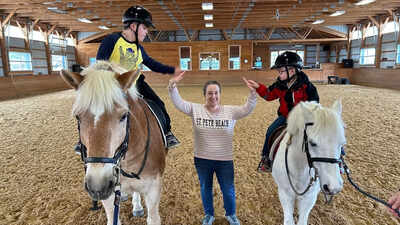
What began as a family’s search for meaningful opportunities for children with disabilities eventually grew into a nationally recognised equestrian programme. In 1999, Mark and Muriel Forrest established the Faith & Family Foundation, laying the groundwork for what would become Wheatland Equestrian in Virginia. Their idea was built around a simple principle: riders with disabilities should have access to the same quality of coaching, competition and community as other riders. Over the years, the programme expanded from a small family-centred operation into an inclusive equestrian organisation serving riders with and without disabilities. Now, the historic property where that mission grew is taking on a different role, as its real estate value will support the organisation’s long-term future. According to Wheatland Equestrian, the Forrests founded the Faith & Family Foundation in 1999, drawing on their own family experiences and Muriel’s background with horses. The organisation’s current programme has earned recognition as a USEF Para-Dressage Center of Excellence, while its former 43-acre Wheatland Farm property is being listed for approximately $8.4 million.
A programme built around inclusion
The Forrests’ motivation came partly from seeing how few sports and recreational opportunities were available to families raising children with disabilities. Muriel, who grew up with horses in Ireland, saw the physical, emotional and confidence-building benefits riding could provide. Wheatland Equestrian was created to bring families together rather than separating riders by ability. Its programme combines therapeutic riding, adapted riding, para-dressage and traditional equestrian training. Riders with disabilities, their siblings and non-disabled members of the community can train alongside one another.That approach has remained central to the organisation. As per Wheatland Equestrian, it now serves more than 100 riders each week across para-dressage, adapted riding, traditional dressage, eventing and youth programmes.
From local programme to national recognition
The organisation’s development eventually took it into competitive para-equestrian sport. Wheatland Equestrian became the fourth centre nationwide to receive the USEF Para-Dressage Center of Excellence designation. Its former Wheatland Farm campus was equipped to support both recreational and high-level competition. The facilities included an FEI-quality outdoor competition arena, an ADA-compliant indoor arena, an accessible 18-stall barn with an automatic mounting lift for wheelchair-dependent athletes and outdoor trails. The organisation also hosted significant equestrian events, including a USEF 2018 Para Dressage Team Observation Event for the World Equestrian Games.
A historic property with multiple uses
The farm itself is considerably more than an equestrian facility. The Crexi listing describes the property as a roughly 43-acre estate with about 41,522 square feet spread across eight structures. It includes a manor house, Wheatland Cottage, stables, indoor and outdoor riding arenas and an event centre. The property also has a long history. The Washington Business Journal reported that its manor house dates to 1741. The combination of historic buildings, equestrian infrastructure and its location in Loudoun County gives the property potential uses beyond its former nonprofit mission, including equestrian operations, events, retreats or a private compound.
Turning property value into future services
The decision to sell does not represent an end to Wheatland Equestrian’s work. The organisation has already moved to a new campus in Upperville, which it says is open and accepting students from Northern Virginia, Maryland and the Washington, D.C., area. According to Crexi, the sale is intended to convert the former campus’s value into resources for the Faith & Family Foundation. The organisation sees the property as an appreciated asset that can provide an endowment and help support services for children and adults with disabilities and their families over the long term.That makes the sale more than a conventional real-estate transaction. The 43-acre farm that once provided the physical setting for Wheatland Equestrian’s growth is now being positioned as a financial asset for its next chapter. Instead of keeping the organisation tied to a property that could limit future expansion, the proceeds can help sustain and potentially broaden its programmes. The farm’s next owner may use its arenas, barns, historic buildings and acreage for an entirely different purpose. But for the Forrests and the Faith & Family Foundation, the property’s next chapter is intended to continue the same broader mission that began in 1999: creating opportunities, community and support for people with disabilities and their families.


