
A Texas farmer’s family has worked 6,000 acres for over a century; after his landlord sold 600 rented acres for a Google data center, he was given 60 days to leave

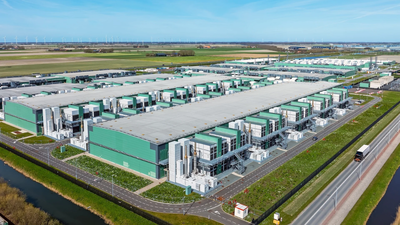
Standing near the Haskell County border in West Texas, fourth-generation farmer Cheyenne Buerger can see industrial cranes building a huge Google facility just over four miles to the northeast. Until recently, part of that same horizon was farmland he worked himself. After farming thousands of acres with his family for more than a century, Buerger was forced to give up 600 acres of rented farmland when his landlord suddenly sold the property to a developer clearing the site for the tech giant. The eviction gave the local farmer very little time to harvest his remaining crops and leave the land. “When I explained I had a crop on it, they said ‘You can finish it, but that’s it,'” Buerger said. “‘You’ve got to be done in 60 days, and you’re out.” Losing the land near Haskell has taken away a large part of Buerger’s local farming operation. Along with his family’s 6,000 acres, where they grow cotton, wheat and milo, the rented fields gave the family more flexibility for crop rotations and livestock management. “It makes me feel a little threatened just from losing land to data centers,” Buerger said. “We can’t compete with that.”
Corporate expansion across rural Texas
The loss of farmland to technology projects is becoming more common across Texas, according to an investigation by The Texas Tribune. As major technology companies expand artificial intelligence and cloud computing, developers are moving into rural counties looking for large, flat and relatively cheap areas of land. Data from the Pew Research Center shows that about 67 per cent of data centres in the United States are located in rural areas. In Texas, low taxes and large amounts of available land have long attracted major industries, but the current growth of data centres has reached new levels. An analysis by The Texas Tribune found 335 operating data centres across Texas, with at least 248 more either planned or under construction. The fast conversion of farmland into large server campuses is causing concern among farmers who are increasingly competing with wealthy technology companies for land and other important resources, including groundwater and electricity.
Growing pressure on farmland
The expansion comes at a difficult time for Texas agriculture. The industry produces more than $963 billion in total economic activity and generates nearly $15 billion in annual exports, according to state production figures cited in the report. State officials have also criticised the choice of farmland for some of these projects. Speaking at a public forum on rural industrial development organised by The Texas Tribune in Granbury, Texas Agriculture Commissioner Sid Miller warned that turning fertile soil into technology sites could permanently reduce the state’s ability to produce food. “They’re building them on our most valuable, most fertile farmland,” said Texas Agriculture Commissioner Sid Miller. “Once our farmland is gone and paved over, we’ll never farm it again.” The amount of land needed for some of these projects is enormous. Three major developments, Project Matador in the Panhandle, Project Pacifico in Pecos County and Project Meta in El Paso, are expected to cover at least 16,000 acres combined. That is roughly equal to 12,000 American football fields.
Huge projects, huge energy needs
In Hereford, about 50 miles southwest of Amarillo, Google outlined plans for its multi-phase Project Roman during a public community meeting. Local farmer Darren Grotegut attended the meeting and learned that the first phase alone would use 3,700 acres for computing facilities. More land would be needed for solar and wind projects to provide electricity. Grotegut estimated that all four phases could eventually cover more than 180,000 acres. To reduce the large amount of water needed to cool the computer equipment, project representatives said some nearby farmland could be converted into native grasslands to help protect local aquifers. The pressure on rural land is not limited to data centres. Clean energy monitoring company Cleanview says 240 utility-scale solar farms are now operating on rural Texas land. By 2024, about 1.5 million acres of former farmland across the state had been converted to solar energy production. For farmers such as Buerger, the future of tenant farming in West Texas looks increasingly uncertain. He still hauls cotton seed across his remaining pastures to feed cattle while construction crews put up steel frames on the fields he once rented. As investors and energy developers continue buying large connected areas of land across Jones and Haskell counties, family farmers have fewer options for finding replacement acreage. Rising land prices linked to industrial development are also making it harder for them to compete. Across the region, farming communities are facing lasting changes in how land, water and electricity are used.


