
Elon Musk provides update on first-ever SpaceX Starship upper stage tower catch

Elon Musk has shared an update on SpaceX’s first-ever attempt to catch the Starship upper stage mid-air, saying that this will be done “in a few months” time. It means that space exploration enthusiasts will need to wait slightly longer to witness the historic event, which was previously slated for late August. The founder initially indicated on August 4 that the aerospace firm planned to try catching the upper spacecraft on its upcoming test mission.“Looks like we will probably catch the ship with the tower in a few months. If there had been a tower out to sea where we practiced landing the ship, it would have been caught,” Musk said in a post on X, adding, “First reflight of the ship will be either end of this year or early next. That will be a fork in the road of history for consciousness reaching the stars.”
Why SpaceX ‘Starship catch’ is a big event
The reason why this will be a historic moment (if successful) is that Starship stands as the largest and most powerful launch system ever constructed, comprising two core stages: the massive Super Heavy first-stage booster and the upper spacecraft, known simply as Ship. SpaceX designed both sections for full, rapid reusability. Instead of landing on barges or runways, the vehicles are engineered to return straight to the launch mount, where massive mechanical “chopstick” arms mounted to the launch tower catch them out of the air.The company has successfully caught the Super Heavy booster on three occasions across Starship’s 13 suborbital test launches so far. Flight 9 reused the booster originally flown on Flight 7, while Flight 11 launched with the booster recovered from Flight 8.
The technical hurdle of catching Starship upper stage
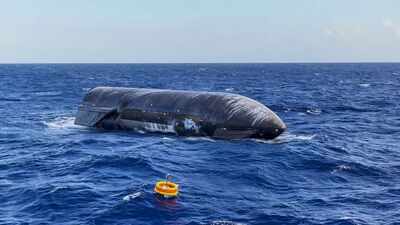
Catching the upper Ship presents far greater engineering challenges than catching Super Heavy because it re-enters Earth’s atmosphere from vastly higher altitudes and travels at significantly greater velocities.Recent flight data shows steady momentum toward this milestone. During Flight 13 on July 24, Ship survived atmospheric reentry and executed a controlled ocean landing within its target zone in the Indian Ocean off Western Australia. The craft remained intact even after tipping over on the water – a milestone earlier prototypes failed to achieve. SpaceX subsequently towed the vehicle to Christmas Island to analyse structural data for future designs.


