In 1980, Miles Boekeloo sold his 365-acre Michigan wilderness retreat to the National Park Service; the deal let his family keep its cabin and 5 acres for another 25 years

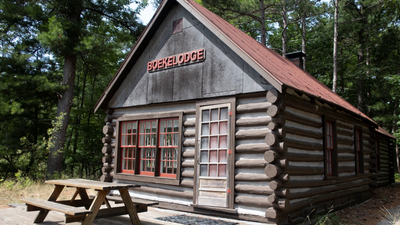
For decades, Miles Boekeloo and his family used a secluded property along Michigan’s Lake Michigan shoreline as a private wilderness retreat. In 1980, Boekeloo sold the entire 365.48-acre property to the National Park Service, and the historic property, now known as Boekelodge, became part of Sleeping Bear Dunes National Lakeshore. Yet the sale came with an unusual arrangement: Boekeloo’s family was allowed to retain the use of five acres containing the family cabin and pond for another 25 years. According to the National Park Service, which documents the history of the property, the agreement allowed the family to remain connected to its longtime retreat until April 2005, while the surrounding landscape became part of the protected national lakeshore.
From homestead to retreat
The story of the property began before the Boekeloos arrived. In 1929, Joseph Cooper purchased 161 acres of land and established a homestead there. The property included a one-room cabin, a garden and other features associated with rural life. Cooper also dug drainage canals attempting to create a cranberry bog, although the project was never completed. The family eventually stopped using the property, and it remained unoccupied for roughly a decade.In 1945, Miles Boekeloo and his wife, Glea, purchased the 161-acre property. They transformed it into a family retreat while retaining much of its rustic character.
Building a family getaway
Boekeloo gradually added features to make the property more comfortable for his family and guests. One of the most distinctive additions was a pond in front of the cabin. Workers dug it in 1945, using the location associated with the earlier cranberry-bog plans. Boekeloo also added two privies and a deck to the cabin.Nearly two decades later, in 1963, the cabin received another addition. A rear section was constructed to create a bunk room, giving visiting family members and guests additional sleeping space. The retreat remained closely connected to the surrounding landscape. A trail led from the cabin through woods, wetlands and dunes toward the Lake Michigan beach, giving the family access to the shoreline while maintaining the secluded atmosphere of the property.
Protecting the surrounding land
As development increased along the Lake Michigan shoreline, Boekeloo grew increasingly concerned about preserving the property’s wilderness character. In 1962, he purchased another 204.48 acres, expanding his holdings from 161 acres to more than 365 acres. The additional land included approximately 1.25 miles of Lake Michigan shoreline.The larger property helped maintain the sense of isolation that had made the retreat special. Instead of allowing the surrounding landscape to become increasingly developed, Boekeloo’s additional purchases kept a substantial area intact.
The unusual 1980 sale
The National Park Service had been working to acquire land for Sleeping Bear Dunes National Lakeshore, which was established in 1970. Discussions about acquiring the Boekeloo property began in the 1970s. Eventually, in 1980, Boekeloo sold the entire 365.48-acre property to the National Park Service.But the sale did not immediately end his family’s connection to the land. As part of the agreement, the Boekeloo family received a Reservation of Use and Occupancy covering five acres. This area included the cabin and pond, allowing the family to continue using the retreat even after the larger property had become federally owned. The arrangement lasted for 25 years, ending in April 2005.
A cabin surrounded by protected land
The agreement created an unusual situation: the Boekeloo family could continue using its longtime cabin while the surrounding hundreds of acres were managed as part of a national lakeshore. The cabin itself remained a central feature of the property. Measuring approximately 716 square feet, it includes the original structure and the rear addition that was built in 1963.Other features of the historic landscape also remain, including the pond, trails, drainage canals and privies. The National Park Service considers the area significant as an example of a mid-20th-century wilderness retreat. Its importance comes not only from the cabin but from the relationship between the cabin and its surrounding landscape of woodland, wetlands, dunes and Lake Michigan shoreline.
What the property represents today
The Boekelodge story is about more than the sale of a large piece of land. It shows how a private family’s relationship with a landscape can become part of a broader conservation story. Boekeloo spent decades creating and protecting a secluded retreat, eventually selling the majority of the property so that it could become part of a national protected area. At the same time, the agreement allowed his family to hold on to the five-acre heart of that retreat for another quarter-century.When the reservation ended in 2005, the entire property had become part of the National Park Service’s stewardship. Today, the surviving cabin, pond and surrounding landscape preserve traces of the family’s years there.What began as a private Michigan wilderness retreat ultimately became part of a protected national landscape, with a rare 25-year transition period that allowed the family to keep using its cabin even after selling more than 365 acres to the National Park Service.


