
Belgium battles its biggest wildfire on record

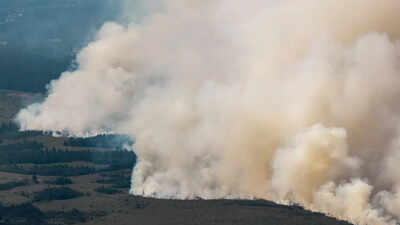
Belgium’s biggest wildfire on record continued to spread towards the German border on Sunday, as firefighters backed by Dutch helicopters, the army and teams from neighbouring countries battled a blaze that has already scorched around 3,000 hectares in the High Fens nature reserve.Firefighters were concentrating on the advancing front of the fire in eastern Belgium, while a defensive line protecting evacuated villages was holding, according to Belgian authorities. Residents who were evacuated on Saturday were nevertheless told not to return as crews continued efforts to contain the flames.The scale of the blaze has prompted an international response, with Belgium receiving emergency assistance from across Europe. The European Union deployed three helicopters and two water-bombing aircraft from around Europe on Saturday after Brussels requested reinforcements.The fire, which began on Friday in the High Fens, has become Belgium’s largest wildfire on record. It has already burned more than twice the area destroyed by the previous record blaze in 2011, when nearly 1,400 hectares were affected, according to data from the European Forest Fire Information System.Stephanie Ernoux, spokesperson for the administration of Belgium’s Wallonia region, said crews were focused on the fire front moving towards Germany.German authorities were also taking precautions. The town of Monschau, near the Belgian border, asked residents living close to the frontier to leave on Sunday, warning of significant smoke pollution. Officials said the fire was not expected to cross into German territory.Firefighters from across Belgium, as well as teams from Germany and Luxembourg, have been working alongside the Belgian army and local farmers to prevent the blaze from spreading further. Dutch helicopters were also assisting crews battling the flames from the air.The fire comes as large parts of Europe face a succession of heatwaves that have intensified drought conditions, leaving forests, grasslands and other vegetation exceptionally dry and vulnerable to rapid fire spread.The situation elsewhere in Europe has also worsened. Two people died on Sunday as wildfires swept across the Greek island of Salamina, while around 100 French firefighters were travelling to Spain to help tackle a fire in Aragon that has already destroyed about 16,600 hectares.The increasing scale of such fires has raised concerns about the impact of climate change. Scientists say human-caused climate change has increased the likelihood of the hot and dry conditions that allow wildfires to spread more rapidly and remain active for longer periods.For firefighters in Belgium, the record-breaking blaze has underscored how the country is increasingly vulnerable to extreme wildfire events.“We would never have imagined that Belgium would be affected by a fire of this scale. Now, we have to face the facts,” Karim Bouarfa, captain of a fire brigade that worked through Saturday night, told Reuters.“I think we will have more and more of them, so it is up to us to prepare ourselves as best as possible,” he said.


