
The rules require applicants to demonstrate financial, managerial and technical capabilities, including arrangements for assured fuel supplies, spent fuel and radioactive waste management, and to meet nuclear liability and decommissioning obligations. NEW DELHI: The government has proposed a detailed licensing and safety framework for expanding atomic power, including insurance or financial security or a combination of both, for nuclear damage, as it seeks to scale clean energy by allowing private and foreign participation in the nuclear sector under the SHANTI Act.The government released the draft SHANTI Rules, 2026 and SHANTI Regulations, 2026, on Friday for public consultation, providing separate but linked frameworks for licensing and safety authorisation. While the Rules deal with licensing of nuclear and related activities, the Regulations set out detailed safety requirements at different stages of a facility’s life.The Sustainable Harnessing and Advancement of Nuclear Energy for Transforming India (SHANTI) Act, enacted in Dec last year, replaced the Atomic Energy Act of 1962 and Civil Liability for Nuclear Damage Act of 2010, providing a new framework for safety, licensing and liability in the nuclear sector.India has set a target of 100 GW of nuclear capacity by 2047, from 8.8 GW currently. The government has also targeted around 22 GW by 2031-32 as part of its Nuclear Energy Mission.Under the proposed Rules, prospective operators can seek an “in-principle approval” even before selecting a site or technology, allowing them to negotiate with reactor technology vendors and acquire land and other infrastructure. The approval would not amount to a final licence and can be revoked on grounds including public interest, national security, public health and safety, or misrepresentation or suppression of material facts.The rules also allow a single composite licence for building, owning, operating and decommissioning nuclear plants. The licence can cover electricity generation, captive generation, hydrogen production, research and other peaceful applications, with captive nuclear power specifically recognised for energy-intensive industries, data centres, semiconductor manufacturing and AI applications.For reactors based on foreign designs, the Rules require the design to be approved or certified by the regulatory authority in the country of origin and the reactor to be operational either there or in another foreign country. The country of origin must have a self-reliant nuclear reactor design and supply-chain ecosystem and globally trusted regulatory approvals.The rules require the licensee to obtain design approval and safety authorisation from the Atomic Energy Regulatory Board (AERB) for siting, construction, commissioning, operation and decommissioning. The Regulations provide for detailed safety checks, including examination of plant design, accident analysis, safety systems, site characteristics, radiological impact, emergency preparedness, waste management and security.Before a plant gets operating authorisation, it will have to submit commissioning results, safety reports, technical specifications, radiation protection and emergency plans, besides obtaining waste authorisation.The rules require applicants to demonstrate financial, managerial and technical capabilities, including arrangements for assured fuel supplies, spent fuel and radioactive waste management, and to meet nuclear liability and decommissioning obligations. Join conversationView All Comments →Share your thoughts in the commentsInsightfulAgreeDisagreeSkepticalConcerningPromisingWorth ReadingBig DevelopmentPost CommentBe respectful · TOI community guidelinesOperators will have to maintain insurance or financial security, or a combination of both, for nuclear damage, with the financial security remaining in place until spent fuel is removed from the relevant storage pool.The rules also provide for a Nuclear Liability Fund, to be funded through a levy on operators. The Centre will review the maximum limits of an operator’s civil liability for nuclear damage every five years through an expert group.Uranium and thorium mining, however, remains restricted, with mining above government-notified thresholds limited to state entities nominated under existing mining rules.Get the latest India News and Live updates. Download the TOI app.About the AuthorAtul MathurAtul Mathur is a Senior Assistant Editor at The Times of India with over 27 years of experience in journalism. Based in Delhi, he has spent much of his career reporting on governance, public policy and politics, churning out researched, data-driven stories that impact daily lives. Atul is known for investigative depth and strong human-interest narratives as he strives to bring clarity and context to complex issues. He currently tracks the energy sector, writing on power, renewable energy, coal and mines.Read MoreEnd of ArticleFollow Us On Social MediaVideosAir India Express Passenger Booked After Pistol Goes Off At Varanasi Airport During Security Check‘Derogatory’: PM Modi’s ‘Dimaagi Naxals’ Remark Triggers Row; Congress, CJP, Left Parties Hit BackActivist Devendra Mahto Stopped From Tiranga March As Jharkhand Student Protest Escalates On I-Day‘Came From The Top’: Mahua Moitra Alleges Late-Night Pressure, Seeks Speaker Om Birla’s InterventionDid Congress Leaders Signal Stop? Viral Vande Mataram Video Sparks Political Firestorm In New DelhiIndia Signs ₹1,577 Crore Drone Deals As Army Powers Up Precision Strikes And Unmanned WarfareAjit Doval Breaks Silence On Operation Sindoor, Reveals PM Modi’s Immediate Response After PahalgamPM Modi From Red Fort: India’s Self-Reliance Push, Semiconductor Boom And Manufacturing SurgeRahul Gandhi, Kharge Skip Red Fort Event Again As Congress Flags Threats To Democratic InstitutionsPM Modi From Red Fort: India’s Self-Reliance Push, Semiconductor Boom And Manufacturing Surge123Photostories8 foods that attract insects in your kitchen without you realising itHow to remove Rahu’s negative energy according to your birth date5 things parents should never let others do to their child at a social gatheringInside Karan Kundrra and Tejasswi Prakash’s opulent Dubai home: Large balconies, a private pool and moreVaani Kapoor goes full maximalist in Mayyur Girotra’s Kutch-embroidered suit, leaving us completely obsessedHimanshi Khurana on battling depression, traumatic childhood and breakup with Asim Riaz over religious differences; says ‘I felt I was betraying God’10 unusual foods from India that tourists are often afraid to try7 Food items naturally rich in vitamin D to add to your dietStop throwing away stale bread: 7 surprisingly useful ways to use itLove quote of the day by Maya Angelou: ‘I sustain myself with the love of family’123Hot PicksMartin Luther King JrRajasthan UCCDelhi trafficJharkhand protestEast Coast Railway GDCE recruitmentMP Class 10, 12 timetableIran warKarnataka bandhUP NEET UG counsellingTop TrendingPM ModiCM VijayBengaluru Namma MetroAsish BanerjeeManan KumarVirender Singh BasoyaJP NaddaWeather TomorrowBengaluru RapidoAbhijeet Dipke

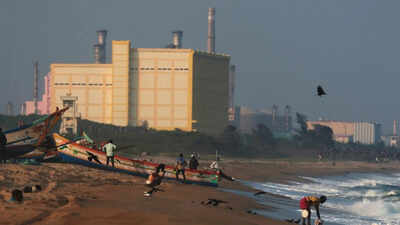
NEW DELHI: The government has proposed a detailed licensing and safety framework for expanding atomic power, including insurance or financial security or a combination of both, for nuclear damage, as it seeks to scale clean energy by allowing private and foreign participation in the nuclear sector under the SHANTI Act.The government released the draft SHANTI Rules, 2026 and SHANTI Regulations, 2026, on Friday for public consultation, providing separate but linked frameworks for licensing and safety authorisation. While the Rules deal with licensing of nuclear and related activities, the Regulations set out detailed safety requirements at different stages of a facility’s life.The Sustainable Harnessing and Advancement of Nuclear Energy for Transforming India (SHANTI) Act, enacted in Dec last year, replaced the Atomic Energy Act of 1962 and Civil Liability for Nuclear Damage Act of 2010, providing a new framework for safety, licensing and liability in the nuclear sector.India has set a target of 100 GW of nuclear capacity by 2047, from 8.8 GW currently. The government has also targeted around 22 GW by 2031-32 as part of its Nuclear Energy Mission.Under the proposed Rules, prospective operators can seek an “in-principle approval” even before selecting a site or technology, allowing them to negotiate with reactor technology vendors and acquire land and other infrastructure. The approval would not amount to a final licence and can be revoked on grounds including public interest, national security, public health and safety, or misrepresentation or suppression of material facts.The rules also allow a single composite licence for building, owning, operating and decommissioning nuclear plants. The licence can cover electricity generation, captive generation, hydrogen production, research and other peaceful applications, with captive nuclear power specifically recognised for energy-intensive industries, data centres, semiconductor manufacturing and AI applications.For reactors based on foreign designs, the Rules require the design to be approved or certified by the regulatory authority in the country of origin and the reactor to be operational either there or in another foreign country. The country of origin must have a self-reliant nuclear reactor design and supply-chain ecosystem and globally trusted regulatory approvals.The rules require the licensee to obtain design approval and safety authorisation from the Atomic Energy Regulatory Board (AERB) for siting, construction, commissioning, operation and decommissioning. The Regulations provide for detailed safety checks, including examination of plant design, accident analysis, safety systems, site characteristics, radiological impact, emergency preparedness, waste management and security.Before a plant gets operating authorisation, it will have to submit commissioning results, safety reports, technical specifications, radiation protection and emergency plans, besides obtaining waste authorisation.The rules require applicants to demonstrate financial, managerial and technical capabilities, including arrangements for assured fuel supplies, spent fuel and radioactive waste management, and to meet nuclear liability and decommissioning obligations.
Share your thoughts in the comments
Be respectful · TOI community guidelines
Operators will have to maintain insurance or financial security, or a combination of both, for nuclear damage, with the financial security remaining in place until spent fuel is removed from the relevant storage pool.The rules also provide for a Nuclear Liability Fund, to be funded through a levy on operators. The Centre will review the maximum limits of an operator’s civil liability for nuclear damage every five years through an expert group.Uranium and thorium mining, however, remains restricted, with mining above government-notified thresholds limited to state entities nominated under existing mining rules.


