
Massachusetts residents sue data centre over 27 diesel generators and 16 cooling towers near homes, raising fears of pollution and noise

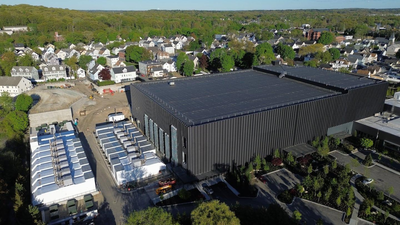
Ten residents in Lowell, Massachusetts, are suing the state’s environmental regulator and the company behind a large data centre over an expansion that would bring the facility’s total to 27 industrial-scale diesel backup generators and 16 cooling towers. The lawsuit challenges the Massachusetts Department of Environmental Protection’s approval of the expansion and alleges that residents were not given a proper opportunity to challenge the project. Markley Group’s 352,000-square-foot data centre sits in a densely populated neighbourhood, with homes close to its infrastructure. Residents have raised concerns about diesel emissions, industrial noise, cooling-tower mist, dust and other impacts. The case comes as communities across the US increasingly question the environmental costs of expanding data-centre infrastructure to meet rising demand for cloud computing and artificial intelligence.
Why Massachusetts residents are challenging the data centre expansion
The lawsuit was filed in Middlesex County Superior Court on April 27, 2026, by 10 Lowell residents represented by the Environmental Justice Law and Advocacy Clinic at Yale Law School, the Conservation Law Foundation and Fitch Law Partners. The defendants are Markley Group LLC and the Massachusetts Department of Environmental Protection, or MassDEP. The residents are challenging the state’s approval of an air-quality plan connected to Markley’s expansion in Lowell’s Sacred Heart and Back Central neighbourhoods. Massachusetts has designated both areas as Environmental Justice populations. The roughly 14-acre facility is surrounded by homes, a public park and a ballfield, while a public preschool is located about a block away. The current dispute centres on eight additional 3,000-kilowatt diesel emergency generators. Markley submitted its latest application to MassDEP in April 2025. If installed, the eight generators would bring the facility’s total to 27 industrial-scale diesel generators. The expansion also involves 16 cooling towers. MassDEP approved the air-quality plan on July 3, 2025, after which residents challenged the decision through the state’s administrative appeals process before taking the dispute to court.
Why are residents concerned about the data centre
Residents say they are being asked to live alongside an expanding industrial facility with diesel generators, cooling towers and other large-scale infrastructure unusually close to their homes. Their legal filings raise concerns about diesel emissions, industrial noise, dust, odours, traffic and cooling-tower mist reaching nearby properties. One plaintiff, Jacob Fortes, has said several diesel generators are located behind his home, with the closest about 84 feet away. The lawsuit also points to the facility’s location within neighbourhoods designated as Environmental Justice populations. Residents argue that adding eight more 3,000-kilowatt diesel generators could increase the environmental and quality-of-life burden on an already densely populated community. Markley says the diesel generators are emergency backup systems rather than the facility’s primary source of electricity. Company representatives told GBH that the generators are generally switched on for about five minutes each week for testing and otherwise remain off unless there is a power outage. The company has therefore argued that the generators are not operated continuously. However, the residents’ lawsuit focuses on the potential environmental effects of having this industrial-scale backup infrastructure operating close to homes, regardless of how frequently the generators are used.
Residents challenge MassDEP’s approval process
The residents’ legal challenge goes beyond concerns about the generators themselves and targets the state’s permitting process. They argue that MassDEP failed to properly consider Environmental Justice requirements, cumulative environmental impacts and alternatives to diesel backup power. They also contend that the agency did not adequately address the environmental effects of the 16 cooling towers or require additional review under the Massachusetts Environmental Policy Act. The plaintiffs are asking the court to scrutinise MassDEP’s approval and determine whether the agency followed the law when allowing the expansion to proceed. The lawsuit also alleges that the state’s review did not sufficiently account for the project’s location in a densely populated community. Residents argue that the impact of adding more industrial equipment should have been assessed alongside the effects of Markley’s existing operations rather than considered in isolation.
Dispute over a consent order
Another major issue involves an administrative consent order between MassDEP and Markley. According to the residents’ lawsuit, the agreement allowed Markley to proceed with certain construction and equipment work while the residents’ administrative appeal was still pending. Residents say they discovered the agreement after noticing construction activity at the site. They argue that MassDEP effectively allowed the company to move ahead before their challenge had been fully resolved.The plaintiffs are asking the court to determine whether MassDEP exceeded its authority through the agreement and related actions. The dispute has added another layer to the residents’ broader argument that the state did not give them a meaningful opportunity to challenge the data centre’s expansion. These claims are allegations made by the plaintiffs and have not been finally decided by a court.
Lowell has also moved against new data centre projects
The controversy has prompted action from Lowell officials beyond the lawsuit. In March 2026, the Lowell City Council unanimously approved a temporary moratorium on new data centre construction and development in the city. The measure was intended to give officials time to examine the potential environmental, infrastructure and zoning effects associated with data centres. The moratorium does not automatically cancel Markley’s existing facility or settle the current lawsuit. Instead, the legal dispute concerns state-level approvals connected to the expansion of an existing data centre. The timing nevertheless highlights the growing concern surrounding large-scale computing facilities in Lowell.
Residents are seeking to pause the expansion
The legal battle continued in July 2026, when residents and their lawyers appeared before a Middlesex Superior Court judge seeking a preliminary injunction to stop Markley from constructing and operating additional generators and cooling towers while the broader case proceeds. Their lawyers argued that the state failed to properly assess the project’s cumulative impacts and did not give residents an adequate opportunity to challenge the approval. The request for an injunction means residents are seeking to prevent the disputed expansion from moving forward while the court considers the underlying legal issues. As of the latest available reports, no final ruling had been issued on the lawsuit, so the residents’ allegations have not been finally adjudicated.
A separate lawsuit focuses on noise
The air-quality and permitting case is not the only legal challenge facing Markley. In May 2026, another group of nearby residents filed a proposed class-action lawsuit alleging excessive noise from the Lowell data centre. That case is separate from the lawsuit challenging MassDEP’s air-quality approval. The two lawsuits reflect different aspects of residents’ concerns. One centres on the state’s environmental permitting and the proposed expansion of diesel generators and cooling equipment, while the other focuses specifically on alleged noise impacts from the facility’s operations.
The data centre is part of a larger AI infrastructure boom
The dispute is unfolding as demand for data-centre capacity grows rapidly across the US, driven partly by artificial intelligence. Data centres require substantial amounts of electricity to operate servers and cooling systems, while backup generators are used to keep critical equipment running during power interruptions. For communities located close to these facilities, however, the expansion can mean living alongside increasingly large industrial infrastructure. The Lowell case illustrates the tension between growing demand for computing capacity and residents’ concerns about pollution, noise, land use and environmental impacts.The central legal question is whether Markley’s expansion can proceed under the approvals granted by MassDEP or whether parts of the permitting process must be reconsidered. Residents want the court to scrutinise the air-quality approval and the consent order, while Markley maintains that its diesel generators are backup systems with limited routine use. The lawsuit remains ongoing, and there has been no final judicial determination that Markley’s operations violate environmental laws. For residents, however, the dispute is about more than eight additional generators. It raises broader questions about whether large data centres should be allowed to expand their industrial footprint so close to homes and how regulators should assess their environmental impact on densely populated and Environmental Justice communities.


