
SC gave the government two weeks to take a final call on introducing warning labels for packaged foods. NEW DELHI: Supreme Court on Thursday sharply criticised the Centre and the Food Safety and Standards Authority of India (FSSAI) over the delay in introducing front-of-pack warning labels for packaged food products high in sugar, salt and saturated fat, warning that it would issue directions if the government failed to take a final decision.A bench of Justices JB Pardiwala and K Vinod Chandran gave the Centre two weeks to place its final decision on record, making it clear that the government could either implement the proposed warning labels on its own or face judicial intervention.”This is your last chance. Next time we will dictate the judgment,” the bench said, according to ANI.The court repeatedly underlined that the issue was one of public health, particularly the health of children and questioned the government’s reluctance to move ahead with stronger nutritional warnings.”Why? You don’t want people of this country to remain healthy? More particularly growing children?” the bench asked during the hearing.Appearing for the Centre, additional solicitor general Brijender Chahar argued that applying strict warning standards could create complications for traditional Indian food items. He said products such as namkeen could end up carrying red warning symbols because of their fat or salt content.He also argued that international nutritional standards might not be directly applicable to Indian dietary habits, pointing out that even two eggs could exceed the prescribed daily fat limit.The court, however, was unconvinced.The bench said consumers were already aware that packaged foods contained sugar, fat and carbohydrates, but front-of-pack warning labels would provide a simpler and more effective way of communicating nutritional risks before a purchase was made.The judges also rejected the argument that warning labels could adversely affect manufacturers.According to ANI, the bench observed that the final decision to purchase a product would continue to rest with consumers and that commercial considerations could not take precedence over public health.During the proceedings, senior advocate Maninder Singh, appearing for a manufacturer, attempted to make submissions. The court responded by stating that the case concerned the health of citizens and that manufacturers could not determine government policy on the issue.Senior advocate Devadutt Kamat suggested that food products could be categorised differently and that detailed nutritional information should be displayed.The bench clarified that it was not opposed to any particular food product but was only seeking greater consumer awareness.”In this country, how many people can afford dry fruits? And how many children buy Kurkure? That makes all the difference. We are not against any particular product. We only want the person purchasing it to know what he is consuming,” the court said, according to ANI.The bench also referred to its February 10, 2026, order, in which it had previously addressed the issue and laid down its observations.During Thursday’s hearing, the petitioner’s counsel drew the court’s attention to the minutes of an FSSAI meeting held on March 7, which allegedly reflected a position contrary to the suggestions made by the court earlier.The judges also took exception to the Centre’s argument that India could not easily adopt international standards relating to nutritional warnings.”We do not approve the stance of the Union when it says that it’s not possible to match the international standards, more particularly developed countries. Should India remain an undeveloped country?” the bench asked, according to ANI.”The world should know that India is concerned about the health of its citizens and more particularly children,” it added.The case stems from a petition seeking mandatory front-of-pack warning labels for packaged food products containing high levels of sugar, salt and saturated fat.The proposed labels are intended to help consumers quickly identify potentially unhealthy products before buying them.Join conversationView All Comments →Share your thoughts in the commentsInsightfulAgreeDisagreeSkepticalConcerningPromisingWorth ReadingBig DevelopmentPost CommentBe respectful · TOI community guidelinesThe issue has also been discussed by Parliament’s Committee on Subordinate Legislation, headed by Shiv Sena Rajya Sabha MP Milind Deora, who has advocated studying Singapore’s Nutri-Grade model as a possible template for India.Separately, the Union health ministry has proposed displaying “sugar and oil boards” in schools, offices and other public institutions as part of a broader effort to encourage healthier eating habits and reduce excessive consumption of sugar and oil.Get the latest India News and Live updates. Download the TOI app.About the AuthorTOI News DeskThe TOI News Desk comprises a dedicated and tireless team of journalists who operate around the clock to deliver the most current and comprehensive news and updates to the readers of The Times of India worldwide. With an unwavering commitment to excellence in journalism, our team is at the forefront of gathering, verifying, and presenting breaking news, in-depth analysis, and insightful reports on a wide range of topics. The TOI News Desk is your trusted source for staying informed and connected to the ever-evolving global landscape, ensuring that our readers are equipped with the latest developments that matter most.”Read MoreEnd of ArticleFollow Us On Social MediaVideosAkali Dal chief Sukhbir Singh Badal Near Hazur Sahib Gurdwara, Assailant Uses Sharp Weapon | WatchPrajwal Revanna’s Jail Phone Had 90 Porn Videos, Senior Prison Official Suspended After Search’Is This The Way In Democracy?’Kharge Fumes, Raises Haldwani ‘Purification’ Row, Nadda Assures ProbeRed Fort Blast: UN Security Council Body Links Deadly Attack To AQIS; Reveals Grisly DetailsPit Bull Attack in Patiala Couple Suffers Multiple Injuries- Wife Undergoes SurgeryThreat Letter Targets Kashmiri Pandits In Kashmir, Employees Asked To Stay Alert Amid Security FearChilling Crash Video: Atiq Ahmed’s Son’s Creta Flips After Losing Control On Highway | WatchUdhayanidhi Backs CM Vijay’s Tamil Nadu Delimitation Stand, Demands No Cut In State’s LS SeatsFCRA Bill Sent To 31-Member JPC Amid Opposition Protests, Akhilesh-Rijiju Clash Over MinoritiesRijiju slams opposition over parliament chaos, says ‘running away from debate’123PhotostoriesYour balcony can be more than a laundry zone: 8 clever makeover ideas to turn a small Indian apartment balcony into a space you will actually useAlia Bhatt’s hairstylist Amit Thakur reveals the truth about hair spas!Kangana Ranaut turns heads on her first Teej in a Kanjeevaram lime green saree, proving traditional never means boringWhy do onions make you cry? 3 tricks that actually work6 foods soldiers ate during World War IIHuskies to Bulldogs: Why some of India’s most ‘trendy’ dog breeds struggle to cope with the summer heat10 most hated foods in the world and why people can’t stand themFrom peacocks to mandalas: 10 best mehendi designs for Hariyali Teej 2026Aluminium foil can clean chimney filters effectively: 3 simple tips to follow7 protein and fiber-rich Oats & Egg combinations for a complete breakfast123Hot PicksKaroline LeavittNCERTTrump SocialJharkhand protestN ChandrasekaranNEET PG 2026 city slipIran warKarnataka bandhUP NEET UG counsellingTop TrendingChhattisgarh NH-30 AccidentKarnataka Closed TodayMallikarjun KhargeBengaluru Mother AccidentGermany Haryana Youth MurderGujarat SuicideSouth Delhi MurderAbhijeet DipkeWeather TomorrowShakeel Noorani

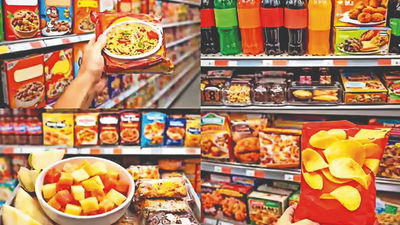
NEW DELHI: Supreme Court on Thursday sharply criticised the Centre and the Food Safety and Standards Authority of India (FSSAI) over the delay in introducing front-of-pack warning labels for packaged food products high in sugar, salt and saturated fat, warning that it would issue directions if the government failed to take a final decision.A bench of Justices JB Pardiwala and K Vinod Chandran gave the Centre two weeks to place its final decision on record, making it clear that the government could either implement the proposed warning labels on its own or face judicial intervention.“This is your last chance. Next time we will dictate the judgment,” the bench said, according to ANI.The court repeatedly underlined that the issue was one of public health, particularly the health of children and questioned the government’s reluctance to move ahead with stronger nutritional warnings.“Why? You don’t want people of this country to remain healthy? More particularly growing children?” the bench asked during the hearing.Appearing for the Centre, additional solicitor general Brijender Chahar argued that applying strict warning standards could create complications for traditional Indian food items. He said products such as namkeen could end up carrying red warning symbols because of their fat or salt content.He also argued that international nutritional standards might not be directly applicable to Indian dietary habits, pointing out that even two eggs could exceed the prescribed daily fat limit.The court, however, was unconvinced.The bench said consumers were already aware that packaged foods contained sugar, fat and carbohydrates, but front-of-pack warning labels would provide a simpler and more effective way of communicating nutritional risks before a purchase was made.The judges also rejected the argument that warning labels could adversely affect manufacturers.According to ANI, the bench observed that the final decision to purchase a product would continue to rest with consumers and that commercial considerations could not take precedence over public health.During the proceedings, senior advocate Maninder Singh, appearing for a manufacturer, attempted to make submissions. The court responded by stating that the case concerned the health of citizens and that manufacturers could not determine government policy on the issue.Senior advocate Devadutt Kamat suggested that food products could be categorised differently and that detailed nutritional information should be displayed.The bench clarified that it was not opposed to any particular food product but was only seeking greater consumer awareness.“In this country, how many people can afford dry fruits? And how many children buy Kurkure? That makes all the difference. We are not against any particular product. We only want the person purchasing it to know what he is consuming,” the court said, according to ANI.The bench also referred to its February 10, 2026, order, in which it had previously addressed the issue and laid down its observations.During Thursday’s hearing, the petitioner’s counsel drew the court’s attention to the minutes of an FSSAI meeting held on March 7, which allegedly reflected a position contrary to the suggestions made by the court earlier.The judges also took exception to the Centre’s argument that India could not easily adopt international standards relating to nutritional warnings.“We do not approve the stance of the Union when it says that it’s not possible to match the international standards, more particularly developed countries. Should India remain an undeveloped country?” the bench asked, according to ANI.“The world should know that India is concerned about the health of its citizens and more particularly children,” it added.The case stems from a petition seeking mandatory front-of-pack warning labels for packaged food products containing high levels of sugar, salt and saturated fat.The proposed labels are intended to help consumers quickly identify potentially unhealthy products before buying them.
Share your thoughts in the comments
Be respectful · TOI community guidelines
The issue has also been discussed by Parliament’s Committee on Subordinate Legislation, headed by Shiv Sena Rajya Sabha MP Milind Deora, who has advocated studying Singapore’s Nutri-Grade model as a possible template for India.Separately, the Union health ministry has proposed displaying “sugar and oil boards” in schools, offices and other public institutions as part of a broader effort to encourage healthier eating habits and reduce excessive consumption of sugar and oil.


