
Peak time tonight, best places to watch and what to expect

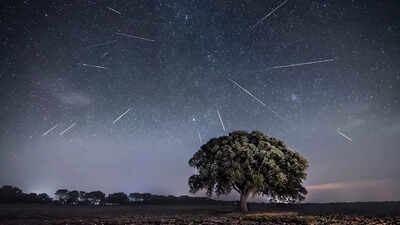
If you’ve been waiting for a good excuse to stay up late and look at the sky, tonight could be worth it. The Perseid meteor shower is reaching its peak around August 12-13, and 2026 is shaping up to be a particularly good year for watching it because the Moon is essentially new. That means much less moonlight competing with the meteors.The Perseids are one of the most popular meteor showers of the year. They’re known for fast, bright meteors, and under dark rural skies, observers can typically see dozens of Perseids per hour around the peak. The shower is active from mid-July into late August, so the peak isn’t the only chance to catch one.
When is the Perseid meteor shower peak in 2026?
The predicted maximum falls on August 13, 2026. The exact astronomical maximum occurs during the daytime in the US, so you won’t be able to watch the moment of maximum activity itself. For sky watchers, the more useful window is the pre-dawn period on August 13, when the Perseid radiant is higher and the sky is still dark.So, if you’re planning to watch tonight, don’t head outside for just a few minutes after sunset and give up. The better strategy is to stay out late, particularly from around midnight toward dawn.The American Meteor Society lists the Perseids as active through August 24, with August 12-13 as the peak nights. In 2026, the Moon is at essentially 0% illumination around the peak, which is excellent news for anyone hoping to spot fainter meteors.
Where can you see the Perseids in the US?
The good news is that you don’t need to be in a famous observatory or a special viewing zone. The Perseids are best seen from anywhere with a genuinely dark sky and a wide, unobstructed view.Still, some places have a clear advantage because they’re far from major sources of artificial light.Great Basin National Park, Nevada is one of the better-known dark-sky destinations in the US. Its remote location means you can get well away from the bright glow of cities.Big Bend National Park, Texas is another strong option. The park’s distance from major urban areas gives stargazers a much darker sky than they’d get in most cities.Death Valley National Park, California and Nevada offers huge stretches of open desert and very little artificial light, making it a popular spot for night-sky viewing.Joshua Tree National Park, California is also a favourite for stargazers, particularly for people in Southern California looking to escape city lights.On the East Coast, Cherry Springs State Park, Pennsylvania is one of the best-known destinations for dark-sky viewing.And in Utah, the areas around Arches and Canyonlands can offer spectacular night skies when conditions cooperate.Other good options include Glacier National Park in Montana and the darker sections of Yellowstone National Park, which spans Wyoming, Montana and Idaho.Of course, even the best location can be affected by clouds, haze and local conditions. A dark-sky site gives you a better starting point, but there’s no guarantee the weather will cooperate.
What direction should you look?
This is where a lot of people make things harder than they need to be.The Perseids appear to come from the direction of Perseus, which rises in the northeastern part of the sky. But you don’t need to stare directly at Perseus. In fact, it’s better to look at a broad section of the sky because meteors can streak far away from the radiant.Find a spot with as much open sky as possible. Lie back, get comfortable and give your eyes around 20 to 30 minutes to adjust to the darkness. Try not to keep checking your phone, since that bright screen can make it harder for your eyes to adapt.And forget the telescope. You don’t need one.You don’t need binoculars either. Your eyes are actually better suited to the job because you want the widest possible view of the sky.
Why does the Perseid meteor shower happen?
The Perseids aren’t actually stars falling from the sky. They’re tiny pieces of debris left behind by comet 109P/Swift-Tuttle.As Earth moves through this trail of material, some of those particles slam into the atmosphere at enormous speeds. The friction and heating make them glow, creating the bright streaks we see from the ground. Perseid meteors enter the atmosphere at roughly 59 kilometres per second, which helps explain why they can look so quick and dramatic.The shower gets its name from the constellation Perseus because that’s where the meteors appear to originate. The actual meteors, however, can shoot across many parts of the sky.
What if you miss the peak?
Don’t worry too much.The Perseids remain active after the August 12-13 peak, although the number of meteors gradually drops as the shower moves toward the end of its active period. The American Meteor Society lists the 2026 Perseid activity through August 24.So if clouds ruin tonight’s plans, there’s still time to try again.The biggest thing is to get away from bright lights, find as much open sky as possible and give yourself enough time to actually watch. You might see a meteor within the first few minutes. Or you might have to wait.But when a bright Perseid suddenly cuts across the sky, you’ll know why staying up was worth it.


