
Pan masala may now only be packaged in paper, paperboard, cellulose, or other naturally derived materials (Photo: Agencies). NEW DELHI: The tiny plastic sachet that has become synonymous with pan masala may finally be on its way out. The Food Safety and Standards Authority of India (FSSAI) has notified plastic-free packaging norms for the product, a move experts say could further enforcement of an existing ban by allowing the food regulator to act directly against violators.The amended Food Safety and Standards (Packaging) Regulations, 2026, require pan masala to be packed only in paper, paperboard, cellulose or other naturally derived materials free from plastic, or in tin or glass containers. The notification prohibits use of materials containing polyethylene, polypropylene, polyester, PVC, synthetic polymers, laminates, aluminium foil and metallised layers, and also makes the packaging subject to Plastic Waste Management Rules, 2016.The rules came into force upon their publication in the gazetteA senior FSSAI official told TOI that pan masala has been specifically included under Schedule IV of packaging regulations to provide Food Business Operators with clear guidance on suitable packaging materials, given the widespread use of small single-use packs and the environmental concerns arising from their disposal. However, environmental experts said the notification primarily furthers enforcement rather than imposing fresh prohibition.Join conversationView All Comments →Share your thoughts in the commentsInsightfulAgreeDisagreeSkepticalConcerningPromisingWorth ReadingBig DevelopmentPost CommentBe respectful · TOI community guidelines“The Plastic Waste Management Rules, 2016, had already placed an explicit legal ban on plastic sachets for gutka, tobacco and pan masala. The FSSAI notification reinforces that mandate through food safety regulations,” said Siddharth G. Singh, programme manager, solid waste management and circular economy, Centre for Science and Environment.He said enforcement of Plastic Waste Management Rules has remained patchy because it largely depends on state pollution control boards and local bodies. Bringing the requirement under the ambit of food safety regulations will allow FSSAI to act directly against Food Business Operators, plugging an enforcement gap that environmental laws alone struggled to address, he said.Singh said pan masala was specifically targeted because the sector relies heavily on use of small single-use sachets, which have a high littering potential and among the lowest collection rates.Get the latest India News and Live updates. Download the TOI app.About the AuthorAnuja JaiswalAnuja Jaiswal is a Senior Assistant Editor at The Times of India, with an impressive 18-year career in narrative journalism. She specializes in health and heritage reporting, expertly simplifying complex health information to make it engaging and understandable for readers. Her deep dives into heritage topics are well-researched, resulting in captivating narratives that resonate with her audience. Over the years, she has worked in Chandigarh, Chhattisgarh and West UP, gaining diverse on-ground experience that shapes her storytelling.Read MoreEnd of ArticleFollow Us On Social MediaVideosPrashant Kishor Promises Jobs For 10,000 Bankipur Youths After Ending BJP’s 30-Year Hold | WatchIndia’s Map Move Rattles China: What Naming 27 Places In Arunachal Means?Air India Phuket-Delhi Pilot’s Confirmatory Dope Test Reportedly Positive For Marijuana, Sources SayTamil Nadu Assembly Passes Anti-NEET Resolution As DMK, AIADMK And PMK Back Abolition DemandDelhi CM Fumes, Rekha Gupta Slams AAP MLA Over Viral Video; Eight AAP MLAs Marshalled OutKashmiri Pandit Employees Sent On Leave After Lashkar-Linked Threat Letter‘Amit Shah Jawab Do’ Vs ‘Rahul Gandhi Bhaago Mat’: NDA, Oppn Face-Off In Parliament’Booked Hotel Room, Strangled Daughters’: Inside Bengaluru Murder Shocker‘Ladakh Is Not Kaziranga’: Snow Leopard Safari Plan Sparks DebateAmit Shah To Speak On Student Protest Crackdown; Rahul Says ‘Not Interested In Fantasy Convos’123PhotostoriesIndependence Day 2026 ethnic ideas: Bollywood actresses to inspire your August 15 lookLung cancer is not only about smoking: Doctor explains the risks hiding in your air, home and daily routineExclusive – Khatron Ke Khiladi 15’s Ruhaanika Dhawan on being the youngest contestant, on-screen mom Divyanka Tripathi’s reaction to her stunts and moreBaluchari saree: The forgotten Bengali handloom that nearly disappearedKeto, Carnivore, High-Protein Diets: Can eating too much protein or too few carbs put your kidneys under stress?The tiaras of Brunei royals: A closer look at the lavish jewels behind their most iconic looks10 unique baby boy names that sound both classic and coolOptical illusion personality test: What you see first reveals your hidden secrets about approaching situations in life5 resume mistakes that could quietly cost you your next jobWhat happens when you put a sponge in the fridge? The simple hack that helps during monsoon123Hot PicksMumbai rainNEET PG city intimation slipSlovenia Indian embassyJharkhand protestWeather AhmedabadAjit DovalIran warDelhi rainUP scholarshipTop TrendingCJPGurgaon Businessman Wife ArrestBengaluru Missing TechieBlinkit MumbaiHarbhajan SinghPune-Bengaluru Highway AccidentTelangana AccidentAbhijeet DipkeWeather TomorrowShakeel Noorani


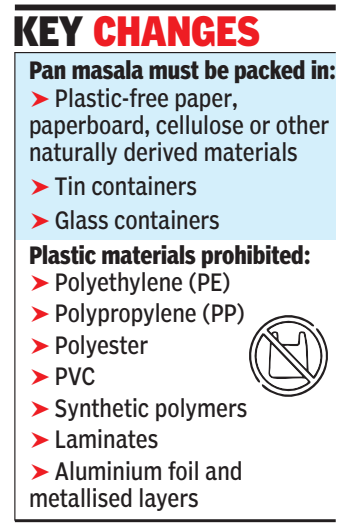
NEW DELHI: The tiny plastic sachet that has become synonymous with pan masala may finally be on its way out. The Food Safety and Standards Authority of India (FSSAI) has notified plastic-free packaging norms for the product, a move experts say could further enforcement of an existing ban by allowing the food regulator to act directly against violators.The amended Food Safety and Standards (Packaging) Regulations, 2026, require pan masala to be packed only in paper, paperboard, cellulose or other naturally derived materials free from plastic, or in tin or glass containers. The notification prohibits use of materials containing polyethylene, polypropylene, polyester, PVC, synthetic polymers, laminates, aluminium foil and metallised layers, and also makes the packaging subject to Plastic Waste Management Rules, 2016.
The rules came into force upon their publication in the gazette
A senior FSSAI official told TOI that pan masala has been specifically included under Schedule IV of packaging regulations to provide Food Business Operators with clear guidance on suitable packaging materials, given the widespread use of small single-use packs and the environmental concerns arising from their disposal. However, environmental experts said the notification primarily furthers enforcement rather than imposing fresh prohibition.
Share your thoughts in the comments
Be respectful · TOI community guidelines
“The Plastic Waste Management Rules, 2016, had already placed an explicit legal ban on plastic sachets for gutka, tobacco and pan masala. The FSSAI notification reinforces that mandate through food safety regulations,” said Siddharth G. Singh, programme manager, solid waste management and circular economy, Centre for Science and Environment.He said enforcement of Plastic Waste Management Rules has remained patchy because it largely depends on state pollution control boards and local bodies. Bringing the requirement under the ambit of food safety regulations will allow FSSAI to act directly against Food Business Operators, plugging an enforcement gap that environmental laws alone struggled to address, he said.Singh said pan masala was specifically targeted because the sector relies heavily on use of small single-use sachets, which have a high littering potential and among the lowest collection rates.


