
Pothole-related deaths in India rose by over 53% in five years, from 1,555 in 2020 to 2,385 in 2024. Do you also have a “work in progress” sign permanently living outside your house?One day, someone digs up the road to lay a water pipe. A few days later, another team arrives to fix a cable. Then comes the patchwork. And just when you think the road is finally back to normal, congratulations, it is dug up again.The road outside your house may technically be the same road, but it has seen so many rounds of digging, filling, breaking and repairing that it almost has a career history.And then, inevitably, the potholes arrive.We often blame potholes on bad roads, heavy rain or poor construction. But a pothole is rarely born overnight. In fact, that annoying crater that makes your car suspension groan or sends a two-wheeler rider swerving usually has a long backstory.A crack appears. Water gets in. The road weakens. Traffic keeps pounding it. The surface finally gives way.And if the underlying problem isn’t fixed, filling the hole may only be a temporary solution.The road gets dug up. Again. And again.Before we get to the pothole itself, there is another character in this story: road digging.Roads don’t just carry vehicles. They carry water pipelines, sewage lines, electricity cables, telecom networks and other utilities underneath them. Whenever something needs to be repaired, replaced or newly installed, the road may have to be opened.The problem begins when the road is not restored to the same standard after the work is completed.From a tiny crack to a full-blown pothole, here’s how road damage turns into a recurring cycle of patch and repair.A poorly compacted patch can become weaker than the surrounding pavement. Water can seep into the edges. Traffic repeatedly hits the repaired section. Eventually, cracks appear.And suddenly, the “temporary” patch becomes the next pothole.This is one reason why road maintenance cannot simply mean filling visible holes. What happens underneath the road matters just as much as what you see on top.Every pothole starts smallThe first warning sign is usually something you wouldn’t give a second glance: a tiny crack.Road surfaces are constantly under pressure. India’s roads have to handle enormous traffic volumes, heavy vehicles and, in many parts of the country, intense heat followed by heavy monsoon rain.Temperature changes cause pavement materials to expand and contract. Repeated traffic loads create fatigue. Overloaded vehicles put additional stress on the surface.Then the monsoon arrives.A police officer fills a pothole with stones on a road, at Edappally, in Kochi. (Image credit: PTI)That tiny crack suddenly becomes a doorway.Water is the real troublemakerRain itself isn’t necessarily the villain. Water getting beneath the road is.Once water enters through a crack, it can reach the layers beneath the asphalt. If drainage is poor, clogged or badly designed, the water may remain there instead of being carried away.The result is gradual weakening of the road’s foundation.The surface may still look fine from above. Underneath, however, the supporting layers can lose strength and material can be washed or displaced, creating weak spots and voids.And then traffic does what traffic does best: keeps coming.Then the tyres take overImagine standing on a floor that has suddenly become slightly hollow underneath. Now imagine thousands of vehicles repeatedly pressing down on that same spot.That is essentially what happens to a road whose underlying layers have weakened.With every passing vehicle, the damaged surface experiences another load. Bits of asphalt loosen, the depression grows and eventually the surface collapses.That is your pothole.And once it forms, it can become a vicious cycle.Rainwater collects in the depression. More water finds its way into the surrounding pavement. The edges weaken. Vehicles hit the damaged section. More material breaks away.A small pothole can therefore become a much bigger one surprisingly quickly, especially during the rainy season.Why does the pothole come back after it is fixedNow comes the question every commuter has asked at least once:“Didn’t they just repair this?”Yes. But repairing the hole and repairing the road are not always the same thing.If workers simply fill the visible depression while the layers underneath remain damaged, the surface may fail again.It is a bit like filling a dent in a wall without fixing the leak behind it.The road may look perfect for a while. Then water gets in again, traffic starts pounding the weak section and — hello, pothole.Potholes on Bengaluru roads (Image credit: PTI)This is why preventive maintenance matters. A small crack can often be dealt with before it becomes structural damage. Once the road base itself has deteriorated, the repair becomes more complicated, expensive and disruptive.And not all potholes are equally dangerousA pothole’s danger isn’t determined by its size alone.A small hole on a busy, high-speed road can be far more dangerous than a giant one on an empty lane.For two-wheelers, an unexpected depression can destabilise the vehicle. On a crowded road, a driver trying to avoid a pothole may suddenly brake or swerve. At night, poor lighting can make the defect difficult to spot. During rain, water can completely hide its depth.So the real danger is a combination of the pothole, speed, traffic, visibility and road conditions.What data showsPotholes claimed 9,438 lives across India between 2020 and 2024, with annual fatalities rising from 1,555 in 2020 to 2,385 in 2024 — a jump of more than 53% in five years.Uttar Pradesh accounted for more than half of the national toll, reporting 5,127 deaths. Madhya Pradesh followed with 969 fatalities, while Tamil Nadu recorded 612, Odisha 425, Punjab 414 and Assam 395. Among Union Territories, Delhi reported the highest toll at 50.But the numbers also raise questions about how pothole-related crashes are recorded. States such as Andhra Pradesh and Bihar reported zero crashes, injuries or deaths under this category, even as states such as Manipur, Nagaland and Tripura reported fatalities. Experts say gaps in objective crash-cause reporting could mean the data does not fully capture the scale of the problem.The toll, however, remains below the 2017 peak of 3,597 pothole-related deaths. The Supreme Court took suo motu cognisance of the issue in 2018, observing that authorities responsible for maintaining roads were failing in their duties.Can we stop pothole before it becomes a pothole?Fortunately, the answer isn’t simply “keep filling holes”.A 2021 IIT Madras study found that nearly 78% of urban potholes reported by citizens remained unfixed for more than two weeks, with delays particularly serious in high-traffic areas.Technology can help road agencies identify damage earlier through road-condition monitoring, GIS mapping and scanning systems. Quick repair methods can deal with certain defects before they expand.Citizen reporting can also help — provided complaints actually lead to inspection and action.Because the person who encounters a dangerous pothole may not be a road engineer inspecting the highway once a month. It may be a delivery rider passing through it ten times a day.But technology alone won’t solve the problem.Road agencies need better coordination too. If one department digs up a road to lay a cable and another has to repair it later, someone needs to ensure the road is restored properly. Otherwise, the same stretch can enter an endless loop of dig → patch → crack → pothole → repair → dig again.How speed, rain, poor visibility and heavy traffic can turn a road defect into a serious hazard.The pothole is only the final chapterSo, the next time you see a pothole outside your home, remember: that hole probably didn’t just “appear”.Join conversationView All Comments →Share your thoughts in the commentsInsightfulAgreeDisagreeSkepticalConcerningPromisingWorth ReadingBig DevelopmentPost CommentBe respectful · TOI community guidelinesIt may have started as a tiny crack.Then came rainwater. Maybe a badly repaired utility cut. Maybe years of heavy traffic. Maybe poor drainage. Maybe all of them.By the time you notice the crater, the real damage may already be underneath.Which is why the real solution isn’t simply asking, “Who will fill this pothole?”It is asking a much more important question:“Why did this road fail in the first place — and why wasn’t it fixed before it got this bad?”Because if the answer remains unclear, that freshly filled pothole may just be waiting for its next monsoon comeback.Get the latest India News and Live updates. Download the TOI app.About the AuthorAastha JhaAastha Jha is a writer at The Times of India, covering politics. She also writes on business, global affairs, social issues, with a focus on policy, governance and their impact on everyday lives. Her work brings together reportage and analysis, tracking developments in India and abroad while examining the broader social and economic currents shaping public discourse.Read MoreEnd of ArticleFollow Us On Social MediaVideosDelhi CM Fumes, Rekha Gupta Slams AAP MLA Over Viral Video; Eight AAP MLAs Marshalled OutKashmiri Pandit Employees Sent On Leave After Lashkar-Linked Threat Letter‘Amit Shah Jawab Do’ Vs ‘Rahul Gandhi Bhaago Mat’: NDA, Oppn Face-Off In Parliament’Booked Hotel Room, Strangled Daughters’: Inside Bengaluru Murder Shocker‘Ladakh Is Not Kaziranga’: Snow Leopard Safari Plan Sparks DebateAmit Shah To Speak On Student Protest Crackdown; Rahul Says ‘Not Interested In Fantasy Convos’CJP Core Committee Dispute: Two Youths On Hunger Strike In Abhijit Dipke’s Hometown Hospitalised‘Only Dialogue Can Solve This’: Rahul Gandhi Backs Peaceful Jharkhand Student Protest | WatchJharkhand Students Storm Assembly Gates Amid Tear Gas, Lathicharge As ED Probe Intensifies Exam RowBihar Man Posed As IAS Officer, Claimed Doval Link; Police Seize Tesla, SUV And Imported Liquor123PhotostoriesKeto, Carnivore, High-Protein Diets: Can eating too much protein or too few carbs put your kidneys under stress?The tiaras of Brunei royals: A closer look at the lavish jewels behind their most iconic looks10 unique baby boy names that sound both classic and coolOptical illusion personality test: What you see first reveals your hidden secrets about approaching situations in life5 resume mistakes that could quietly cost you your next jobWhat happens when you put a sponge in the fridge? The simple hack that helps during monsoonTrying to lose thigh fat by walking? Doctor explains how to walk smarter, not just longer, for better fat-loss resultsHow to walk smart to reduce thigh fat5 stylish ways to recycle your old denim jeans instead of throwing them awayThe parenting lessons children learn without being taught: 7 agreements every couple should makeBefore cholesterol reaches the heart, it may leave clues elsewhere: 7 changes doctors say not to overlook123Hot PicksMumbai rainNEET PG city intimation slipSlovenia Indian embassyJharkhand protestWeather AhmedabadAjit DovalIran warDelhi rainUP scholarshipTop TrendingCJPGurgaon Businessman Wife ArrestBengaluru Missing TechieBlinkit MumbaiHarbhajan SinghPune-Bengaluru Highway AccidentTelangana AccidentAbhijeet DipkeWeather TomorrowShakeel Noorani

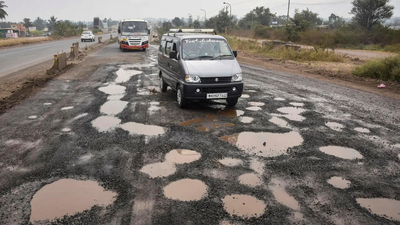
Do you also have a “work in progress” sign permanently living outside your house?One day, someone digs up the road to lay a water pipe. A few days later, another team arrives to fix a cable. Then comes the patchwork. And just when you think the road is finally back to normal, congratulations, it is dug up again.The road outside your house may technically be the same road, but it has seen so many rounds of digging, filling, breaking and repairing that it almost has a career history.And then, inevitably, the potholes arrive.We often blame potholes on bad roads, heavy rain or poor construction. But a pothole is rarely born overnight. In fact, that annoying crater that makes your car suspension groan or sends a two-wheeler rider swerving usually has a long backstory.A crack appears. Water gets in. The road weakens. Traffic keeps pounding it. The surface finally gives way.And if the underlying problem isn’t fixed, filling the hole may only be a temporary solution.The road gets dug up. Again. And again.Before we get to the pothole itself, there is another character in this story: road digging.Roads don’t just carry vehicles. They carry water pipelines, sewage lines, electricity cables, telecom networks and other utilities underneath them. Whenever something needs to be repaired, replaced or newly installed, the road may have to be opened.The problem begins when the road is not restored to the same standard after the work is completed.
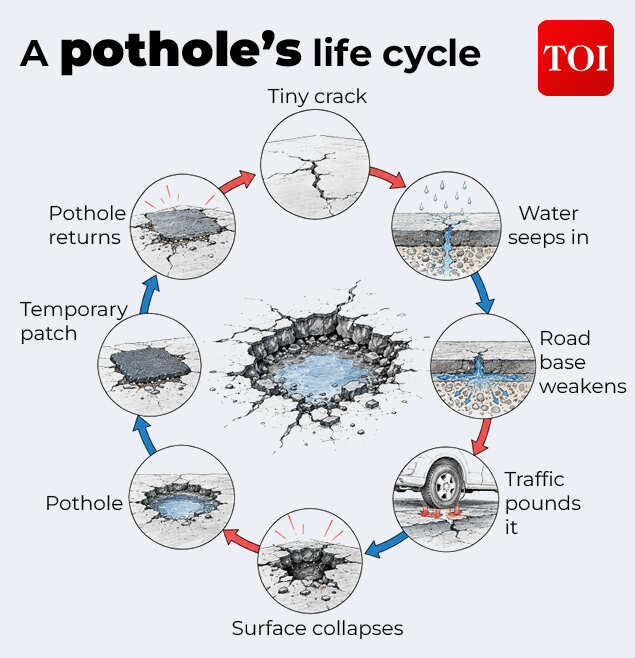
From a tiny crack to a full-blown pothole, here’s how road damage turns into a recurring cycle of patch and repair.
A poorly compacted patch can become weaker than the surrounding pavement. Water can seep into the edges. Traffic repeatedly hits the repaired section. Eventually, cracks appear.And suddenly, the “temporary” patch becomes the next pothole.This is one reason why road maintenance cannot simply mean filling visible holes. What happens underneath the road matters just as much as what you see on top.
Every pothole starts small
The first warning sign is usually something you wouldn’t give a second glance: a tiny crack.Road surfaces are constantly under pressure. India’s roads have to handle enormous traffic volumes, heavy vehicles and, in many parts of the country, intense heat followed by heavy monsoon rain.Temperature changes cause pavement materials to expand and contract. Repeated traffic loads create fatigue. Overloaded vehicles put additional stress on the surface.Then the monsoon arrives.
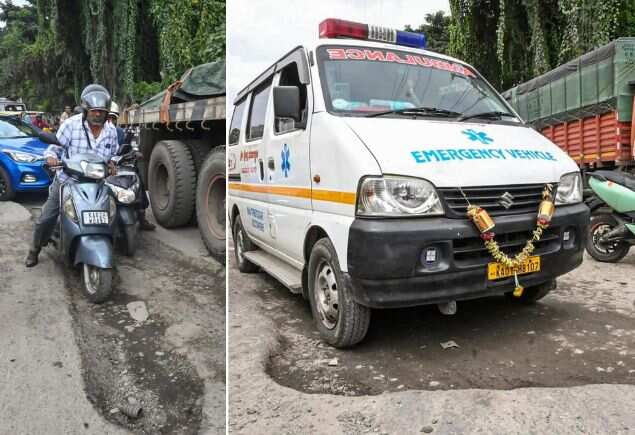
A police officer fills a pothole with stones on a road, at Edappally, in Kochi. (Image credit: PTI)
That tiny crack suddenly becomes a doorway.Water is the real troublemakerRain itself isn’t necessarily the villain. Water getting beneath the road is.Once water enters through a crack, it can reach the layers beneath the asphalt. If drainage is poor, clogged or badly designed, the water may remain there instead of being carried away.The result is gradual weakening of the road’s foundation.The surface may still look fine from above. Underneath, however, the supporting layers can lose strength and material can be washed or displaced, creating weak spots and voids.And then traffic does what traffic does best: keeps coming.Then the tyres take overImagine standing on a floor that has suddenly become slightly hollow underneath. Now imagine thousands of vehicles repeatedly pressing down on that same spot.That is essentially what happens to a road whose underlying layers have weakened.With every passing vehicle, the damaged surface experiences another load. Bits of asphalt loosen, the depression grows and eventually the surface collapses.That is your pothole.And once it forms, it can become a vicious cycle.Rainwater collects in the depression. More water finds its way into the surrounding pavement. The edges weaken. Vehicles hit the damaged section. More material breaks away.A small pothole can therefore become a much bigger one surprisingly quickly, especially during the rainy season.
Why does the pothole come back after it is fixed
Now comes the question every commuter has asked at least once:“Didn’t they just repair this?”Yes. But repairing the hole and repairing the road are not always the same thing.If workers simply fill the visible depression while the layers underneath remain damaged, the surface may fail again.It is a bit like filling a dent in a wall without fixing the leak behind it.The road may look perfect for a while. Then water gets in again, traffic starts pounding the weak section and — hello, pothole.
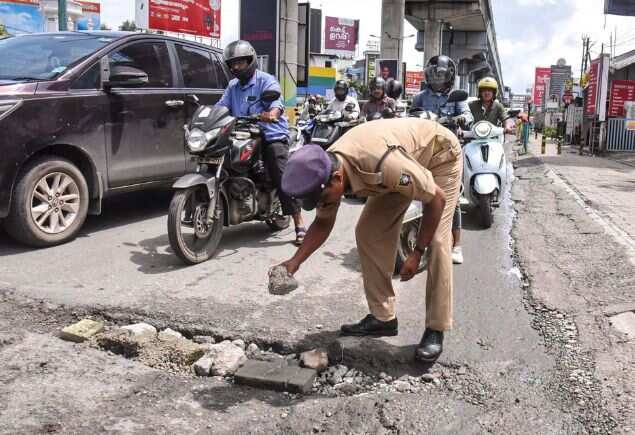
Potholes on Bengaluru roads (Image credit: PTI)
This is why preventive maintenance matters. A small crack can often be dealt with before it becomes structural damage. Once the road base itself has deteriorated, the repair becomes more complicated, expensive and disruptive.And not all potholes are equally dangerousA pothole’s danger isn’t determined by its size alone.A small hole on a busy, high-speed road can be far more dangerous than a giant one on an empty lane.For two-wheelers, an unexpected depression can destabilise the vehicle. On a crowded road, a driver trying to avoid a pothole may suddenly brake or swerve. At night, poor lighting can make the defect difficult to spot. During rain, water can completely hide its depth.So the real danger is a combination of the pothole, speed, traffic, visibility and road conditions.
What data shows
Potholes claimed 9,438 lives across India between 2020 and 2024, with annual fatalities rising from 1,555 in 2020 to 2,385 in 2024 — a jump of more than 53% in five years.Uttar Pradesh accounted for more than half of the national toll, reporting 5,127 deaths. Madhya Pradesh followed with 969 fatalities, while Tamil Nadu recorded 612, Odisha 425, Punjab 414 and Assam 395. Among Union Territories, Delhi reported the highest toll at 50.But the numbers also raise questions about how pothole-related crashes are recorded. States such as Andhra Pradesh and Bihar reported zero crashes, injuries or deaths under this category, even as states such as Manipur, Nagaland and Tripura reported fatalities. Experts say gaps in objective crash-cause reporting could mean the data does not fully capture the scale of the problem.The toll, however, remains below the 2017 peak of 3,597 pothole-related deaths. The Supreme Court took suo motu cognisance of the issue in 2018, observing that authorities responsible for maintaining roads were failing in their duties.
Can we stop pothole before it becomes a pothole?
Fortunately, the answer isn’t simply “keep filling holes”.A 2021 IIT Madras study found that nearly 78% of urban potholes reported by citizens remained unfixed for more than two weeks, with delays particularly serious in high-traffic areas.Technology can help road agencies identify damage earlier through road-condition monitoring, GIS mapping and scanning systems. Quick repair methods can deal with certain defects before they expand.Citizen reporting can also help — provided complaints actually lead to inspection and action.Because the person who encounters a dangerous pothole may not be a road engineer inspecting the highway once a month. It may be a delivery rider passing through it ten times a day.But technology alone won’t solve the problem.Road agencies need better coordination too. If one department digs up a road to lay a cable and another has to repair it later, someone needs to ensure the road is restored properly. Otherwise, the same stretch can enter an endless loop of dig → patch → crack → pothole → repair → dig again.
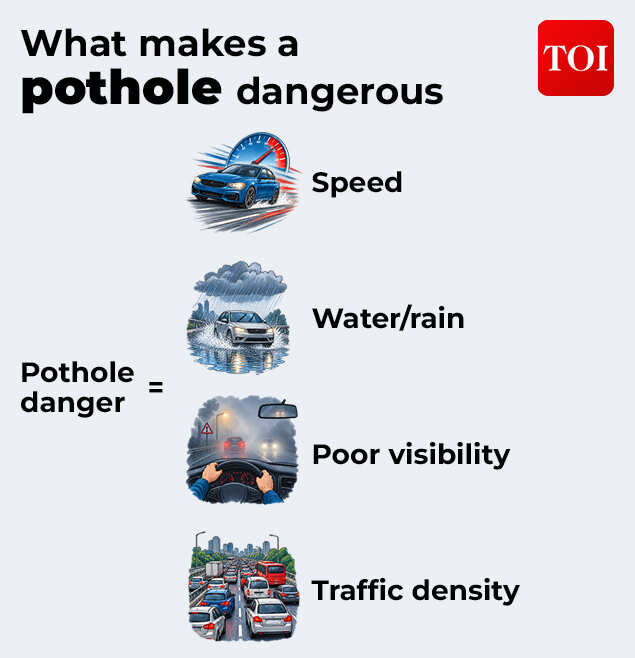
How speed, rain, poor visibility and heavy traffic can turn a road defect into a serious hazard.
The pothole is only the final chapterSo, the next time you see a pothole outside your home, remember: that hole probably didn’t just “appear”.
Share your thoughts in the comments
Be respectful · TOI community guidelines
It may have started as a tiny crack.Then came rainwater. Maybe a badly repaired utility cut. Maybe years of heavy traffic. Maybe poor drainage. Maybe all of them.By the time you notice the crater, the real damage may already be underneath.Which is why the real solution isn’t simply asking, “Who will fill this pothole?”It is asking a much more important question:“Why did this road fail in the first place — and why wasn’t it fixed before it got this bad?”Because if the answer remains unclear, that freshly filled pothole may just be waiting for its next monsoon comeback.


