
In Rio de Janeiro’s Guanabara Bay, discarded salon hair is being transformed into an oil-absorbing barrier that protects mangroves from oil spills

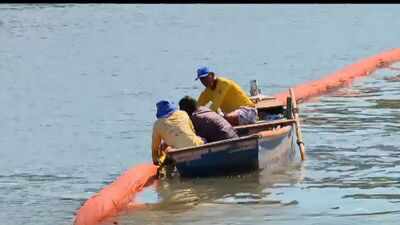
When scientists have a will, there is always a way. In a shocking yet successful project, leftover hair from haircuts that is not suitable for wigs and would have gone to waste is now being used to prevent oil and other pollutants from getting into the water and the trees.In Rio de Janeiro’s Guanabara Bay, a barrier made from human hair discarded by beauty salons is being used to prevent pollution. It can remain in the water for up to four months, according to a report by Euronews. The project is being helmed by Brazilian non-governmental organisation Fiotrar, founded by Mariana Robrahn.The principle behind the solutions is physical and logical. Each gram of hair can absorb about five grams of oil, and this capacity transforms an abundant waste into a containment material. The technology has already been used in other countries, such as Chile and the United States, and has been adapted for Brazil by the NGO.
Why hair attracts oil

When the material comes into contact with an oil spill, the oil adheres to the hair’s surface, and the water runs off.
The behaviour of the hair in the presence of oil is what makes the entire project worthy and viable. Human hair is oleophilic, meaning it has an affinity for oily substances, while simultaneously repelling water. When the material comes into contact with an oil spill, the oil adheres to the hair’s surface, and the water runs off.The laboratory demonstration proves it. Oil is poured into a container with water and hair: the oil gets trapped in the strands, while the water comes out clean on the other side. This is the same reason why hair remains oily a few days after washing, now applied on an environmental scale. In addition to human hair, animal fur can also be used to filter and absorb oil, which broadens the available raw material base for the process.
Installing the barrier
Testing the barrier in natural environments began at Bom Jesus Cove, washed by Guanabara Bay in Rio de Janeiro. The site was chosen because there was already a functioning waste containment barrier, allowing the new structure to be integrated with the existing setup. The installation extends about 350 meters and uses approximately 250 kilograms of hair. It is the first barrier of its kind in Brazil to exceed 300 meters in length, with the primary goal of protecting the region’s mangroves, an ecosystem that serves as a nursery for species and is especially vulnerable to oil spills.This initiative is the result of a partnership between Fiotrar and the organisation Orla Sem Lixo Transforma, which is responsible for the existing orange barrier, supported by the Grupo Boticário Foundation.
How is the structure made?
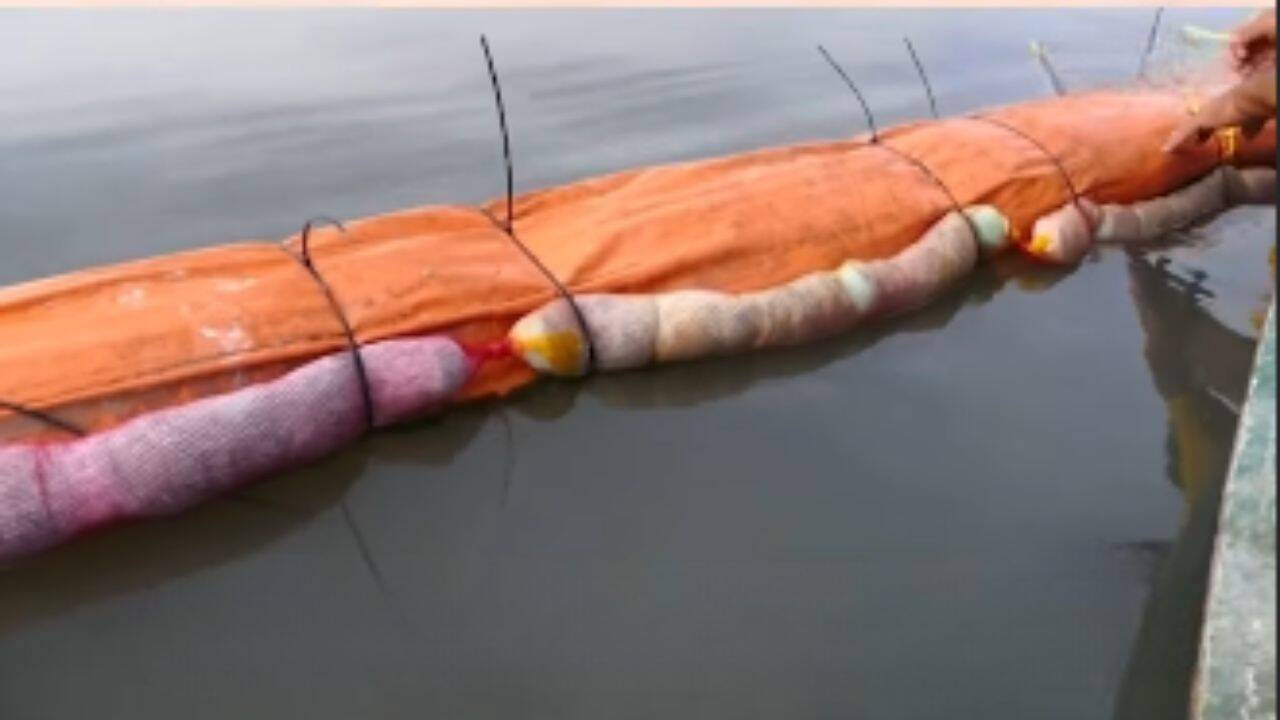
While a strand needs to be of considerable length to be made into a wig, cuts as short as 2.5 centimetres are sufficient for containment mats.
The hair for the project is sourced from beauty salons. About a dozen establishments donate cut hair that will not be used for wig-making, and this surplus is what supplies the production of the mats. The criteria for usability are much more flexible than those for wigs. While a strand needs to be of considerable length to be made into a wig, cuts as short as 2.5 centimetres are sufficient for containment mats. Practically all hair that falls on the salon floor can be used, which explains why the organisation considers the raw material nearly inexhaustible in a country with the number of salons Brazil has.The hair is not released freely into the water, as would be assumed. The strands are packaged into rolls made from cotton mesh, forming cylinders that the team informally calls blankets or sausages. These cylinders are then secured to the floating orange barrier that collects waste at the surface. According to environmental engineer Ana Beatriz Gonçalves, who is responsible for maintaining the new barriers, the existing structure serves as support for Fiotrar’s barrier. The part that retains the oil is the hair, and the part that keeps it afloat is what was already there.The floating barrier itself consists of styrofoam, fabric, layers of geosynthetic blankets, and a tarpaulin cover. The entire assembly forms a continuous line on the water, and the scene observed in the bay shows these cylinders being deployed from small vessels.
Four months going
The duration is one of the most relevant and notable factors for the operators of the system. The barriers can remain in the water for up to four months trapping pollution, after which the material must be collected and replaced. What they capture and absorb during this period is not only the result of major accidents. Chemist Caroline Carvalho, director of Fiotrar, explained that the system captures pollution from vessels, illegal discharges, and other contamination sources, essentially, the chronic and everyday leaks that rarely make headlines. Maintenance occurs on a weekly basis and is managed by a technical team that monitors the condition of the mats and the volume of oil retained. A hair barrier is not a set-and-forget structure, and the operational cost includes this continuous monitoring throughout the time it remains in the water.Guanabara Bay has been suffering for decades from various types of pollution, largely due to heavy maritime traffic, with ships constantly entering and leaving. This is why the region became one of the locations chosen to test the project.The community of fishermen feels the direct impact of this situation. Fisherman Sérgio Carvalho reports that when he heads out to fish with nets, he encounters numerous oil spills that disrupt his work. According to him, the oil remains on the surface but affects everything down to about one and a half meters in depth, causing fish to disappear.The expectation among the fishing community and the environmental groups involved is that the barriers will aid in the recovery of the bay’s ecosystems. Fishermen in the region were already engaged in trash removal and have now also taken part in the efforts to address the oil.
From wigs for cancer patients to barriers for the sea
The project is not the first of its kind. In 2013, Mariana Robrahn, along with Mylene Duarte, founded the NGO Cabelegria, dedicated to making and distributing wigs for cancer patients free of charge, using donated hair strands.However, a considerable portion of the donations received did not meet the minimum requirements to become a wig, such as length and strand condition and ended up being discarded. In 2019, while searching for a destination for this material, Mariana discovered an organisation in the United States that produced mats and barriers using human hair to remove oil from the ocean.By 2021, the idea evolved into an independent structure with the creation of Fiotrar, focused on advancing the technology in Brazil. The development went through laboratory testing at the Federal University of Rio de Janeiro before reaching the water.Now, Fiotrar has developed its own machine to create mats and is working on a filter to remove heavy metals from effluents, also using hair. If successful, the same waste could have two distinct environmental applications: oil containment in open water and treatment of industrial effluents. This agenda depends on new research cycles, and the organisation has not announced a timeline for this second aspect.


