
Scientists discovered that animal poop travelled across oceans 540-million-years ago and triggered the evolution of life on earth

Around 540 million years ago, the biological landscape of Earth went through a huge transformation called the Cambrian explosion. During this era, the ancestors of most modern animal groups began to appear, depicting a massive surge in biodiversity. The traditional scientific explanations for this evolution focus on rising oxygen levels or protective ozone layers, but a new perspective highlights a unique biological byproduct which is ‘animal waste.’Research published in the journal ‘Trends in Ecology and Evolution’ suggests that the emergence of sophisticated digestive systems led to a huge increase in faeces. This new abundance of organic matter acted as a powerful catalyst, which altered the chemistry of the ancient oceans. By transporting vital nutrients from the surface to the deep seafloor, this early animal waste helped in creating a stable, nutrient-rich environment necessary for life to flourish and diversify.
How animal poop changed the life beneath the oceans 540-million-years ago
Before the arrival of complex animals, the oceans were very different places. For billions of years, life consisted of simple, microscopic organisms that did not leave a good enough footprint. However, as the Cambrian period began, a ‘feacal revolution’ happened. ScienceAlert reports that this shift was started by the appearance of animals with ‘through-guts,’ which allowed them to process food more efficiently and expel it as concentrated pellets.In modern marine environments, animal waste plays a critical role in ‘biological pump.’ According to Nautilus, this process involves the movement of essential nutrients like carbon, nitrogen, phosphorus, and iron from the surface down to the deep seafloor. When ancient animals began producing these pellets, the waste sank faster than loose organic particles. This process ‘cleaned’ the water column, and allowed the sunlight to penetrate deeper and provide life-sustaining chemicals to the marine communities.
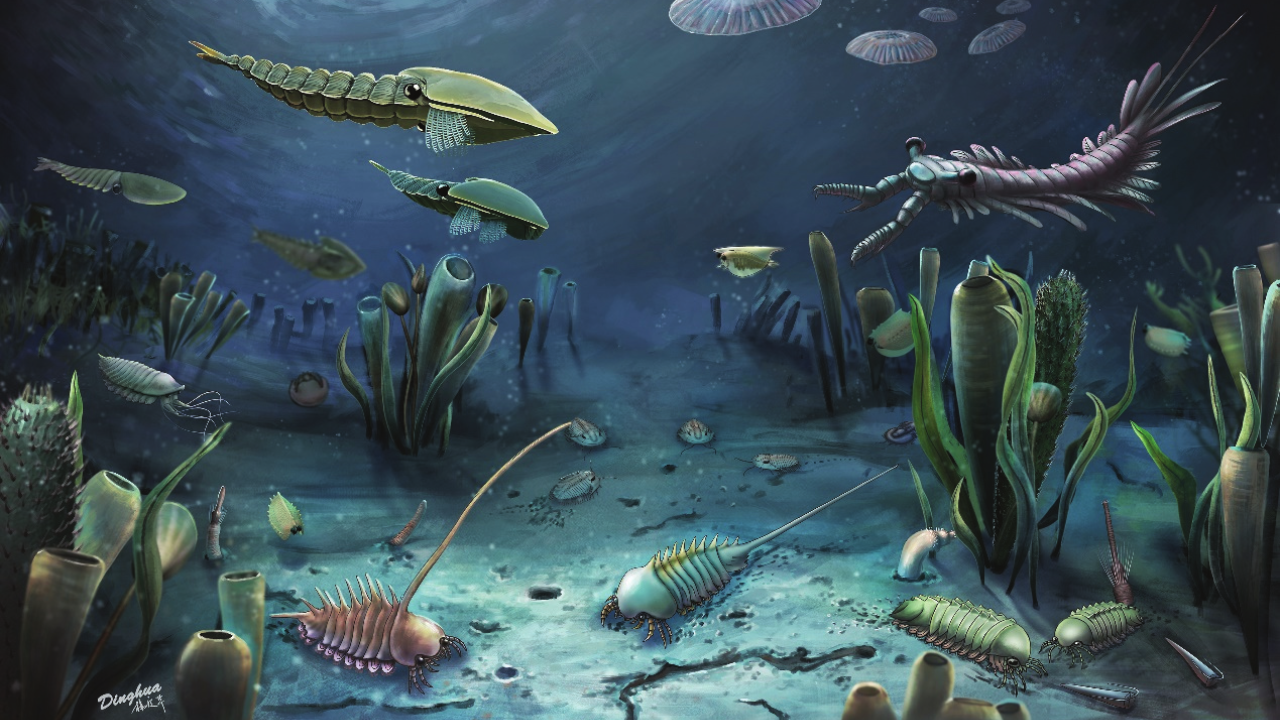
Life reconstruction of the Linyi Lagerstätte in Northern China. Image Credit: Zhixin Sun/Wikipedia
Why was the evolution of digestive system so important
Evolutionary biologist Russell Bicknell, explains that the importance of faeces is often ignored when compared to other factors like rising oxygen. By considering ancient diets and sophisticated digestion, researchers can see a clear picture of how organic matter began to fertilise our oceans.As animals evolved specialised foreguts and digestive glands, they became capable of processing a variety of food sources. This became the reason for having diverse ‘feeding strategies’ that aligned with the production and distribution of nutrients. This complete change in the ecosystem was driven by the nutrients found in animal wastes, which further helped in creating favorable conditions to sustain more complex organisms.
What does the fossil record tell us about prehistoric animal poop
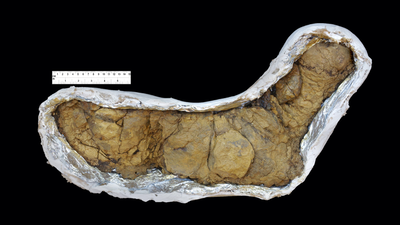
To understand this ancient phenomenon, scientists look for ‘coprolites’ (technical term for fossilised faeces). Nautilus reports that the evidence of animals exists from the earlier Ediacaran period about 600 million years ago, but no fossilised waste has been found from that time. However, if one looks at the Cambrian, they will find that coprolites appear in 36 different fossil deposits with the oldest dating back to approximately 538.8 million years ago.These fossils provide an interesting window into the past. As per ScienceAlert, the earliest examples are tiny pellets, found in loose clusters or forming thin films on the walls of ancient burrows. Some are long and stringy, which can probably be the waste left by a modern goldfish. As the animals grew larger, their waste grew with them. Later fossils from the Cambrian record show ‘logs’ that are several millimetres long, with some of them containing the crushed shells or fragments of other creatures, which indicates that they were predators.
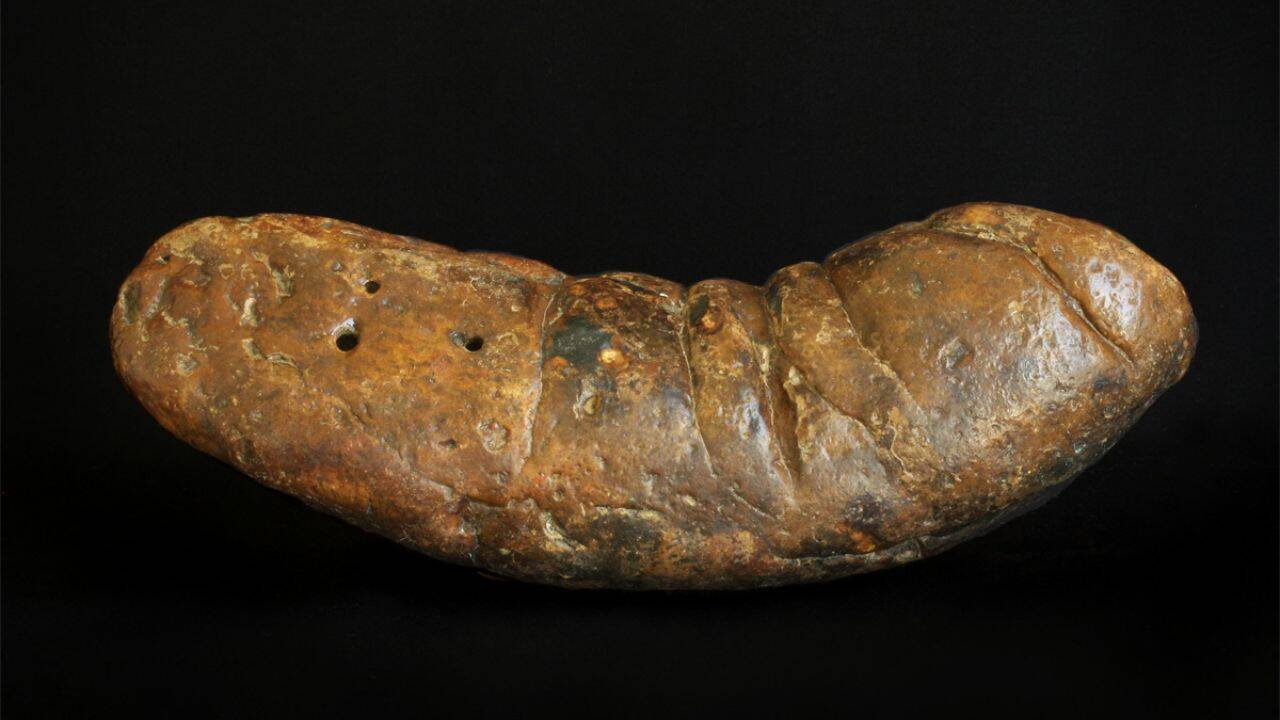
A large coprolite from South Carolina, US. Image Credit: Poozeum/Wikipedia
Positive feedback loop for evolution
The research team, led by Julien Kimmig and Russell Bicknell, suggests that the increase in size of faecal pellets proves that more nutrients reached the deep ocean, which then supported even larger and more diverse life forms.This ‘positive feedback loop’ says that ‘the more animals succeeded, the more they improved the environment for future generations.’ As noted by ScienceAlert, the acceleration in organism size during the Cambrian was the reason behind the complex marine systems we observe today. This evidence suggests that the biological pump was essential for turning a simple world into a vibrant, diverse one. By turning their noses down and looking at what animals left behind, scientists are finding a brand-new way to understand the history of life.


