
First 3D-printed home project begins in Florida city under affordable housing plan

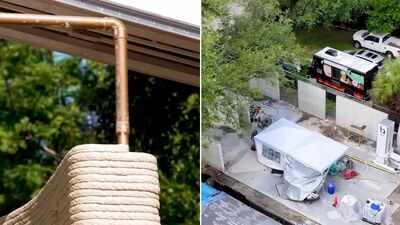
The city of St. Petersburg in Florida has begun construction of its first 3D-printed home as part of an affordable housing initiative, with officials claiming the technology could dramatically reduce construction time. However, experts caution that 3D printing is far from being a complete solution to housing shortages.The project, located in the city southwest of Tampa, uses a robotic arm to print the home’s exterior walls by depositing layers of liquid cement. Officials said the approach could cut the time needed to build the structure from more than two weeks to as little as two days.“You’re talking [about] something that might be a two or two and a half week process can be squeezed down into a day and a half, maybe two days,” Nick Bradford, owner of engineering consultancy Structures Group, said.Developer Bright Community Trust is constructing the homes on vacant city-owned land leased at nominal rates. The completed homes will be sold to buyers earning up to 120 per cent of the area’s median income, or about $96,300 annually for a single person. The city plans to build up to 150 single-family homes under the programme.Despite growing interest in the technology, industry observers argue that 3D-printed housing remains limited in scope.Commentator Simon Whistler noted that only a few hundred such homes have been built globally and pointed to several projects that failed to deliver expected results. These include a partially completed 3D-printed house in Iowa that was demolished after failing structural strength tests and an Illinois housing project that never materialised despite a multimillion-dollar investment in printing equipment.At the same time, the technology has recorded some milestones. Japan approved its first two-storey reinforced concrete 3D-printed house, known as the “O House” or “Stealth House”, in late 2025.Experts also say the technology still relies heavily on conventional construction methods. While printers can build walls, they cannot install plumbing, electrical wiring, roofs, windows, doors or interior finishes, all of which require traditional labour.Critics have also raised concerns over the environmental impact of concrete, the high cost and limited availability of industrial-scale printers, and challenges in constructing multi-storey buildings.“As you get more complicated, you start eliminating the cost savings,” Bradford said.Architect and YouTube creator Stewart Hicks said another limitation lies in the finished design, arguing that the printing process restricts architectural flexibility and often produces homes with unconventional appearances due to the printer’s inability to create sharp corners.


