
Doctors say the physical and mental toll can last for months (Photo: ANI). NEW DELHI: The Air India flight from Phuket to Delhi that suddenly dropped nearly 300 feet after encountering severe turbulence on Tuesday has once again highlighted that the impact of such incidents extends well beyond visible injuries. While at least 14 passengers and cabin crew members were injured and the Directorate General of Civil Aviation (DGCA) has launched an investigation, doctors say the physical and psychological consequences of severe turbulence can linger for days, weeks or even months.Psychiatrists warn that even passengers who escape with minor or no physical injuries may develop significant psychological distress. “The sudden perception of imminent danger, combined with the loss of control and visible panic, can activate the body’s survival response,” said Dr Rajesh Sagar, professor in the Department of Psychiatry at AIIMS.Dr Sagar said that passengers may experience persistent fear, anxiety, sleep disturbances, intrusive memories and heightened alertness after the incident. In some cases, the experience can trigger Acute Stress Disorder (ASD) within days, which may progress to Post-Traumatic Stress Disorder (PTSD) if symptoms persist beyond a month.”The psychological impact should not be underestimated simply because there are no major physical injuries,” Dr Sagar said. He advised passengers to seek help if they continue to experience nightmares, flashbacks, avoidance of flying or emotional distress. Early psychological support based on the principles of Psychological First Aid can reduce the risk of long-term trauma, he added.Doctors also cautioned against dismissing apparently minor physical injuries sustained during turbulence. Dr (Maj.) Mukesh Garg, Director of Orthopaedics, Arthroscopy and Sports Injury at Sarvodaya Hospital, said passengers thrown against seats, overhead bins or cabin interiors may sustain bruises, ligament injuries, fractures or injuries to the neck and spine.”Not all injuries become obvious immediately,” he said. “Soft tissue injuries, ligament tears and mild concussions may take several hours to become apparent. Pain, swelling and stiffness often worsen over the next 24 to 48 hours.”He advised anyone who suffered a blow to the head, neck or back to undergo medical evaluation even if symptoms initially appear mild. Warning signs requiring immediate medical attention include severe or worsening headache, repeated vomiting, dizziness, confusion, blurred vision, weakness or numbness of the limbs, difficulty walking, severe neck pain and loss of bladder or bowel control.Join conversationView All Comments →Share your thoughts in the commentsInsightfulAgreeDisagreeSkepticalConcerningPromisingWorth ReadingBig DevelopmentPost CommentBe respectful · TOI community guidelinesExperts also recommend that passengers who develop a fear of flying after severe turbulence gradually rebuild confidence through counselling, breathing exercises and relaxation techniques. Starting with shorter flights, travelling with a trusted companion and keeping the seatbelt fastened throughout the journey can also help restore a sense of safety and control.Get the latest India News and Live updates. Download the TOI app.About the AuthorAnuja JaiswalAnuja Jaiswal is a Senior Assistant Editor at The Times of India, with an impressive 18-year career in narrative journalism. She specializes in health and heritage reporting, expertly simplifying complex health information to make it engaging and understandable for readers. Her deep dives into heritage topics are well-researched, resulting in captivating narratives that resonate with her audience. Over the years, she has worked in Chandigarh, Chhattisgarh and West UP, gaining diverse on-ground experience that shapes her storytelling.Read MoreEnd of ArticleFollow Us On Social MediaVideos’It’s My Moral Call To Be Here’: Author Nilotpal Mrinal Joins Ranchi Student ProtestMeta CEO Mark Zuckerberg Apologises Over PM Modi Video Row, Admits Paid Content BoostingJharkhand Students Display Mark Sheets, Allege Irregularities In JPSC-JSSC Evaluation’Merit Can’t Beat Money’: Jharkhand Aspirant On Hunger Strike Demand Strong JPSC-JSSC Reforms’I’m A Farmer’s Son, I Can’t Buy Papers’: In JPSC-JSSC Exam Leak, Students Demand CBI Probe’56% Indian Vehicles Uninsured’: Supreme Court Calls For ‘Challans’, Urgent Enforcement Action’We Feel Cheated’: Jharkhand Student Protesters Voice Anger Over JPSC-JSSC Exam Row’If You Won’t Listen, Then Who Will?’: Jharkhand Student’s Msg To Hemant Soren Over JPSC-JSSC RowIndia Responds After Pakistan Deploys Chinese SH-15 Howitzers Along BorderJharkhand Mob Lynching: Rape Accused Beaten To Death, Police Probe POCSO Case And Mob Violence123PhotostoriesIndia named among the World’s 100 Best Cuisines: Here’s what makes it special5 must-have sneakers every wardrobe needs in 20265 timeless lessons from your grandparents that modern life forgot10 baby names inspired by dawn, sunset, and the skyBrain teaser optical illusion: You are among the top 1% if you stop all 25 animals hidden in the man’s face within 2 minutesWant Korean glass skin? These 5 daily habits make all the differenceThe Barack Obama blueprint: Healthy habits that help the former US President stay energetic and resilient at 658 ordinary moments that leave a lifelong impact on your childMalaika Arora’s 5 morning yoga poses every woman should try for better flexibility and joint healthKriti Sanon’s 3,000-crystal ivory Gaurav Gupta lehenga looks like fashion imagined beyond Earth123Hot PicksRBI MeetingGold Rate TodayStock Market TodayICMAI June 2026 toppers listTamil Nadu Budget SessionTN supplementary resultSpaceXUPI transactionsD Y PatilTop TrendingRBI MPC MeetingVande Matram StanzaUdhayanidhi StalinBritish ReturnsPM ModiTamil Nadu Budget Session 2026Air India FlightD Y Patil DeathTamil Nadu BudgetShradha Singh

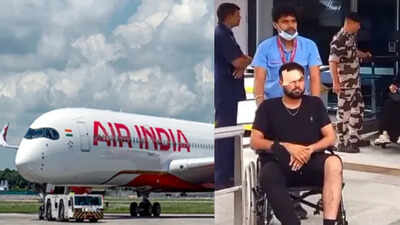
NEW DELHI: The Air India flight from Phuket to Delhi that suddenly dropped nearly 300 feet after encountering severe turbulence on Tuesday has once again highlighted that the impact of such incidents extends well beyond visible injuries. While at least 14 passengers and cabin crew members were injured and the Directorate General of Civil Aviation (DGCA) has launched an investigation, doctors say the physical and psychological consequences of severe turbulence can linger for days, weeks or even months.Psychiatrists warn that even passengers who escape with minor or no physical injuries may develop significant psychological distress. “The sudden perception of imminent danger, combined with the loss of control and visible panic, can activate the body’s survival response,” said Dr Rajesh Sagar, professor in the Department of Psychiatry at AIIMS.Dr Sagar said that passengers may experience persistent fear, anxiety, sleep disturbances, intrusive memories and heightened alertness after the incident. In some cases, the experience can trigger Acute Stress Disorder (ASD) within days, which may progress to Post-Traumatic Stress Disorder (PTSD) if symptoms persist beyond a month.“The psychological impact should not be underestimated simply because there are no major physical injuries,” Dr Sagar said. He advised passengers to seek help if they continue to experience nightmares, flashbacks, avoidance of flying or emotional distress. Early psychological support based on the principles of Psychological First Aid can reduce the risk of long-term trauma, he added.Doctors also cautioned against dismissing apparently minor physical injuries sustained during turbulence. Dr (Maj.) Mukesh Garg, Director of Orthopaedics, Arthroscopy and Sports Injury at Sarvodaya Hospital, said passengers thrown against seats, overhead bins or cabin interiors may sustain bruises, ligament injuries, fractures or injuries to the neck and spine.“Not all injuries become obvious immediately,” he said. “Soft tissue injuries, ligament tears and mild concussions may take several hours to become apparent. Pain, swelling and stiffness often worsen over the next 24 to 48 hours.”He advised anyone who suffered a blow to the head, neck or back to undergo medical evaluation even if symptoms initially appear mild. Warning signs requiring immediate medical attention include severe or worsening headache, repeated vomiting, dizziness, confusion, blurred vision, weakness or numbness of the limbs, difficulty walking, severe neck pain and loss of bladder or bowel control.
Share your thoughts in the comments
Be respectful · TOI community guidelines
Experts also recommend that passengers who develop a fear of flying after severe turbulence gradually rebuild confidence through counselling, breathing exercises and relaxation techniques. Starting with shorter flights, travelling with a trusted companion and keeping the seatbelt fastened throughout the journey can also help restore a sense of safety and control.


