
The Supreme Court requested high courts to pass appropriate full-court resolutions in favour of increasing the age of superannuation of judicial officers from 60 to 62 years NEW DELHI: Attempting to bring judicial officers’ retirement age on a par with that for HC judges, the Supreme Court on Wednesday asked states to decide by Sept 2 on increasing the superannuation age of trial court judges from 60 to 62 years while brushing aside pleas of financial constraints and the disparity it would create vis-a-vis government employees.In the early 1990s, the Supreme Court had increased through a judgment the retirement age of judicial officers across India from 58 to 60 years. This time, however, a bench of CJI Surya Kant and Justices Joymalya Bagchi and V Mohana said that instead of a judicial ruling, it would be better if state governments made the decision on their own. The strength of trial court judges has doubled since 1992, from around 10,000 to over 20,000 at present. The number of HC judges has increased from 568 in 1992 to 1,114 now.A few states have increased the age of retirement for judicial officers from 60 to 61, akin to similar benefits for government employees. Some states argued that increasing the age of superannuation of judicial officers to 62 years would create disparity and cause discontent among government employees, who too would demand identical benefits, entailing a huge financial burden for the government.But the bench rejected both these objections. It said that when a judicial officer retires, the government pays them a lump-sum amount and pension, which is more than half of their last-drawn salary. On filling the vacancy, the government pays a salary to the new appointee. Retaining experienced and seasoned judicial officers would be financially beneficial for the state and judiciary, it said.Join conversationView All Comments →Share your thoughts in the commentsInsightfulAgreeDisagreeSkepticalConcerningPromisingWorth ReadingBig DevelopmentPost CommentBe respectful · TOI community guidelinesRejecting the argument of parity with government employees, the CJI-led bench said judicial officers are appointed by the government under a constitutional scheme and hence form a class separate from that of government employees. “Both the reasons given by states are untenable. But we are of the opinion that the issue can be resolved amicably by administrative decisions of states,” the bench said.Asking advocates general of states to persuade their respective governments, the bench said, “States must revisit the issue of enhancing the retirement age of judicial officers irrespective of the present retirement age of government employees.”The Supreme Court requested high courts to strengthen the hands of state governments on the issue by passing appropriate full-court resolutions in favour of increasing the age of superannuation of judicial officers from 60 to 62 years.Get the latest India News and Live updates. Download the TOI app.End of ArticleFollow Us On Social MediaVideos’It’s My Moral Call To Be Here’: Author Nilotpal Mrinal Joins Ranchi Student ProtestMeta CEO Mark Zuckerberg Apologises Over PM Modi Video Row, Admits Paid Content BoostingJharkhand Students Display Mark Sheets, Allege Irregularities In JPSC-JSSC Evaluation’Merit Can’t Beat Money’: Jharkhand Aspirant On Hunger Strike Demand Strong JPSC-JSSC Reforms’I’m A Farmer’s Son, I Can’t Buy Papers’: In JPSC-JSSC Exam Leak, Students Demand CBI Probe’56% Indian Vehicles Uninsured’: Supreme Court Calls For ‘Challans’, Urgent Enforcement Action’We Feel Cheated’: Jharkhand Student Protesters Voice Anger Over JPSC-JSSC Exam Row’If You Won’t Listen, Then Who Will?’: Jharkhand Student’s Msg To Hemant Soren Over JPSC-JSSC RowIndia Responds After Pakistan Deploys Chinese SH-15 Howitzers Along BorderJharkhand Mob Lynching: Rape Accused Beaten To Death, Police Probe POCSO Case And Mob Violence123PhotostoriesIndia named among the World’s 100 Best Cuisines: Here’s what makes it special5 must-have sneakers every wardrobe needs in 20265 timeless lessons from your grandparents that modern life forgot10 baby names inspired by dawn, sunset, and the skyBrain teaser optical illusion: You are among the top 1% if you stop all 25 animals hidden in the man’s face within 2 minutesWant Korean glass skin? These 5 daily habits make all the differenceThe Barack Obama blueprint: Healthy habits that help the former US President stay energetic and resilient at 658 ordinary moments that leave a lifelong impact on your childMalaika Arora’s 5 morning yoga poses every woman should try for better flexibility and joint healthKriti Sanon’s 3,000-crystal ivory Gaurav Gupta lehenga looks like fashion imagined beyond Earth123Hot PicksRBI MeetingGold Rate TodayStock Market TodayICMAI June 2026 toppers listTamil Nadu Budget SessionTN supplementary resultSpaceXUPI transactionsD Y PatilTop TrendingRBI MPC MeetingVande Matram StanzaUdhayanidhi StalinBritish ReturnsPM ModiTamil Nadu Budget Session 2026Air India FlightD Y Patil DeathTamil Nadu BudgetShradha Singh

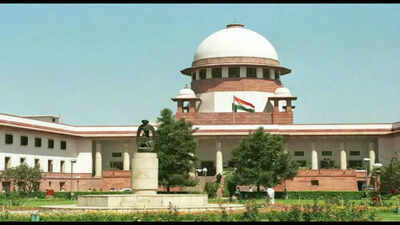
NEW DELHI: Attempting to bring judicial officers’ retirement age on a par with that for HC judges, the Supreme Court on Wednesday asked states to decide by Sept 2 on increasing the superannuation age of trial court judges from 60 to 62 years while brushing aside pleas of financial constraints and the disparity it would create vis-a-vis government employees.In the early 1990s, the Supreme Court had increased through a judgment the retirement age of judicial officers across India from 58 to 60 years. This time, however, a bench of CJI Surya Kant and Justices Joymalya Bagchi and V Mohana said that instead of a judicial ruling, it would be better if state governments made the decision on their own. The strength of trial court judges has doubled since 1992, from around 10,000 to over 20,000 at present. The number of HC judges has increased from 568 in 1992 to 1,114 now.A few states have increased the age of retirement for judicial officers from 60 to 61, akin to similar benefits for government employees. Some states argued that increasing the age of superannuation of judicial officers to 62 years would create disparity and cause discontent among government employees, who too would demand identical benefits, entailing a huge financial burden for the government.But the bench rejected both these objections. It said that when a judicial officer retires, the government pays them a lump-sum amount and pension, which is more than half of their last-drawn salary. On filling the vacancy, the government pays a salary to the new appointee. Retaining experienced and seasoned judicial officers would be financially beneficial for the state and judiciary, it said.
Share your thoughts in the comments
Be respectful · TOI community guidelines
Rejecting the argument of parity with government employees, the CJI-led bench said judicial officers are appointed by the government under a constitutional scheme and hence form a class separate from that of government employees. “Both the reasons given by states are untenable. But we are of the opinion that the issue can be resolved amicably by administrative decisions of states,” the bench said.Asking advocates general of states to persuade their respective governments, the bench said, “States must revisit the issue of enhancing the retirement age of judicial officers irrespective of the present retirement age of government employees.”The Supreme Court requested high courts to strengthen the hands of state governments on the issue by passing appropriate full-court resolutions in favour of increasing the age of superannuation of judicial officers from 60 to 62 years.


