
Aluminium Foil Doorknob Hack: Doorknob aluminium foil hack: A simple, practical way to wrap aluminium foil around the doorknob to prevent household damage

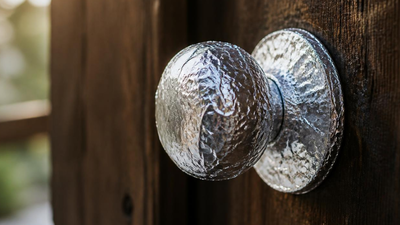
There’s a reason kitchen drawers around the world hoard rolls of aluminum foil long after the leftovers are gone.Turns out that it can be used as one of the most useful alternatives in the house, not just for food, but for the small, fiddly problems that come up during any type of daily chore.Anyone who has ever painted a door or got their house whitewashed knows how it works.The edges are taped, dropcloth is laid down, and then the painter gets into the rhythm of the paint and brush, only to notice a smear of paint sitting right on the doorknob, and cleaning dried paint off metal or brass hardware is annoying at best and damaging at worst.But do not worry because that is where a simple bit of foil comes in.Let’s dig in to find out how aluminium foil works best when things go wrong!
How does wrapping aluminium foil around door handles help?
Wrapping door handles in aluminum foil before painting protects the surface from splashes and drips. Once the job is finished, the foil simply gets peeled off, and the hardware looks untouched.Painter’s tape, by comparison, often struggles with rounded or oddly shaped hardware. So, where painter’s tape fails, aluminum foil prevails!Since foil can bend and clings to curves that tape can’t properly seal, this method of wrapping aluminium foil works best in simplicity.
How to do it properly?
The method takes barely a minute.To use foil to wrap around the doorknob, tear off a piece of foil large enough to fully cover the handle and the surrounding exposed hardware, then wrap it closely around the piece, pressing it into shape by hand so it hugs every curve and edge.This helps to mold the foil firmly around the handle, working from both sides for a tight fit, and pressing down any overlapping edges so paint can’t seep underneath.Once the paint dries, the foil is simply removed and thrown away, leaving the handle exactly as it was, without requiring any scrubbing, solvent, or leaving any scratches.
This trick can also be used beyond just painting
While painting is the trick’s original use, it has also become a short-term solution during shifting a household, when handles and hardware are more exposed to bumps, dust, or accidental scrapes.


