
How China’s new two-stage plan aims to destroy Earth-bound asteroids before impact

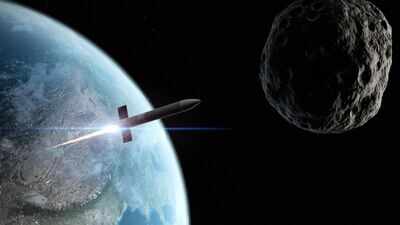
Chinese researchers have identified what they describe as the most effective way to destroy or deflect a large asteroid threatening Earth by burying a nuclear bomb beneath its surface before detonation.According to a study led by researchers at the China Academy of Launch Vehicle Technology in Beijing, the two-stage approach could significantly improve the effectiveness of a nuclear interception mission. The researchers found that detonating the nuclear device inside a cavity created beneath the asteroid’s surface transfers far more energy than a surface explosion, making it significantly more effective at altering the asteroid’s trajectory or breaking it apart.How the proposed method worksThe proposed approach involves two spacecraft working in sequence. The first would strike the asteroid with a high-speed metal penetrator to create a deep cavity, while the second would deliver a nuclear device into the hole before detonating it.According to the researchers, placing the explosion beneath the surface allows much more of the blast energy to be absorbed by the asteroid instead of escaping into space, increasing the effectiveness of the interception mission.The team’s simulations found that a 3-megaton nuclear explosion, roughly equivalent to 200 Hiroshima bombs could completely destroy an asteroid about 100 metres in diameter.The study found that burying the nuclear device about 30 metres beneath the asteroid’s surface could more than triple the change in the asteroid’s velocity compared with a shallow explosion.The researchers said the approach could offer a viable emergency option for planetary defence against large near-Earth objects, particularly in scenarios where conventional interception methods may not be sufficient.What are asteroids and why do they threaten Earth?Asteroids are rocky objects that orbit the Sun, most of them located in the asteroid belt between Mars and Jupiter. While the vast majority remain far from Earth, some are classified as near-Earth objects (NEOs) because their orbits bring them close to the planet. If one of these objects collides with Earth, the impact can release enormous amounts of energy depending on its size and speed.Throughout Earth’s history, asteroid impacts have shaped the planet. The best-known example occurred about 66 million years ago, when a roughly 10-km-wide asteroid struck near present-day Mexico’s Yucatán Peninsula, creating the Chicxulub crater. Scientists believe the impact triggered global climate changes that led to the extinction of around 75% of all plant and animal species.In 2013, a much smaller asteroid entered Earth’s atmosphere over Chelyabinsk, Russia, generating a powerful shockwave that damaged thousands of buildings and injured more than 1,500 people, mostly from shattered glass.These incidents have prompted space agencies worldwide to invest in planetary defence programmes aimed at detecting potentially hazardous asteroids early and developing technologies that could deflect them before they pose a threat to Earth.


