
When the government decided who could manufacture, import or expand a factory, permissions themselves became valuable commodities Long ago, my father told me a story about a certain ‘Sunil ji. Nobody ever addressed him by his first name, it was always succeeded by a ‘ji’, because his office chair was covered with a towel. He would often wear a safari suit & a stiff-upper lip at family weddings. The guy with a govt job, an Afsar (officer), top billing in the arranged marriage market, despite having the lowest basic pay. At one such wedding, his wife blurted out an issue they were facing. Due to some clerical mistake, the details of their salary account was not updated, and Sunil ji wasn’t receiving his salary for over 2 years. They found this anomaly just last month. My family was grudgingly impressed, and hoped one of their kids turned out to be a towel-chair guy like Sunil ji For much of modern India’s history, there wasn’t enough. Jobs. College seats. Telephones. Gas cylinders. Batsmen with a good strike rate. We were short of everything. As if our nation came out of British rule like some of the TV reporters came out of the NEET protest, Gasping for breath, barely surviving the violence with almost all of the valuables stolen, but their morality, virtue and the associated pride intact. This was India in 1947. Such was the muscle memory of the rule, that we kept presenting our Annual budget at 5 PM IST, so that our British overlords could tune-in after having their breakfast. This tradition continued till 1999, more than 50 years after independence, until the Finance minister Yashwant Sinha, changed it to 11 AM. Imagine. The trauma of British rule never went away, it showed up in our metabolic wiring, in our insulin resistance, in our early onset of diabetes. Primarily due to the British administered famines. The bodies of our ancestors rewired to store fat. When the Brits eventually went back, they left behind quite a few problematic things like bureaucracy, Pakistan & monumental scarcity.When our leaders took over, they knew our demand vastly exceeded the supply, so they had to control the access of resources. And who do you trust to do that? Another British inheritance – The Collectorate. A regiment of people specifically trained to extract from the population, to collect revenues and give it back to the overlords, for whom serving people was optional, a hobby. A lot of them were corrupt too, In contrast there was barely any corruption among British officers, because they were paid almost 70 times the Indian officers. Hence, the Indians had to compensate with corruption. As we know, they continued compensating beyond independence as well. This coterie was assigned to allocate resources to Indians.No wonder, they acquired tremendous power. People began paying to jump the queue. When the government decided who could manufacture, import or expand a factory, permissions themselves became valuable commodities. British raj was eventually succeeded by Inspector Raj. And the underpaid inspectors lived in the same bungalows the British lived in. Economist Robert Klitgaard famously summarized it as:Corruption = Monopoly + discretion – accountabilityWhenever one person has monopoly over a decision, wide discretion, and little accountability, corruption happens. Accountability was like Vitamin-D for the country. We were always deficient. Add to that a lethargic judiciary. Some even justified corruption saying it’s an essential lubricant for files to move without friction. A tool to facilitate ease of doing business. Many of the Indian billionaires today, exist due to their ancestors greasing their file-folders with this lubricant generously.Corruption is a chronic illness, it has been embedded in the DNA of a drought-coded, resource starved nation like ours. A government comes to power riding a wave of public anger. The previous regime is portrayed as irredeemably corrupt. Files are opened. Committees are formed. Raids happen. People are content. Finally, someone is cleaning the system.For a while, it genuinely feels different. Time passes, Power stops feeling temporary. The government begins winning elections. The public approval remains high. Loyalists become more confident. Criticism starts sounding less like feedback and more like conspiracy. Every institution gradually fills up with people who think alike. Corruption creeps up again. Like a virus – a parasite that needs a host – like a mosquito or a bat or a pigeon. Parasites don’t advertise themselves. They attach themselves to something stronger. In India’s case, this host is often identity – caste, religion, language. Every political movement needs an emotional engine. That engine mobilises voters, creates loyalty and builds political capital. Most of the time these issues are legitimate and deeply important. But once emotions become intense enough, they also become excellent camouflage. People stop asking uncomfortable questions because larger battles appear to be underway.Join conversationView All Comments →Share your thoughts in the commentsInsightfulAgreeDisagreeSkepticalConcerningPromisingWorth ReadingBig DevelopmentPost CommentBe respectful · TOI community guidelinesIf my religion is under threat, why discuss the waterlogged street near my house?If my caste is finally receiving justice, why focus on procurement irregularities? Not saying, Identity is not important. But we often forget to see what’s lurking behind it. The virus keeps growing, and one day it becomes bigger than the host, voters can see it, and it gets overthrown. Exit pollsters get shamed. The power of democracy is lauded. Until a new host emerges. The cycle continues. Elections just change the wrapper of the age-old system.Corruption will go away when we make it high-risk and low-reward. High salaries & high conviction rate. A Singaporean minister earns more than a top investment banker. And their corruption watchdog has a conviction rate of 99%. Our ED has at ~1%. This is the crux, until we fix it – another Sunil ji will discover they have a salary account a decade later.Abhishek Asthana is a tech & media entrepreneur. He runs a creative agency called GingerMonkey & is also the Co-founder of Knot Dating, a VC funded matrimony startup.Get the latest India News and Live updates. Download the TOI app.About the AuthorAbhishek AsthanaAbhishek Asthana is a tech & media entrepreneur. He runs a creative agency called GingerMonkey & is also the Co-founder of Knot Dating, a VC funded matrimony startup. Rest of the time he tweets from the handle @Gabbbarsingh & pretends to take interest in everything underRead MoreEnd of ArticleFollow Us On Social MediaVideos‘Enemy Nations Conspiring To Hurt India’: PM Modi During ‘Nasha Mukt Yuva’ Campaign LaunchIndian Navy Launches Final Diving Support Craft, Completes Indigenous Five Ship ProgrammeMother Of Noida Teen Seeks Protection, FIR Withdrawal After PM Modi’s Appeal For Compassion’Why Do Killings Happen When…’: Farooq Abdullah’s Remarks On Kulgam Terror Attack Spark BJP-NC RowRam Temple Skit Row: Rahul Gandhi, Pappu Yadav, Awadhesh Prasad BookedPaper Leak Law Passed, But Can Tougher Punishment Alone Stop India’s Endless Exam Leak Crisis?’Pakistan-Based Handles, Suvendu On Target’: Bengal STF Uncovers Shocking ‘Jaish Module”PM Has The Audacity Of Forgiving’: Rahul Gandhi Slams Modi’s Video On Jantar Mantar ‘Abuses”Terrorists Asked Caste, Then Shot’: Family’s Shocking Claim In Kulgam AttackPM Modi Inaugurates ₹5,000 Crore Bhogapuram Airport, Launches ₹17,900 Crore Andhra Projects123PhotostoriesThe science behind tadka and why this simple technique does more than add flavour5 best ways to make money as a student in India without affecting your studies5 Succulent plants perfect for small indoor gardensKatrina Kaif’s makeup artist Daniel Bauer reveals the right way to clean your makeup brushesWhy Gen Z dates so differently: 5 relationship trends millennials find hard to decodeAnanya Panday gives metallic glam a savage upgrade in sculptural Anamika Khanna coutureWhere to store aluminium foil so that it lasts longer and doesn’t get damagedTraitors 2 confirmed contestants list: Mallika Sherawat, Shweta Tiwari, Munawar Faruqui and moreWhy do pressure cookers whistle? Here’s what actually happens insideFrom Golden Lancehead to Golden tree snake: 5 stunning yellow snakes found in the wild123Hot PicksHurricane IrmaRuchika SinghRRB Group D Admit CardNEET selective edit windowCommonwealth Games LiveUS work permit feeE20 petrol debateAssam floodsKanwar Yatra 2026Top TrendingMohammad Hamim MondalWeather TomorrowArpita SarkarAbhijeet Dipke Family FinancesPM ModiNoida Woman ArrestAmit ShahKulgam Terror AttackMumbai Building CollapseStock Market Up

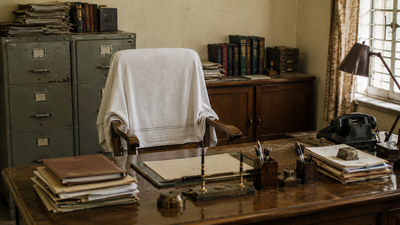
Long ago, my father told me a story about a certain ‘Sunil ji. Nobody ever addressed him by his first name, it was always succeeded by a ‘ji’, because his office chair was covered with a towel. He would often wear a safari suit & a stiff-upper lip at family weddings. The guy with a govt job, an Afsar (officer), top billing in the arranged marriage market, despite having the lowest basic pay. At one such wedding, his wife blurted out an issue they were facing. Due to some clerical mistake, the details of their salary account was not updated, and Sunil ji wasn’t receiving his salary for over 2 years. They found this anomaly just last month. My family was grudgingly impressed, and hoped one of their kids turned out to be a towel-chair guy like Sunil ji
For much of modern India’s history, there wasn’t enough. Jobs. College seats. Telephones. Gas cylinders. Batsmen with a good strike rate. We were short of everything. As if our nation came out of British rule like some of the TV reporters came out of the NEET protest, Gasping for breath, barely surviving the violence with almost all of the valuables stolen, but their morality, virtue and the associated pride intact. This was India in 1947. Such was the muscle memory of the rule, that we kept presenting our Annual budget at 5 PM IST, so that our British overlords could tune-in after having their breakfast. This tradition continued till 1999, more than 50 years after independence, until the Finance minister Yashwant Sinha, changed it to 11 AM. Imagine. The trauma of British rule never went away, it showed up in our metabolic wiring, in our insulin resistance, in our early onset of diabetes. Primarily due to the British administered famines. The bodies of our ancestors rewired to store fat. When the Brits eventually went back, they left behind quite a few problematic things like bureaucracy, Pakistan & monumental scarcity.When our leaders took over, they knew our demand vastly exceeded the supply, so they had to control the access of resources. And who do you trust to do that? Another British inheritance – The Collectorate. A regiment of people specifically trained to extract from the population, to collect revenues and give it back to the overlords, for whom serving people was optional, a hobby. A lot of them were corrupt too, In contrast there was barely any corruption among British officers, because they were paid almost 70 times the Indian officers. Hence, the Indians had to compensate with corruption. As we know, they continued compensating beyond independence as well. This coterie was assigned to allocate resources to Indians.No wonder, they acquired tremendous power. People began paying to jump the queue. When the government decided who could manufacture, import or expand a factory, permissions themselves became valuable commodities. British raj was eventually succeeded by Inspector Raj. And the underpaid inspectors lived in the same bungalows the British lived in. Economist Robert Klitgaard famously summarized it as:Corruption = Monopoly + discretion – accountabilityWhenever one person has monopoly over a decision, wide discretion, and little accountability, corruption happens. Accountability was like Vitamin-D for the country. We were always deficient. Add to that a lethargic judiciary. Some even justified corruption saying it’s an essential lubricant for files to move without friction. A tool to facilitate ease of doing business. Many of the Indian billionaires today, exist due to their ancestors greasing their file-folders with this lubricant generously.Corruption is a chronic illness, it has been embedded in the DNA of a drought-coded, resource starved nation like ours. A government comes to power riding a wave of public anger. The previous regime is portrayed as irredeemably corrupt. Files are opened. Committees are formed. Raids happen. People are content. Finally, someone is cleaning the system.For a while, it genuinely feels different. Time passes, Power stops feeling temporary. The government begins winning elections. The public approval remains high. Loyalists become more confident. Criticism starts sounding less like feedback and more like conspiracy. Every institution gradually fills up with people who think alike. Corruption creeps up again. Like a virus – a parasite that needs a host – like a mosquito or a bat or a pigeon. Parasites don’t advertise themselves. They attach themselves to something stronger. In India’s case, this host is often identity – caste, religion, language. Every political movement needs an emotional engine. That engine mobilises voters, creates loyalty and builds political capital. Most of the time these issues are legitimate and deeply important. But once emotions become intense enough, they also become excellent camouflage. People stop asking uncomfortable questions because larger battles appear to be underway.
Share your thoughts in the comments
Be respectful · TOI community guidelines
If my religion is under threat, why discuss the waterlogged street near my house?If my caste is finally receiving justice, why focus on procurement irregularities? Not saying, Identity is not important. But we often forget to see what’s lurking behind it. The virus keeps growing, and one day it becomes bigger than the host, voters can see it, and it gets overthrown. Exit pollsters get shamed. The power of democracy is lauded. Until a new host emerges. The cycle continues. Elections just change the wrapper of the age-old system.Corruption will go away when we make it high-risk and low-reward. High salaries & high conviction rate. A Singaporean minister earns more than a top investment banker. And their corruption watchdog has a conviction rate of 99%. Our ED has at ~1%. This is the crux, until we fix it – another Sunil ji will discover they have a salary account a decade later.Abhishek Asthana is a tech & media entrepreneur. He runs a creative agency called GingerMonkey & is also the Co-founder of Knot Dating, a VC funded matrimony startup.


