
NEW DELHI: Petrol was projected to cost around Rs 125 per litre in Delhi when global crude prices touched $135 a barrel if India had not blended ethanol with petrol, the petroleum ministry said on Friday, defending the ethanol-blending programme against what it described as “misleading” claims about its costs, impact on food security and alleged taxpayer subsidy.The clarification came amid criticism that Food Corporation of India (FCI) rice was supplied to distilleries at concessional rates, allegedly causing losses to the exchequer, and that ethanol blending survives only because ethanol is more expensive than petrol.The ministry said consumers paid Rs 94.77 per litre because 20% of every litre comprised domestically produced ethanol procured at pre-agreed prices, insulating retail fuel prices from the global crude price spike. “The result was nearly Rs 30 per litre in savings at the pump during the peak of the crisis,” it said.In a detailed clarification, the ministry rejected allegations that foodgrain meant for the poor was being diverted to produce ethanol or that subsidised rice supplied by the FCI was being used to artificially support the programme. “Ethanol is not built around cheap rice. It is built around a flexible mix of approved feedstocks, with FCI rice used only when certified surplus stocks are available after meeting every food security obligation,” the ministry said, adding that food security obligations always take precedence and that grain is released for ethanol production only after requirements under the public distribution system, National Food Security Act, welfare schemes and mandatory buffer stocks have been fully met.Responding to criticism over the supply of FCI rice to distilleries, the ministry said rice was only one of several approved feedstocks under the ethanol programme, was priced under the same govt pricing framework as other approved feedstocks, and was not accorded any special treatment. It said FCI rice accounted for just 0.02% of ethanol production in ethanol supply year (ESY) 2023-24, with its share rising to 24.6% in ESY 2025-26 only after surplus stocks became available. During the same period, maize’s share declined from 42.6% to nearly 36%, indicating that distilleries switch between approved feedstocks depending on availability.The ministry also said the programme utilises damaged grain, broken rice and foodgrain unfit for human consumption that would otherwise deteriorate in storage. It added that India is expanding production of second-generation ethanol from agricultural residue under the Pradhan Mantri JI-VAN Yojana to further reduce dependence on foodgrain-based feedstock.Join conversationView All Comments →Share your thoughts in the commentsInsightfulAgreeDisagreeSkepticalConcerningPromisingWorth ReadingBig DevelopmentPost CommentBe respectful · TOI community guidelinesRejecting the contention that ethanol blending survives on taxpayer subsidy, the ministry maintained that the objective of the programme was not to make petrol cheaper on a day-to-day basis but to shield consumers from sharp swings in global crude prices while reducing dependence on imported crude oil, imports of which meet nearly 88% of India’s requirement. “Ethanol blending is an insurance policy against global oil shocks and not a day-to-day price competition,” it said.Get the latest India News and Live updates. Download the TOI app.About the AuthorAtul MathurAtul Mathur is a Senior Assistant Editor at The Times of India with over 27 years of experience in journalism. Based in Delhi, he has spent much of his career reporting on governance, public policy and politics, churning out researched, data-driven stories that impact daily lives. Atul is known for investigative depth and strong human-interest narratives as he strives to bring clarity and context to complex issues. He currently tracks the energy sector, writing on power, renewable energy, coal and mines.Read MoreEnd of ArticleFollow Us On Social MediaVideosMeta India Head Named In FIR As Posts Criticising PM Modi Surface; Social Accounts Under Scanner’My Father Was Almost Lynched’: Injured Delhi Cop’s Daughter Emotional Appeal After Violence | Watch’Cracks Appeared Hours Before Collapse’ Rescue Teams Search For Survivors In Maharashtra’s BhiwandiCJP’s Saurav Das Says Abusive Remarks Deserve Defamation Cases, Not Criminal Prosecution | WatchRajya Sabha Passes Anti-Paper Leak Law As PM Modi Vows Zero Tolerance Against Exam MafiasPM Modi Releases New Selfie Video On Instagram As Rajya Sabha Clears Anti-Paper Leak BillAfter ‘Gau-Mutra Expert’ Remark, Priyanka Gandhi Gets Scathing Open Letter From 200+ Academicians‘Cut Shudra’s Tongue If…’: Kharge Quotes ‘Translated Manusmriti’ In RS; Sudhanshu, Nadda Hit BackAssam Flood Death Toll Rises To 78 As Over Three Lakh Remain Affected Despite Receding WatersHockey India’s Saffron Jersey Sparks Massive Row As Olympians, Critics Question Iconic Blue Identity123PhotostoriesInside Archana Puran Singh’s 75-year-old Dehradun home: A lush garden, vintage interiors and a massive living roomThese 8 ancient Indian foods were considered medicine before modern nutrition existedThinking of taking Priorin for hair loss? Know its benefits, ingredients, and natural alternativesAnanya Panday’s peacock blue Gauri & Nainika gown is the luxe fashion moment everyone will rememberWhat Lord Shiva teaches you based on your birth dateBefore you throw out old glass jars, try these 7 DIY ideas for your kitchen, garden, and homeChef reveals the healthy salad recipe that President Droupadi Murmu asked her team to master10 tiny texting habits that quietly push people away without you realizing it10 foods that are traditionally avoided during the month of Sawan in IndiaThese 9 historic villages have survived wars, empires and centuries; yet visiting them feels like stepping into a storybook123Hot PicksHurricane IrmaRuchika SinghRRB Group D Admit CardNEET selective edit windowCommonwealth Games LiveUS work permit feeE20 petrol debateAssam floodsKanwar Yatra 2026Top TrendingSaurav DasCJP ProtestJaisalmer Military Station AccidentKolkata Police New UniformDehradun Teacher SuicideAbhijeet DipkeRuchika SinghShraddha Walkar Murder CaseMumbai Building CollapseStock Market Up

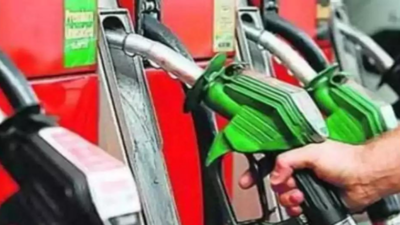
NEW DELHI: Petrol was projected to cost around Rs 125 per litre in Delhi when global crude prices touched $135 a barrel if India had not blended ethanol with petrol, the petroleum ministry said on Friday, defending the ethanol-blending programme against what it described as “misleading” claims about its costs, impact on food security and alleged taxpayer subsidy.The clarification came amid criticism that Food Corporation of India (FCI) rice was supplied to distilleries at concessional rates, allegedly causing losses to the exchequer, and that ethanol blending survives only because ethanol is more expensive than petrol.The ministry said consumers paid Rs 94.77 per litre because 20% of every litre comprised domestically produced ethanol procured at pre-agreed prices, insulating retail fuel prices from the global crude price spike. “The result was nearly Rs 30 per litre in savings at the pump during the peak of the crisis,” it said.In a detailed clarification, the ministry rejected allegations that foodgrain meant for the poor was being diverted to produce ethanol or that subsidised rice supplied by the FCI was being used to artificially support the programme. “Ethanol is not built around cheap rice. It is built around a flexible mix of approved feedstocks, with FCI rice used only when certified surplus stocks are available after meeting every food security obligation,” the ministry said, adding that food security obligations always take precedence and that grain is released for ethanol production only after requirements under the public distribution system, National Food Security Act, welfare schemes and mandatory buffer stocks have been fully met.Responding to criticism over the supply of FCI rice to distilleries, the ministry said rice was only one of several approved feedstocks under the ethanol programme, was priced under the same govt pricing framework as other approved feedstocks, and was not accorded any special treatment. It said FCI rice accounted for just 0.02% of ethanol production in ethanol supply year (ESY) 2023-24, with its share rising to 24.6% in ESY 2025-26 only after surplus stocks became available. During the same period, maize’s share declined from 42.6% to nearly 36%, indicating that distilleries switch between approved feedstocks depending on availability.The ministry also said the programme utilises damaged grain, broken rice and foodgrain unfit for human consumption that would otherwise deteriorate in storage. It added that India is expanding production of second-generation ethanol from agricultural residue under the Pradhan Mantri JI-VAN Yojana to further reduce dependence on foodgrain-based feedstock.
Share your thoughts in the comments
Be respectful · TOI community guidelines
Rejecting the contention that ethanol blending survives on taxpayer subsidy, the ministry maintained that the objective of the programme was not to make petrol cheaper on a day-to-day basis but to shield consumers from sharp swings in global crude prices while reducing dependence on imported crude oil, imports of which meet nearly 88% of India’s requirement. “Ethanol blending is an insurance policy against global oil shocks and not a day-to-day price competition,” it said.


